

Maddy summaryThis bill prohibits U.S. currency from featuring the likeness of any living or sitting U.S. president. It directly affects the U.S. Mint and currency design processes, requiring them to remove current or future presidential images from circulating coins and paper money. The provision would apply immediately to new currency designs and any existing designs featuring living presidents. This is a procedural change to currency policy with no other stated mechanisms or broader implications.
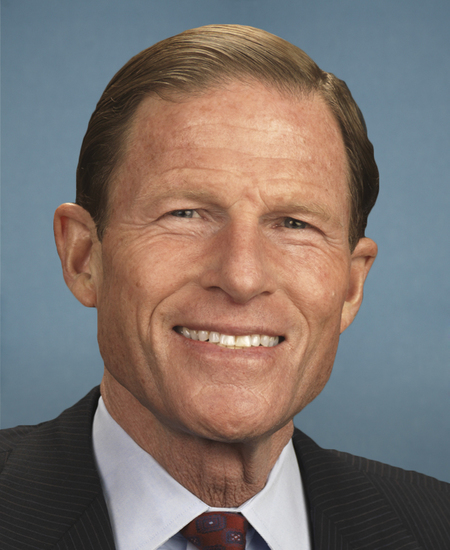
Sen. Richard Blumenthal
Sponsored bills
Maddy summaryS 3400, the Ally’s Act, requires most private health insurance plans and group health plans to cover hearing implants and related services for eligible individuals. It mandates coverage for cochlear implants, bone conduction devices, maintenance, repairs, upgrades every five years, hearing assessments, pre- and post-surgery care, and aural rehabilitation. Insurers cannot impose stricter cost-sharing or treatment limits for these services than for other medical care, and cannot deny coverage based on medical necessity determinations by a physician or audiologist. The law applies to plans covering individuals with hearing loss (including unilateral or bilateral) who meet medical criteria, effective for plan years starting January 1, 2026.
Maddy summaryThis bill requires national parks to reduce disposable plastic use by eliminating the sale of single-use plastic water bottles and other items like plastic bags and food containers. It directly affects park visitors (who must bring reusable bottles) and concessioners (like food vendors and shops). Key mechanisms include setting up water refill stations, developing visitor education plans, and requiring regional park directors to consider factors like safety, costs, and concessioner revenue before implementation. Parks must conduct biennial evaluations to track visitor satisfaction, waste reduction, and public health impacts. The law applies to all national park units, with some flexibility for parks already without plastic water sales.
Maddy summarySRES 533 is a non-binding Senate resolution condemning white supremacy, hate, and antisemitism, with specific focus on the promotion of these ideologies by white supremacist Nick Fuentes and his platforming by Tucker Carlson. It highlights Fuentes' Holocaust denial, antisemitic conspiracy theories (like the "Great Replacement" myth), and use of dog whistles, while criticizing Carlson for hosting Fuentes without challenge and Heritage Foundation's Kevin Roberts for defending such views. The resolution urges all elected officials and leaders to reject these ideologies whenever they occur, and affirms condemnation of Nazism and the Holocaust. As a formal expression of Senate opinion, it does not create new laws but serves as a public stance against harmful rhetoric.
Maddy summarySRES 531 is a non-binding Senate resolution celebrating the 50th anniversary of the Individuals with Disabilities Education Act (IDEA) on November 29, 2025. It recognizes IDEA's historical role in guaranteeing children with disabilities access to free appropriate public education in inclusive settings, transforming educational opportunities for millions. The resolution honors students, families, educators, and advocates who advanced IDEA's principles since its 1975 enactment. It does not create new policy but formally acknowledges the law's enduring impact on educational equity.
Maddy summaryS 3354, the QUIET Act, requires anyone making robocalls or text messages using artificial intelligence to mimic a human to disclose at the start that AI is being used. It directly affects businesses, marketers, or scammers using AI for automated calls/texts that sound human, but excludes calls needing substantial human input. The bill adds enhanced penalties, doubling maximum fines for violations involving AI impersonation intended to defraud or cause harm. These provisions amend federal law to increase transparency and strengthen consequences for deceptive AI-driven communications.
Maddy summaryS 3347, the Flight Delay and Cancellation Compensation Act, requires airlines to provide $750 in cash compensation, free rebooking, meals, and for overnight delays, lodging and transportation when flights are delayed or canceled due to the airline's fault. The bill mandates the Transportation Secretary to form a committee within 90 days - including airline, airport, and consumer representatives - to develop recommendations for these standards, including aligning with international rules like Canada's Air Passenger Protection Regulations. An interim rule implementing these requirements will take effect two years after enactment, mandating the compensation and services for affected passengers. This legislation standardizes passenger protections across U.S. airlines to align with global practices.
Maddy summaryThis bill requires federal agencies to obtain approval from the National Capital Planning Commission before making any changes to the White House or its grounds. Congress would then have a 60-day window to block a project via a joint resolution, effectively giving lawmakers a veto power over White House renovations. It also prohibits using private funds for such projects without congressional authorization and allows lawsuits to challenge violations, with courts required to expedite cases. The bill directly affects White House renovation projects and shifts oversight authority to Congress and federal planning bodies.
Maddy summaryThe Junk Fee Prevention Act (S 3367) requires businesses selling tickets for events (like sports or concerts) and communications services (like internet or cell phone plans) to clearly show all fees upfront to consumers. It prohibits hidden or deceptive fees, mandates refunds for unfulfilled tickets, and bans excessive early termination charges for service plans. Businesses must display the total price including all mandatory fees before purchase, ensure fees don’t change unexpectedly, and disclose refund policies transparently. This directly affects consumers purchasing event tickets, internet/cell services, or airline ancillary services by making fee structures clearer and preventing surprise charges.
Maddy summaryThis bill updates the Social Security lump sum death payment amount from a formula based on the deceased's benefit to a fixed $2,900. The payment will automatically increase each year starting in 2026 based on the Consumer Price Index (CPI), ensuring it keeps pace with inflation. It directly affects survivors who receive the lump sum death payment following a Social Security recipient's death. The change applies to deaths occurring on or after January 1, 2026, replacing the previous "three times" calculation method.