

Maddy summaryThe "Save the Kurds Act" maintains U.S. sanctions on Syria by requiring congressional approval before the President can terminate Syria's "state sponsor of terrorism" designation, redesignating Hay'at Tahrir al-Sham as a foreign terrorist organization, and imposing sanctions on Syrian government officials and financial institutions. It prohibits U.S. investments in Syria, restricts financial transactions with Syrian entities, bans certain energy exports to Syria, and includes exceptions for humanitarian aid. The bill would automatically suspend sanctions if Syria stops attacking Kurdish forces, but would expire after five years. This legislation directly affects Syrian government entities, financial institutions, and U.S. persons engaging in transactions with Syria.
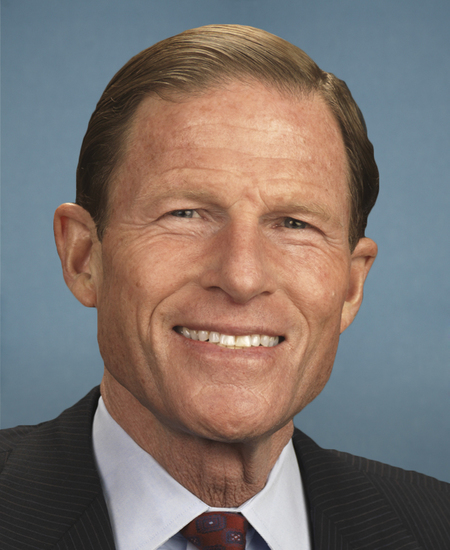
Sen. Richard Blumenthal
Sponsored bills
Maddy summaryThis bill creates a legal pathway for individuals harmed by ICE or CBP officers to sue the U.S. government directly for constitutional violations. It amends the Federal Tort Claims Act to allow victims to seek monetary damages for deprivations of rights under the Constitution, including due process violations, racial profiling, unreasonable searches, or privacy rights infringements, regardless of whether the violation stemmed from official policy. The government would be liable for these damages, funded from specific appropriations (like those for border security), and the bill waives sovereign immunity for such cases. This directly affects people subjected to unlawful immigration enforcement actions by ICE or CBP officers, providing them a new civil remedy against the government.
Maddy summaryThis bill authorizes $6 million annually for seven years to fund the National Law Enforcement Museum's community outreach, public education, and officer safety programs. It directly supports the National Law Enforcement Officers Memorial Fund, which operates the museum in Washington, D.C., by requiring the Secretary of the Interior to award grants for specific activities like developing safety resources, expanding educational exhibits, and providing free museum access for officers and families. Key provisions include funding programs to reduce line-of-duty deaths, enhance public understanding of law enforcement, and foster community-police relationships through workshops and digital resources. The bill does not create new safety standards but provides federal funding to maintain and expand existing outreach efforts already coordinated with law enforcement agencies.
Maddy summaryS 3691 establishes a 15-member Commission to investigate historical discrimination against LGBTQ+ military personnel and veterans based on sexual orientation or gender identity. The Commission will gather testimonies from affected individuals, review military records from World War II onward, and analyze impacts on health, benefits, employment, and mental wellbeing caused by past discharge policies. It will propose specific remedies, including record corrections, compensation for lost benefits, improved gender-affirming healthcare access, and updated diversity policies for the Department of Defense and Veterans Affairs. The Commission must submit a final report to Congress within one year, outlining findings and actionable recommendations to address historical injustices.
Maddy summarySRES 585 is a commemorative resolution honoring Ben Nighthorse Campbell, a former U.S. Senator from Colorado and the first Native American to chair the Senate Committee on Indian Affairs. It recognizes his military service, Olympic judo career, legislative work (including authoring the National Museum of the American Indian Act), and advocacy for tribal communities. The resolution has no policy impact - it formally expresses the Senate’s respect for his legacy, requests transmission to his family, and directs a moment of silence. It directly affects Campbell’s legacy and family, not any current policy or population. (Note: This is a procedural resolution, not a bill with legislative provisions.)
Maddy summaryThis bill amends federal law to prevent the President from nominating current or former political appointees as Inspectors General (IGs). It directly affects the appointment process for all federal agency IG positions by barring nominations of individuals serving as political appointees under the current President or who previously held such roles. The key provision states that the IG position itself cannot be considered a political appointee, ensuring the role remains non-partisan. This change aims to strengthen IG independence by removing potential political influence in their selection.
Maddy summaryThe SHIFT Act (S 3658) updates U.S. fishery management to address shifting fish populations due to ecological changes. It requires the Secretary of Commerce to review scientific data when fish stocks move across state or federal management areas, triggering either a single council or joint council plan to manage the fishery. The bill mandates that management plans account for ecosystem shifts in catch limits and habitat impacts, with councils required to propose solutions within one year of notification. It also establishes a process for adding new fisheries or gear to management lists and requires a 5-year report to Congress on the law's implementation.
Maddy summaryThe MOLD Act requires the military to establish strict mold prevention standards for privatized housing, including mandatory humidity limits and ventilation rules, with independent inspections after tenant moves, complaints, or remediation. Contractors must cover all costs for mold remediation, relocation, property damage, and refunds for housing allowances when units are uninhabitable. Military families gain access to inspection reports and complaint data, while the military must publicly report mold issues quarterly and annually. This directly affects service members and their families living in privatized housing across 78 U.S. developments, impacting approximately 700,000 people.
Maddy summaryS 3660, the Credit Card Fairness Act, limits late fees charged by large credit card issuers (those with 1 million+ open accounts) to a maximum of $8 per late payment. The bill requires that late fees be proportional to the actual costs incurred by issuers for late payments, not set arbitrarily. It allows the Consumer Financial Protection Bureau (CFPB) to adjust the $8 cap annually based on inflation (using the Consumer Price Index), but the fee must never exceed the issuer's documented costs. This bill directly affects major credit card companies and aims to prevent excessive late fees, codifying the CFPB's existing rule into law.
Maddy summaryThe Power for the People Act of 2026 requires data center owners and operators to pay for the grid upgrades they necessitate, rather than passing these costs to residential and business ratepayers. The bill establishes data center-specific load queues that prioritize facilities implementing low-carbon energy solutions, labor standards, and grid-friendly practices, while delaying or denying interconnection for those that don't meet these requirements. It also mandates that states create data center-specific rate classes to ensure these facilities pay for the full cost of grid upgrades, including transmission and distribution costs. The legislation includes provisions for transparency in forecasting data center energy demands and encourages the use of battery storage and renewable energy to reduce grid strain. The bill aims to protect grid reliability, ensure electricity affordability, and minimize environmental impacts of data center development.