

Maddy summaryThe Pell Grant Preservation and Expansion Act of 2026 aims to increase financial aid for college students by doubling the maximum Federal Pell Grant award to $10,000 for the 2026-2027 school year, with amounts rising annually to reach $15,000 by 2031-2032. The bill also changes the funding structure so that Pell Grants become a mandatory program that automatically adjusts for inflation rather than relying on annual congressional appropriations. Additional provisions expand eligibility to include students with negative financial aid indexes, provide special rules for recipients of means-tested benefits, and allow Dreamer students who become citizens or permanent residents to qualify for aid. The legislation further restores the total number of semesters a student can receive Pell Grants from 12 to 18 and modifies how institutions determine satisfactory academic progress to reduce penalties for students struggling with course requirements.
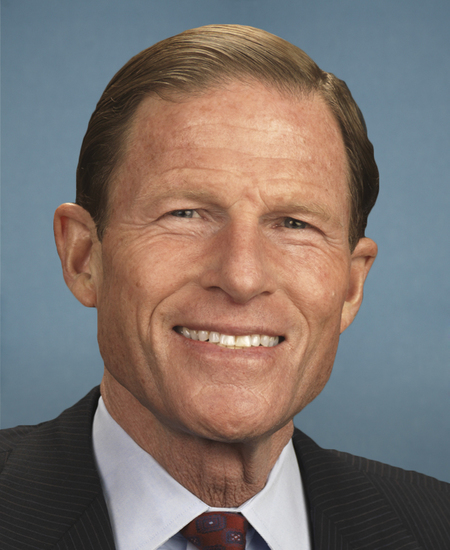
Sen. Richard Blumenthal
Sponsored bills
Maddy summaryThe Sunshine in the Courtroom Act of 2025 allows federal appellate and district court judges to permit media coverage of court proceedings - including photographing, recording, broadcasting, or televising - at their discretion. It requires judges to obscure witnesses' faces and voices upon request (for non-parties), prohibits broadcasting jurors or attorney-client conferences, and mandates that the Judicial Conference create mandatory guidelines within six months for protecting vulnerable witnesses like crime victims or minors. The law includes a three-year sunset for district court media authority and prohibits interlocutory appeals of judges' media coverage decisions. This bill directly affects federal courts, media organizations, and witnesses, balancing public access with due process and witness safety protections.
Maddy summaryS 1146, the "Cameras in the Courtroom Act," requires the U.S. Supreme Court to permit television coverage of all publicly open court sessions. This directly affects the Supreme Court (as the entity implementing the rule) and the public (who would gain access to live coverage of proceedings). The bill's key provision states that the Court may block TV coverage in a specific case only if a majority of justices determine it would violate a party's fair trial rights. The law does not mandate coverage but sets a default rule allowing it unless the Court unanimously decides otherwise for due process reasons.
Maddy summaryThe PFAS Alternatives Act directs the Secretary of Health and Human Services to create grant programs that help develop and train firefighters on using protective gear free from PFAS chemicals. Under this law, eligible nonprofit and educational organizations can receive funding to research next-generation turnout gear that maintains safety standards without relying on per- and polyfluoroalkyl substances. The legislation allocates up to $25 million between 2027 and 2031 for research grants and $2 million between 2028 and 2032 for training initiatives, ensuring that new gear designs are tested and that first responders learn proper care and decontamination methods. Additionally, the bill requires the Secretary to submit a progress report to Congress within two years of enactment to track the implementation of these safety improvements.
Maddy summaryThis bill directs the Secretary of Education to create and share evidence-based model plans for mental health and suicide prevention specifically for colleges and universities. In partnership with the Substance Abuse and Mental Health Services Administration, the government will provide technical assistance to schools that wish to adopt these models, while also considering existing state efforts and collaborating with various community and student groups. The legislation requires regular updates to these model plans every five years and mandates periodic reports to Congress on the program's progress. Importantly, the bill clarifies that these measures are voluntary guidelines and do not impose new legal requirements on higher education institutions.
Maddy summaryThe No Robot Bosses Act prevents employers from relying predominantly on automated systems to make hiring, firing, or other employment decisions, while also requiring these systems to be transparent about how they evaluate workers. Companies using such technology must disclose how the system works, train their staff on potential biases, and allow employees to opt out of having their applications or management handled by algorithms. The bill mandates that developers and employers conduct detailed pre-deployment evaluations and annual impact assessments to ensure these tools do not discriminate or harm workers' rights. A new Fairness and Transparency Office within the Department of Labor will oversee compliance, investigate violations, and enforce penalties that include substantial fines and protections against retaliation for whistleblowers.
Maddy summaryThe Stop Spying Bosses Act establishes new federal rules to limit how employers collect, use, and share employee data, primarily affecting businesses with at least 11 workers and their employees. It prohibits employers from gathering sensitive information such as biometric scans, off-duty activities, or political views unless the data is strictly necessary for specific job functions like ensuring safety or administering benefits. The law requires employers to clearly disclose what data they collect and how it influences decisions about hiring, firing, or promotions, while also granting workers the right to access and correct their own records. To enforce these standards, the bill creates a new Worker Protection and Technology Division within the Department of Labor, which will investigate violations and provide whistleblower protections against retaliation. Additionally, the legislation invalidates pre-dispute arbitration agreements that would stop workers from joining class-action lawsuits regarding privacy violations.
Maddy summaryThis Senate resolution reaffirms the importance of the United States protecting refugees and displaced persons globally and within the country. It highlights specific statistics on displacement crises and criticizes current administration actions, such as an indefinite suspension of refugee admissions and cuts to foreign aid. The bill calls on government officials to restore the Refugee Admissions Program, lift bans on entry, and provide humanitarian support to vulnerable populations. While it does not change existing laws, it serves as a formal statement of support for refugee rights and urges the executive branch to resume resettlement efforts.
Maddy summaryThe Lifeline for First Responders Act creates a new grant program to support the mental health and wellness of emergency medical services and first responder agencies. Funded by $7.5 million annually from 2028 to 2032, these grants are distributed to fire services, EMS agencies, and dispatch centers for specific purposes. The program allows recipients to use the funds for stress reduction, suicide prevention, confidential counseling, family support, and related training. Managed by the National Highway Traffic Safety Administration, the initiative aims to provide resources for behavioral health and stigma reduction within these critical service sectors.
Maddy summaryThis bill directs the Secretary of Homeland Security to grant Temporary Protected Status to nationals of Haiti. Under this provision, eligible Haitian immigrants would be allowed to live and work in the United States without fear of deportation until March 20, 2029. The legislation overrides other existing laws to ensure this designation remains in effect for the specified period.