

Maddy summarySRES 67 is a symbolic Senate resolution designating February 2023 as "Career and Technical Education (CTE) Month" to recognize CTE's role in preparing students for high-demand careers. It does not create new policies or funding but expresses Senate support for CTE programs that connect students with workforce skills in fields like healthcare, technology, and construction. The resolution encourages educators and parents to promote CTE as a valuable educational pathway, referencing the 106th anniversary of the foundational Smith-Hughes Vocational Education Act. As a procedural resolution, it has no direct impact on legislation or affected individuals.
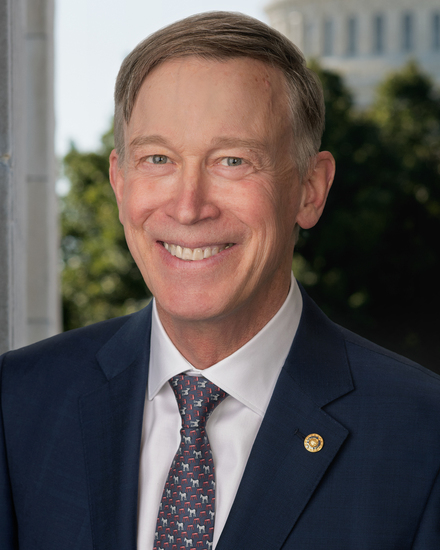
Sen. John W. Hickenlooper
Sponsored bills
Maddy summarySRES 65 is a Senate resolution opposing H.R. 25 (the FairTax Act of 2023), which would impose a 30% national sales tax on all goods and services. The resolution states this tax would raise average annual grocery costs by $3,500, car prices by $10,000, and home prices by $125,000 for working families and seniors. It supports middle-class tax cuts instead of burdening households, while opposing any tax changes that would cut Social Security, Medicare, or Medicaid funding. The resolution expresses the Senate’s position against policies that disproportionately impact lower- and middle-income households.
Maddy summaryThis symbolic Senate resolution (SRES 69) designates February 18-25, 2023, as "National FFA Week" to celebrate the 95th anniversary of the National FFA Organization. It recognizes FFA’s role in developing future agricultural leaders through its educational programs, which serve over 850,000 students across all 50 states and territories. The resolution has no legal effect - it is a ceremonial expression of support, not a policy change. It directly affects the FFA organization and its members by highlighting their educational mission during a designated week.
Maddy summaryThe Outdoors for All Act establishes a federal grant program to fund outdoor recreation projects in underserved communities. It provides funding for eligible entities (like cities, counties, tribes, or nonprofits) to acquire land for parks or develop outdoor facilities in qualifying areas - urban regions with 25,000+ people, adjacent clusters, or tribal lands. Grants prioritize projects that improve park access in low-income neighborhoods, engage youth, create jobs, and support cultural gathering spaces, while requiring a 100% cash or in-kind match (with possible waivers). Funds cannot cover maintenance, indoor facilities, or restricted-access land, and recipients must submit annual progress reports to the Interior Secretary.
Maddy summaryThis resolution (SRES 63) is a symbolic Senate measure formally celebrating Black History Month. It acknowledges the contributions of African Americans to U.S. history and society, recognizes the origins of Black History Month (beginning as Negro History Week in 1926), and encourages nationwide reflection on this history. The resolution does not create new laws or policies but serves as a formal Senate acknowledgment of the significance of Black History Month in February. It aims to honor the legacy of African American pioneers and promote learning about their impact on the nation.
Maddy summaryS 399, the "Saving the Civil Service Act," limits how federal agencies can move positions between the competitive service (where hiring is open and based on merit) and the excepted service (where hiring is more flexible). It restricts transferring positions to excepted service without meeting specific criteria, requires employee consent for any transfer between service types, and caps transfers during a presidential term at either 1% of an agency's workforce or five employees, whichever is greater. Agencies must also report all such transfers to Congress annually with justifications, and the Office of Personnel Management must issue implementing regulations within 90 days of the bill's enactment. This directly affects federal employees whose positions may be moved between service types and all federal agencies managing personnel transfers.
Maddy summaryS 325, the Supreme Court Ethics Act, establishes new ethics rules for Supreme Court justices and creates an enforcement mechanism. It requires the Judicial Conference to issue a binding code of conduct for justices within one year, followed by the appointment of an Ethics Investigations Counsel to handle public complaints about potential violations and conduct harming the Court's administration. The Counsel must investigate allegations, report annually on complaints, and disclose reasons for recusal or denial of recusal motions in public court records. This directly affects Supreme Court justices and the public's ability to monitor judicial conduct.
Maddy summaryThis bill requires U.S. Customs and Border Protection to ensure certain immigrants a meaningful opportunity to consult with legal counsel during immigration inspections at ports of entry or during deferred inspections. It directly affects individuals like lawful permanent residents returning from travel, refugees, asylees, and others with valid visas or parole documents. Key provisions mandate that CBP provide this consultation within one hour of starting secondary inspection, allow counsel to present evidence, and accommodate in-person meetings when possible. A special rule prevents lawful permanent residents from abandoning their status without first receiving legal advice, unless they provide a written waiver.
Maddy summaryThis bill authorizes a Congressional Gold Medal to honor the volunteers and donors who supported the North Platte Canteen during World War II. It directs the Treasury Secretary to strike a gold medal commemorating the approximately 55,000 individuals (mostly women) from Nebraska, Colorado, and Kansas who provided food, hospitality, and donations to over 6 million troops between 1941 and 1946. The medal will be presented to the Lincoln County Historical Museum in North Platte, Nebraska, for public display and research. The bill is purely commemorative and does not create new programs or obligations.
Maddy summaryThe GAAME Act of 2023 (S 364) amends the Elementary and Secondary Education Act to require all public schools to provide sequential, standards-based arts and music education. It defines "arts" as dance, media arts, theater, and visual arts, and mandates that these programs be taught by certified educators. The bill directly affects K-12 public schools receiving federal funding under ESEA, ensuring students have access to these programs through specific funding mechanisms for certified staff, materials, and professional development. It does not change existing academic standards but requires schools to integrate arts and music into their curriculum as part of a well-rounded education.