

Maddy summaryThis bill directs the U.S. Treasury to instruct American representatives at multilateral development banks (like the World Bank and Asian Development Bank) to oppose new loans to China. It is based on findings that China exceeded the income threshold for graduation from development assistance in 2016 and has since received over $20 billion in loans from these institutions. The bill requires annual reports tracking China's borrowing, U.S. voting efforts to end lending to countries that have surpassed graduation thresholds, and the status of China's eligibility. It directly affects China's access to multilateral development financing and the operational policies of these banks.
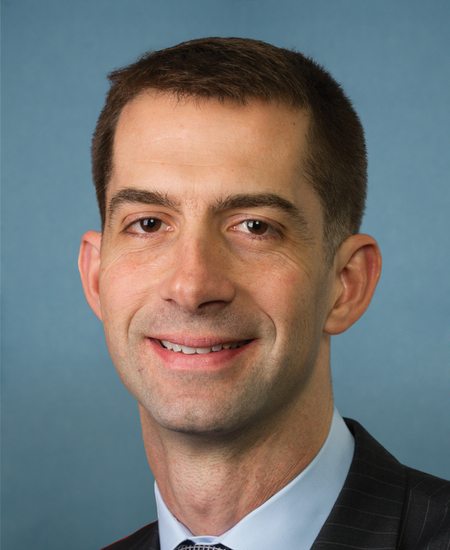
Sen. Tom Cotton
Sponsored bills
Maddy summaryThis bill reduces the weight thresholds triggering enhanced federal sentencing for fentanyl and synthetic opioid offenses. It amends the Controlled Substances Act to lower quantities from 400 grams to 20 grams for mandatory minimums (and similar reductions for other penalties), directly affecting individuals convicted of fentanyl-related trafficking. The bill also directs the U.S. Sentencing Commission to update federal sentencing guidelines within 120 days to align with these changes. Additionally, it requires the U.S. Postal Service to increase chemical screening devices, dedicate personnel for 24/7 analysis, and allocates $9 million for interdiction efforts targeting fentanyl and synthetic opioids in mail shipments.
Maddy summaryThis bill amends federal law to mandate the death penalty or life imprisonment for the murder of law enforcement officers. It applies to federal officers (when killed in duty) and state/local officers (when the crime involves interstate commerce or weapons that traveled across state lines). Key provisions require courts to consider specific aggravating factors - such as ambush tactics, prior violence advocacy, or affiliation with extremist groups - when determining sentencing. The bill explicitly states it does not affect state or local jurisdiction over such cases.
Maddy summaryThis bill creates a government list of social media apps and platforms deemed untrustworthy due to foreign government influence. It requires the President to publish an annual list of entities owned or controlled by foreign governments (or acting on their behalf) that have over 1 million monthly users and either altered content for foreign interests or shared U.S. user data with such entities. Once listed, the bill blocks U.S. financial transactions with these entities, forces app stores to remove their apps, and requires internet providers to block access to their websites (with limited VPN exceptions). It also restricts visas for employees of listed entities and mandates foreign agent registration for former employees.
Maddy summaryThis bill prohibits federal, state, and local governments from enforcing any law that restricts the right to possess, carry, or transport firearms unless the law aligns with the U.S.'s historical tradition of firearm regulation. It directly affects states and localities that have enacted gun control measures, such as bans on carrying firearms across state lines or restrictions on commonly used firearms. Key provisions allow individuals or gun rights organizations to sue to block enforcement of such laws and require courts to award attorney fees to successful plaintiffs. The bill also clarifies that state laws offering stronger gun rights protections remain valid and unaffected.
Maddy summaryThis joint resolution (SJRES 20) seeks to block a 2023 rule from the Department of Justice and Bureau of Alcohol, Tobacco, Firearms and Explosives (ATF) that classified certain firearms with stabilizing braces as rifles under federal law. If passed, it would nullify the rule, meaning firearms equipped with these braces would no longer be subject to the rule’s classification requirements. The resolution uses the congressional disapproval process under Title 5, U.S. Code, to stop the rule from taking effect, directly affecting firearm manufacturers and owners who use stabilizing braces on weapons.
Maddy summaryThis is a ceremonial Senate resolution (SRES 110) honoring the late James George Abourezk, the first Arab American to serve in the U.S. Senate (1973-1979) from South Dakota. It commemorates his legacy, including his work re-establishing the Senate Committee on Indian Affairs and co-authoring key Native American rights legislation like the Indian Child Welfare Act. The resolution directs the Senate to adjourn in his memory and send a copy to his family, acknowledging his service as a representative and advocate for Native American communities. As a procedural resolution, it has no legislative effect beyond commemoration.
Maddy summarySRES 107 is a non-binding Senate resolution recognizing that the Equal Rights Amendment (ERA), proposed by Congress in March 1972, expired when its 7-year ratification deadline passed without enough states approving it. It affirms that Congress has no constitutional authority to alter the terms of a proposed amendment after it is submitted to states or after it expires. The resolution cites legal precedents, including Supreme Court rulings and a 2020 Department of Justice opinion, stating that ratification deadlines are binding and cannot be extended retroactively. It concludes that any future effort to adopt the ERA would require a new congressional proposal, not modifications to the 1972 version. This resolution does not change current law or affect ongoing state ratification efforts for a new ERA proposal.
Maddy summaryThe Stop Forced Organ Harvesting Act of 2023 requires the U.S. government to address forced organ harvesting by mandating annual reports on the issue in foreign countries and allowing passport denial or revocation for individuals convicted of organ trafficking. It directs the President to impose sanctions - including asset blocking and visa bans - on individuals or entities involved in forced organ harvesting, with exceptions for humanitarian aid. The bill defines "forced organ harvesting" as organ removal by coercion, deception, or abuse of power, and "trafficking" as recruiting or transporting people for organ removal through similar means. These provisions aim to hold accountable those exploiting vulnerable individuals for organ removal.
Maddy summaryThis bill requires federal and state prisons to house inmates based on biological sex (defined by reproductive anatomy and chromosomes at birth), prohibiting co-location of inmates of different biological sexes except for temporary, non-overnight arrangements. It directly affects all federal prisons and state correctional facilities receiving federal funding under the Omnibus Crime Control Act. The law mandates that housing decisions use biological sex and requires states to certify compliance to receive federal correctional funding. It does not address violence prevention measures but focuses solely on housing separation policies.