

Maddy summaryThis bill prohibits public elementary, secondary schools, and colleges from receiving federal funding if they use their facilities to house non-citizens under federal immigration orders (excluding those already admitted to the U.S.). It amends existing law to block federal financial assistance for schools that provide shelter for these individuals, while exempting short-term disaster shelters (under 72 hours) or facilities used during declared disasters. The policy directly affects public educational institutions receiving federal programs, requiring them to avoid hosting such non-citizens to maintain funding eligibility. It does not restrict schools from housing other groups or affect private institutions.
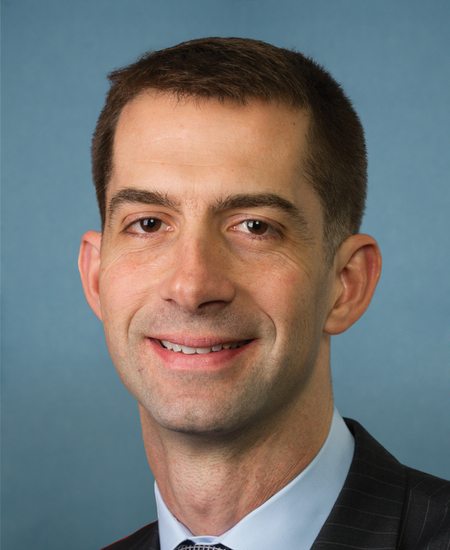
Sen. Tom Cotton
Sponsored bills
Maddy summaryS 2953 requires the federal government to annually identify and review significant regulations that are duplicative (overlapping with other rules), burdensome (imposing excessive costs or unfunded mandates), or outdated (not updated in 10 years). The Office of Information and Regulatory Affairs Administrator must compile a list of such regulations, consult with agencies, and submit it to Congress for review. Congress then has 30 days to propose joint resolutions for repeal, which would move through expedited procedures in both chambers with limited debate and no amendments. The bill directly affects federal agencies responsible for creating regulations and businesses/individuals subject to those regulations, but does not automatically repeal any rules - only establishes a process for Congress to act on identified regulations.
Maddy summarySRES 208 is a Senate resolution designating November 12, 2023, as "National Warrior Call Day." It encourages U.S. citizens, particularly those connected to military service, to reach out to veterans through peer-to-peer conversations to support their mental health and transition from military life. The resolution highlights veteran suicide statistics (6,146 deaths in 2020) and emphasizes that isolation - exacerbated by the pandemic - increases risks for conditions like PTSD. It does not create new programs but urges public engagement to connect veterans with support systems. This is a symbolic, awareness-raising measure with no binding policy changes.
Maddy summaryThis bill requires standardized presentations about Department of Veterans Affairs (VA) benefits during preseparation counseling for service members transitioning from military to civilian life. It mandates that these presentations be reviewed by the VA and veterans service organizations before use, include information on how to file claims, and cannot promote specific organizations. The VA must also submit annual reports to Congress detailing which veterans service organizations participated, attendance numbers, and recommendations for improvement. The bill directly affects service members receiving transition assistance, ensuring they receive consistent, accurate information about VA benefits.
Maddy summaryS 2911, the "Protecting the Right To Keep and Bear Arms Act of 2023," prevents federal officials from using emergency declarations to impose gun control. It bans the President from declaring emergencies under the National Emergencies Act or the Stafford Act for gun control purposes, and stops the Health and Human Services Secretary from declaring public health emergencies for the same reason. The bill also amends the Stafford Act to explicitly prohibit emergency declarations that would restrict firearm possession, sale, or transfer of firearms, ammunition, or related accessories. This directly affects how federal emergency powers can be used during crises, limiting actions that could impact gun rights under the Second Amendment.
Maddy summaryThis non-binding resolution expresses Congress's support for Israel by declaring it is not a racist or apartheid state, rejecting antisemitism and xenophobia, and affirming the U.S. as a steadfast partner. It serves as a symbolic statement of bipartisan backing without creating new laws, funding, or obligations. Introduced by Senators Cotton, Cruz, and others in July 2023, it reflects congressional sentiment rather than policy change.
Maddy summaryThe Higher Wages for American Workers Act of 2023 would gradually increase the federal minimum wage to $11.00 per hour within four years, with smaller employers having slightly lower starting rates and future increases tied to inflation. The bill would make E-Verify, a system for verifying employment eligibility, permanent and mandatory for all employers, with implementation timelines based on employer size (ranging from 6 months to 18 months after enactment). It also includes enhanced penalties for unauthorized employment, fraud prevention measures for Social Security numbers, and requires states to share driver's license information with E-Verify to improve accuracy. The bill directly affects nearly all employers across the United States and would impact millions of workers through wage increases and verification processes.
Maddy summaryThe SEVER Act of 2023 requires U.S. officials to deny visas to United Nations representatives who are subject to U.S. sanctions under Executive Order 13876 (relating to Iran-related sanctions) as of September 10, 2023. This bill directly affects UN officials personally sanctioned by the U.S. government for Iran-related activities. The key provision amends existing visa denial law to add this new category of individuals for whom visas must be denied. The bill does not create new sanctions but integrates existing Iran sanctions into visa enforcement procedures.
Maddy summaryThis bill requires car manufacturers to include AM radio receivers as standard equipment in all new vehicles sold in the U.S., without additional cost to buyers. It mandates that AM radio controls be clearly visible on the dashboard for drivers. For vehicles sold before the rule takes effect, manufacturers must label them to disclose the absence of AM radio. The bill aims to maintain access to AM radio broadcasts, which are used for emergency alerts, but does not mandate new emergency systems.
Maddy summaryThis bill amends the Elementary and Secondary Education Act to allow schools to use existing federal funds for student sports clubs, teams, training, and related outdoor wellness activities. It directly affects K-12 schools by removing a previous restriction that barred such uses of ESEA funds. The key mechanism is an exception added to Section 8526(7), explicitly permitting these activities before the period ending that section. The change applies to funds already allocated under the ESEA, not creating new spending.