

Maddy summaryThis bill prohibits U.S. government cooperation with the International Criminal Court (ICC) and blocks funding for the Palestinian Authority under existing law if it engages with ICC investigations. It specifically blocks U.S. economic support funds for the Palestinian Authority when the ICC investigates Israeli officials, as referenced in the 2024 Appropriations Act. The bill also bans all federal funds from supporting ICC activities, including investigations, arrest warrants, or enforcement of rulings. It directly affects U.S. foreign aid programs and the Palestinian Authority's access to U.S. funding tied to ICC-related actions.
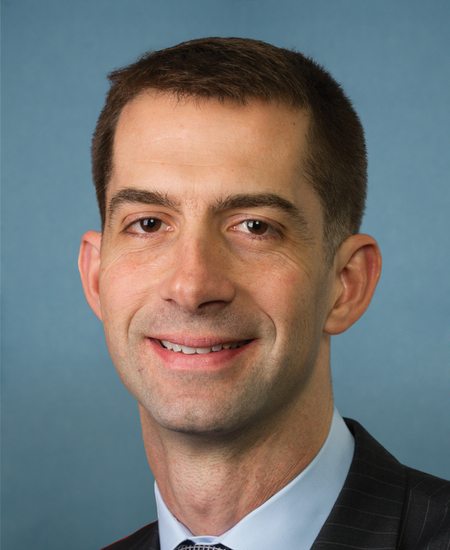
Sen. Tom Cotton
Sponsored bills
Maddy summaryThis bill amends the CARES Act by removing subsection (c) of Section 4024. It does not create new policies or directly affect any specific group; it only modifies an existing provision in federal law. The change is purely procedural, eliminating a specific subsection without altering the law's overall structure or requirements. No new rules or impacts on housing are introduced. (1 sentence, as it is a procedural amendment).
Maddy summaryThe Focus on Learning Act requires the Surgeon General to study how mobile device use affects student learning, mental health, and school climate in K-12 schools. It establishes a pilot program offering $5 million to fund secure containers/lockers for schools to create "mobile device-free environments" during school hours (excluding school-issued devices). Participating schools must maintain communication systems for staff/emergency response, have clear parent contact processes, and get parental input before implementing the policy. The bill directly affects elementary and secondary schools, students, and parents by mandating a study and pilot program to test device-free learning environments.
Maddy summaryThis bill requires the U.S. government to replace the term "West Bank" with "Judea and Samaria" in all official documents, communications, and materials. It prohibits federal funds from being used to create or distribute any materials referencing the territory as the "West Bank," with limited exceptions for international treaties and a Secretary of State waiver process. The bill amends multiple existing laws (including the Foreign Assistance Act and Taylor Force Act) to update references from "West Bank" to "Judea and Samaria" throughout U.S. legislation. It does not change U.S. policy on the territory’s status or affect any people or communities directly - it only mandates a terminology shift in government communications.
Maddy summaryThis bill amends federal law to increase penalties for obstructing justice through picketing or parading near judicial buildings. Specifically, it raises the maximum prison sentence for such offenses under 18 U.S.C. § 1507 from one year to five years. The law directly affects individuals who engage in protests or demonstrations that interfere with court operations near the Supreme Court or other judicial facilities. The key change is a stricter criminal penalty for obstructing justice, not a new policy or program.
Maddy summaryThe Fair Access to Banking Act (S 401) prohibits large financial institutions ($10 billion+ in assets) and payment networks from denying services to lawful businesses based on political or reputational factors, such as the type of legal business they operate. It requires banks to justify denials using objective, risk-based standards instead of category-based decisions, and mandates written explanations for denials. The law enables lawsuits against violators with treble damages and civil penalties up to 10% of service value (capped at $10,000 per violation). It directly affects major banks, payment processors, and credit unions that serve large-scale customers, ensuring fair access for businesses operating within federal law.
Maddy summaryThis bill would eliminate diversity, equity, and inclusion (DEI) programs across federal agencies by requiring the closure of DEI offices, rescinding related executive orders (including those on racial equity and LGBTQ+ inclusion), and prohibiting federal funds from being used for DEI-related activities. It defines "prohibited diversity, equity, or inclusion practice" as including training that asserts certain groups are inherently superior or inferior, or requiring employees to sign statements about such concepts. The bill affects all federal agencies, personnel, contractors, and grantees by banning DEI training, offices, and related activities while exempting Equal Employment Opportunity offices and disability-related programs. It also creates a private cause of action allowing individuals to sue for violations with penalties of $1,000 per violation per day.
Maddy summaryS 364, titled the "Hearing Protection Act" (though it regulates firearm silencers, not hearing protection), changes federal law to treat firearm silencers like firearms for tax and regulatory purposes. It imposes a 10% federal tax on silencers (similar to firearms), preempts state laws that tax or regulate silencers beyond federal rules, and requires the destruction of existing silencer registration records within one year. The bill clarifies definitions of "firearm silencer" in federal law and modifies licensing requirements for these devices. This directly affects silencer owners, manufacturers, and state governments that previously imposed additional restrictions or taxes.
Maddy summaryThis bill establishes tax credits for individuals and corporations who contribute to scholarship granting organizations that provide educational scholarships for eligible students. The individual tax credit is limited to 10% of adjusted gross income or $5,000, while corporate credits are capped at 5% of taxable income. The bill defines "eligible students" as those from households with income not exceeding 300% of the area median gross income, and specifies that scholarships can cover tuition, materials, tutoring, and educational therapies. The bill includes a $10 billion annual cap on tax credits, with a first-come, first-served allocation system, and requires scholarship organizations to meet specific financial and operational standards.
Maddy summaryThis bill (S 313) restricts U.S. funding for United Nations assistance programs in Afghanistan until the Secretary of State certifies specific conditions are met. It prohibits voluntary or assessed U.S. contributions to the UN for Afghanistan aid unless the Secretary certifies no U.S. funds are used in UN cash shipments there, and no designated terrorist groups (either "foreign terrorist organizations" or "specially designated global terrorist organizations") receive funds from those shipments. If certification is later found inaccurate, the Secretary must revoke it and provide a detailed justification to congressional committees. The bill directly affects U.S. foreign aid policy and UN operations in Afghanistan, requiring a formal certification process before funding can proceed.