Natural Immunity Is Real Act This bill requires all federal agencies to acknowledge and consider natural immunity to COVID-19 when promulgating any regulation related to the COVID-19 public health emergency.
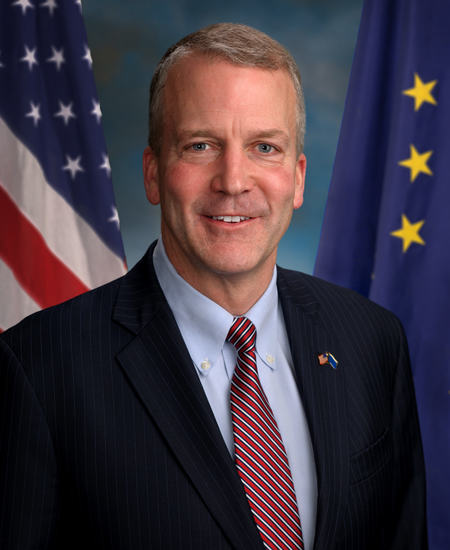
Sen. Dan Sullivan
Sponsored bills
Indo-Pacific Strategic Energy Initiative Act This bill requires and authorizes actions related to supporting energy projects in other countries, including projects to increase energy security in the Indo-Pacific region. The Department of State must prioritize U.S. government effort in helping the governments of Japan, India, and other like-minded countries in the Indo-Pacific region to increase their energy security and reduce energy emissions, including through providing diplomatic and political support as necessary. The U.S. Trade and Development Agency must provide early-stage support for energy infrastructure projects in the Indo-Pacific region that promote the reduction of greenhouse gas and carbon dioxide emissions. The State Department, the Department of Commerce, and the Department of Energy must identify projects appropriate for such support. The U.S. International Development Finance Corporation (1) may provide support for projects related to the importation of liquefied natural gas and the generation of low-emission energy, including projects owned by foreign government entities; and (2) may not prohibit or restrict support for a project on the basis of the type of energy involved. The Export-Import Bank must establish a strategic energy portfolio focused on financing projects that may increase U.S. energy exports and are related to the development or construction of (1) liquefied natural gas import terminals, (2) carbon capture and storage, (3) blue hydrogen infrastructure, or (4) other low-emission energy infrastructure.
Your Health Comes First Act This bill requires any COVID-19 vaccine mandate issued by Congress or an executive agency to contain an exemption based on an individual's personal health concern.
Prohibiting Forced Vaccination for COVID-19 Act This bill specifies that no federal law provides a federal agency with the authority to mandate COVID-19 vaccinations.
No Taxation Without Congressional Consent Act This bill prohibits assessing a fine, fee, or tax against any person who violates a COVID-19 vaccine mandate issued by the Occupational Safety and Health Administration or other executive agency.
Transparency in COVID-19 Expenditures Act This bill requires the Government Accountability Office (GAO) to audit certain funding that was provided to address COVID-19. Specifically, the GAO must audit and report on the use of funding provided by the Coronavirus Preparedness and Response Supplemental Appropriations Act, 2020; the Families First Coronavirus Response Act; the Coronavirus Aid, Relief, and Economic Security Act (CARES Act); the Paycheck Protection Program and Health Care Enhancement Act; Divisions M and N of the Consolidated Appropriations Act, 2021; and the American Rescue Plan Act of 2021.
Full Faith and Credit Act This bill requires the Department of the Treasury to prioritize certain obligations if the federal debt limit is reached and provides for a limited increase in the debt limit to fund these priorities. If the federal government reaches the debt limit, the following obligations must be given equal priority over all other federal obligations: the principal and interest on the debt held by the public; Social Security benefits; pay and allowances for members of the Armed Forces on active duty and members of the U.S. Coast Guard; compensation, pensions, and payments for medical services provided by the Department of Veterans Affairs, and the Medicare programs. If the debt limit has been reached and incoming revenue will be insufficient to pay the priority obligations over an upcoming two-week period, the bill requires (1) Treasury to notify Congress of the expected revenue shortfall for the two-week period, and (2) the debt limit to be increased by the amount of the expected shortfall. If the incoming revenue exceeds the expected shortfall, the excess revenue must be held in reserve and applied to the following two-week period.
Radiation Exposure Compensation Act Amendments of 2021 This bill expands two programs that compensate individuals who were exposed to radiation during certain nuclear testing or uranium mining and subsequently developed medical conditions, including cancers. First, the bill expands and extends a program that compensates individuals who were exposed to radiation from atmospheric nuclear testing or other sources and subsequently developed specified cancers. Under current law, this program compensates individuals who were present in a designated geographic area during a period of nuclear testing and certain individuals employed in uranium mining. The bill expands the designated areas to include Colorado, Idaho, Montana, New Mexico, and Guam and additional areas in Arizona, Nevada, and Utah; makes more individuals who worked in uranium mining eligible for the program; increases the amount of compensation awarded to and provides medical benefits for eligible claimants; and extends for 19 years following the bill's enactment the fund that supports this program and the statute of limitations for filing claims (currently, the program terminates on July 10, 2022). Second, the bill makes certain individuals employed in uranium mines or mills eligible for a program that compensates workers, including Department of Energy employees and contractors, for illnesses caused by occupational exposure to radiation and hazardous substances during development and testing of the nation's nuclear weapons stockpile. The bill also establishes a grant program in the National Institute of Environmental Health Sciences for institutions of higher education to study the epidemiological impacts of uranium mining and milling among individuals without occupational exposure.

Equitable Payments for Nursing Facilities Act of 2021 This bill allows the Centers for Medicare & Medicaid Services to adjust the federal per diem payment rate for Medicare skilled nursing facilities in Alaska or Hawaii to reflect the unique circumstances of such facilities.
This resolution (1) recognizes the success of the Hamilton-class Coast Guard cutters, and (2) commends the officers and crew who have served on them.