Maddy summarySRES 523 is a Senate resolution honoring the late Senator Herb Kohl of Wisconsin. The resolution expresses the Senate's sorrow at his death, directs the Secretary of the Senate to communicate it to the House of Representatives and send a copy to his family, and instructs the Senate to adjourn as a mark of respect. This procedural resolution does not create new laws or affect policy, but formally commemorates Kohl's service and legacy. It was introduced by a bipartisan group of Senators and passed unanimously on January 11, 2024.
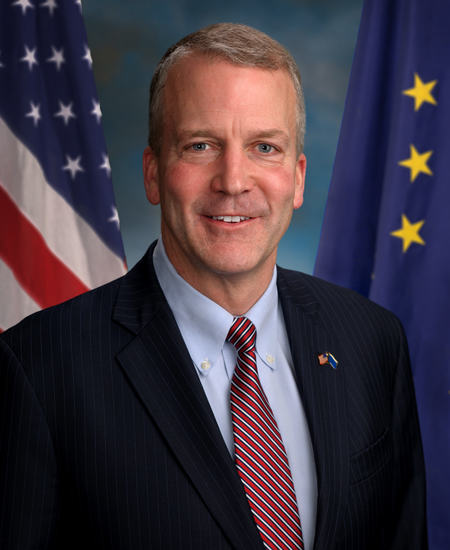
Sen. Dan Sullivan
Sponsored bills
Maddy summaryThis Senate resolution (SRES 521) expresses the U.S. Senate's support for Taiwan's democratic institutions and its history of free elections. It commends Taiwan for holding 7 presidential and 9 legislative elections since transitioning to democracy in the late 1980s, including peaceful transfers of power between political parties. The resolution specifically highlights Taiwan's upcoming 2024 elections and reaffirms U.S. commitment to existing policy frameworks like the Taiwan Relations Act. As a symbolic resolution, it has no binding effect but formally recognizes Taiwan's democratic achievements and expresses concern over potential interference in its elections.
Maddy summary# Summary of "Secure the Border Act of 2023" (Employment Eligibility Verification Provisions) This legislation (primarily Sections 801-816) fundamentally reforms the U.S. employment eligibility verification system by replacing the current E-Verify program with a new, mandatory verification system for employers. ## Key Provisions: 1. **Mandatory Verification System**: Requires all employers to verify the work authorization of new hires through a new verification system established under Section 274A(d). 2. **Phased Implementation Timeline**: - Large employers (10,000+ employees): 6 months after enactment - Medium employers (500-10,000 employees): 12 months after enactment - Small employers (20-500 employees): 18 months after enactment - Very small employers (<20 employees): 24 months after enactment - Agricultural workers: 36 months after enactment 3. **Verification Process**: - Requires examination of specific documents to verify identity and work authorization - Establishes a verification system with confirmation or tentative nonconfirmation within 3 business days - Requires secondary verification process for tentative nonconfirmations 4. **Penalties for Non-Compliance**: - Civil penalties ranging from $2,500 to $25,000 per violation - Criminal penalties for pattern or practice violations ($5,000 per unauthorized alien) - Potential debarment from federal contracts for repeat violators 5. **Fraud Prevention Measures**: - Blocks social security account numbers subject to unusual multiple use - Allows suspension of compromised social security numbers - Protects children's identities from being used for employment verification 6. **Agricultural Workforce Provisions**: - Extended timeline for agricultural workers (36 months) - Specific definitions of agricultural labor - Study on agricultural workforce composition and recommendations 7. **Good Faith Defense**: - Allows employers to avoid penalties if they can demonstrate good faith compliance - Requires reasonable security measures for identity verification This legislation represents a significant expansion of employer verification requirements with substantial penalties for non-compliance, designed to strengthen enforcement against unauthorized employment while establishing a more comprehensive verification system. The phased approach aims to give employers time to adjust to the new requirements based on business size.

Maddy summaryThis bill (SJRES 32) seeks congressional disapproval of a specific rule issued by the Bureau of Consumer Financial Protection (CFPB) on May 31, 2023. The rule, published as Regulation B under the Equal Credit Opportunity Act (ECOA), addressed how lenders must evaluate small business loan applications to prevent discrimination. If passed, the resolution would block this rule from taking effect, meaning lenders would not be required to follow these specific small business lending provisions. The bill directly affects the CFPB's regulatory authority and financial institutions that process small business loans under ECOA.
Maddy summaryThis Senate resolution condemns attacks by Iran-backed militia groups on U.S. military personnel in Iraq and Syria, which have injured over 60 service members and damaged infrastructure. It urges the Biden administration to increase pressure on Iran to stop supporting such attacks and to take steps to deter future incidents, including maintaining U.S. military presence in the region. The resolution also emphasizes the importance of U.S. forces in Iraq and Syria for regional stability and counterterrorism efforts, while commending military actions taken in self-defense.
Maddy summaryThis bill retroactively restores pay, benefits, and seniority for senior military officers (O-7 rank or higher) whose promotions were delayed due to a Senate confirmation suspension starting in February 2023. It applies specifically to officers confirmed between December 5-31, 2023, who faced delays because the Senate paused its advice-and-consent process for such appointments. The bill requires the Secretary of Defense to pay retroactive compensation from a defined date (the later of 30 days after Senate calendar placement or the original appointment date) and use that date for determining the officer's seniority in their new rank. It directly affects military personnel whose career progression was impacted by the confirmation delay, without creating new policy or changing appointment procedures.
Maddy summaryThis bill requires the Federal Communications Commission (FCC) to issue detailed reports after major disasters when its Disaster Information Reporting System activates for at least 7 days. The reports must document outages in broadband, mobile services, and 911 systems, include public hearings with affected communities and providers, and recommend improvements to network resilience. It also directs the Office of Management and Budget to reclassify public safety telecommunicators as "protective service occupations" in federal job statistics. Additionally, the FCC must report on compliance with Kari’s Law, which mandates direct 911 access in multi-line phone systems. These provisions aim to improve disaster communications transparency and response coordination without creating new funding or regulatory requirements.
Maddy summaryThis bill amends the Save Our Seas 2.0 Act to revise the governance and operations of the Marine Debris Foundation. It redefines "Tribal organization" to align with the Indian Self-Determination Act, requires the Foundation to operate as a corporation (not an organization), and mandates new best practices for outreach to Indian Tribes. Key changes include allowing the Foundation to locate its main office outside Washington, D.C. in a coastal state, and permitting salary payments for 24 months using federal funds. The bill directly affects the Foundation’s structure, its engagement with Tribal organizations, and how it manages federal funds for marine debris programs.
Maddy summarySRES 497 is a Senate resolution (introduced December 13, 2023) expressing the Senate's view that the slogan "From the river to the sea, Palestine will be free" and similar phrases are antisemitic and constitute a call for genocide against the Jewish state. It does not create new laws or affect any individuals or policies; it is solely a symbolic statement of the Senate's position. The resolution formally declares the Senate's "sense" on the meaning of the slogan, based on the signers' interpretation. As a non-binding resolution, it has no legal effect on citizens, government actions, or future legislation.
Maddy summaryThis bill prohibits the Department of Veterans Affairs from providing health care or processing health care claims for individuals unlawfully present in the United States who are not already eligible for VA benefits under existing law. It directly affects non-citizens without legal immigration status who would otherwise seek VA health services. The key mechanism bans VA health care services and claims processing for this group, while preserving eligibility for veterans and others legally residing in the U.S. The bill does not alter current VA eligibility rules for citizens or lawfully present individuals.