

Maddy summaryThe Fire Ready Nation Act of 2024 establishes a coordinated fire weather services program within the National Oceanic and Atmospheric Administration (NOAA) to improve wildfire prediction, response, and recovery. It requires development of advanced weather models, enhanced observational systems (including satellite and drone technologies), and impact-based decision support tools for emergency personnel. The bill creates an Incident Meteorologist Service to provide on-site weather support during wildfires and authorizes $15 million for fiscal year 2025, increasing to $50 million by 2029. This legislation directly affects Federal agencies, State and local emergency responders, and communities in wildfire-prone areas.
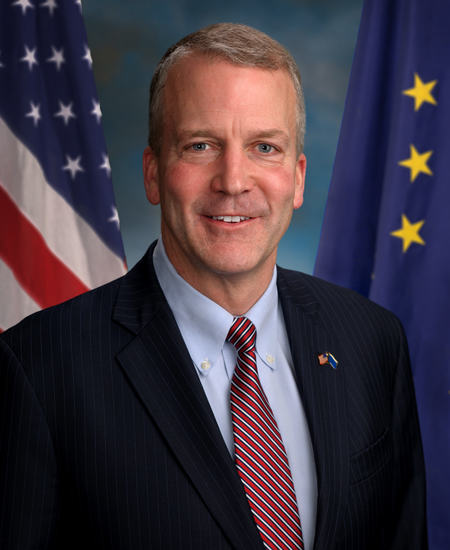
Sen. Dan Sullivan
Sponsored bills
Maddy summaryThis bill amends the Harmful Algal Blooms and Hypoxia Research and Control Act of 1998 to strengthen federal efforts addressing harmful algal blooms (HABs) and hypoxia in marine, estuarine, and freshwater systems. It requires a federal Task Force to produce a comprehensive Action Strategy every five years examining causes, ecological consequences, economic impacts, and potential solutions for HABs across diverse water systems. The bill establishes a National Harmful Algal Bloom Observing Network to integrate monitoring capabilities and creates a National-Level Incubator Program to develop new prevention and mitigation strategies through merit-based funding. It authorizes $19.5 million annually for the National Oceanic and Atmospheric Administration and $8 million for the Environmental Protection Agency from 2024 through 2028 to implement these initiatives, directly affecting federal agencies, coastal communities, and industries dependent on healthy aquatic ecosystems.
Maddy summaryThe Safe and Secure Transportation of American Energy Act amends a federal criminal law to expand penalties for interfering with energy transportation infrastructure, such as pipelines and power lines. It broadens prohibited acts to include vandalism, tampering, disrupting operations, and preventing construction of these systems. This change directly affects individuals who engage in such actions, increasing legal consequences for disrupting energy infrastructure projects. The bill does not create new infrastructure but strengthens existing legal protections for energy transportation networks.
Maddy summaryThis bill prohibits U.S. imports of eight specific minerals (including copper, nickel, and platinum) produced in Russia or by Russian entities, starting 90 days after enactment. It directly affects U.S. importers, manufacturers, and businesses relying on these minerals. The ban ends one year after the President certifies Russia has stopped hostilities against Ukraine, but resumes immediately if Russia resumes attacks during a three-year monitoring period. The President cannot waive this prohibition under any circumstances.
Maddy summaryThe VALOR Act of 2024 establishes specific criteria for determining when a democratically elected government exists in Venezuela, requiring the President to submit such determinations to Congress. The bill imposes sanctions on the Maduro regime and blocks transactions involving Venezuelan government debt instruments, cryptocurrency, and property, while requiring regular reports on sanctions implementation and foreign entities doing business with the Maduro regime. It outlines a plan for U.S. assistance to Venezuela once a democratically elected government is recognized, including humanitarian aid and support for democratic institutions, with the President required to submit determinations to Congress when such a government is in place. The act affects U.S. engagement with international financial institutions regarding Venezuela and sets conditions for lifting sanctions as democratic progress is made.
Maddy summaryThis bill would recognize five southeastern Alaska Native communities (Haines, Ketchikan, Petersburg, Tenakee, and Wrangell) that were excluded from the Alaska Native Claims Settlement Act by authorizing them to form Urban Corporations. It would provide each community with approximately 23,040 acres of Federal land (divided into specific parcels), along with shareholder shares in the new corporations. The bill includes provisions for land conveyance within two years of incorporation, public access rights for subsistence and recreation, and mechanisms for negotiating access to roads and facilities. It also establishes settlement trusts for community health, education, and cultural preservation, with the Secretary required to convey land within two years of the Urban Corporation's formation.
Maddy summarySRES 797 designates August 16, 2024, as National Airborne Day to honor the history and contributions of U.S. airborne forces, commemorating the first official U.S. Army parachute jump on August 16, 1940. The resolution calls on the American public to observe the day with ceremonies and activities recognizing airborne forces' legacy in military operations from World War II through modern conflicts. This is a symbolic, non-binding designation with no direct legal or financial impact on specific groups.
Maddy summarySRES 800 is a symbolic Senate resolution introduced on August 1, 2024, by a bipartisan group of senators. It condemns the July 13, 2024, attempted assassination of Donald J. Trump at a Butler, Pennsylvania, rally and honors three individuals affected: Corey D. Comperatore (who died shielding his family), David Dutch (critically injured), and James Copenhaver (critically injured). The resolution calls for national unity and civility following the violent incident. As a non-binding resolution, it does not create new laws or policies but expresses the Senate's stance on the event.
Maddy summaryS 4958 requires the Department of Housing and Urban Development (HUD) and the Department of Agriculture (USDA) to withdraw a specific federal energy efficiency standard for new housing financed by these agencies (89 Fed. Reg. 33112). The bill mandates that these agencies revert to the previous energy efficiency standards and prohibits them from using federal funds to implement or enforce this withdrawn standard or any substantially similar rule. It also extends this prohibition to the Department of Veterans Affairs and the Federal Housing Finance Agency (FHFA), preventing them from finalizing or enforcing similar energy efficiency standards for housing. This bill directly affects federal housing programs and agencies that set energy efficiency requirements for new construction.
Maddy summaryThe ANCHOR Act requires the National Science Foundation (NSF) Director to develop a plan within one year to improve cybersecurity and telecommunications for the U.S. Academic Research Fleet - university-operated ocean research vessels funded by NSF. The plan must assess fleet-wide needs for network speed, data transmission, telemedicine, real-time research support, and educational outreach, along with cost estimates for equipment, personnel, and implementation timelines. It also mandates collaboration with cybersecurity agencies and consideration of international standards to address vulnerabilities in vessel operations. This bill directly affects NSF, research universities, and the fleet vessels themselves, without altering funding or creating new mandates beyond the required plan.