

Maddy summaryHR 471, the Fix Our Forests Act, establishes a new system for identifying and managing high-risk wildfire areas called "firesheds" and creates a centralized Fireshed Center to coordinate wildfire risk management across federal agencies. The bill streamlines environmental reviews for wildfire risk reduction projects, allowing for faster implementation of hazardous fuels management activities in designated areas. It includes provisions for community wildfire risk reduction programs, water source protection, and specific initiatives for restoring white oak forests. The legislation also includes litigation reforms to expedite forest management projects and reduce delays from legal challenges. These provisions aim to reduce wildfire risk and improve forest health through more coordinated, data-driven management approaches.
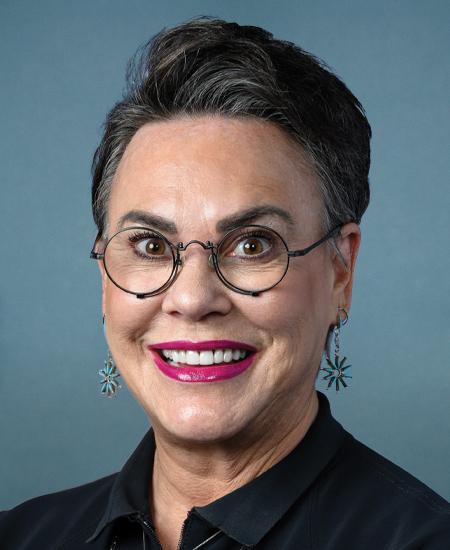
Rep. Harriet M. Hageman
Sponsored bills
Maddy summaryHR 1846, the Federal Reserve Board Abolition Act, would end the Federal Reserve System by abolishing its Board of Governors and all 12 Federal Reserve banks after a one-year transition period following enactment. The bill requires liquidating the Fed's assets through the Office of Management and Budget, transferring all liabilities (including employee benefits) to the Treasury Secretary, and depositing net proceeds into the Treasury's General Fund. This bill directly affects the Federal Reserve's structure and operations, transferring its responsibilities to the Treasury without altering current monetary policy functions.
Maddy summaryHR 1866, the GUARD Act, prevents federal funding under the Child Abuse Prevention and Treatment Act from being awarded to any state that discriminates against parents or guardians who oppose gender-affirming medical, social, or legal changes for minors. The bill requires states to avoid adverse actions against such parents if they believe a minor's gender identity claims conflict with their biological sex at birth, regardless of medical diagnoses. States violating this provision could face legal action by affected parents to halt funding and recover funds. The law directly affects parents opposing gender-affirming care for minors and alters federal grant enforcement for child welfare programs.
Maddy summaryHR 1383 extends the Secure Rural Schools program, which provides payments to counties and states with federal land (like national forests) to support local schools and services. It reauthorizes these payments through fiscal year 2026, adding specific rules to ensure counties don’t receive duplicate payments for 2024 and 2025. The bill also extends related authorities for special projects on federal land and county fund expenditures through 2028-2029. This directly affects rural communities adjacent to federal lands that rely on these payments for education and infrastructure.
Maddy summaryHR 773 amends the Food Security Act of 1985 to remove specific provisions related to public-private partnerships. It repeals language referencing "public-private partnerships" in Section 1241(f) and modifies how non-Federal funds can be used for conservation programs. The bill allows the Secretary to create sub-accounts under conservation programs (administered under subtitle D) to accept and use non-Federal funds, directing these funds specifically to those programs' sub-accounts instead of general accounts. This change directly affects conservation programs funded through the Secretary's administration under the Food Security Act. The bill focuses on streamlining the handling of contributions for these programs without creating new requirements.
Maddy summaryThe PASTURES Act prohibits federal agencies from penalizing livestock owners for grazing on specific federal lands without existing fences. It directly affects ranchers and livestock owners (cattle, bison, horses, sheep, goats) who graze on National Forest System lands, Fish and Wildlife Service lands, or public lands bordering private property where grazing was previously permitted but later prohibited. The bill requires the Secretary of Agriculture or Interior to cover all costs for constructing or maintaining fences meant to prevent grazing on these lands. This changes the financial responsibility from landowners to the federal government for fence-related expenses on designated "covered lands."
Maddy summaryThis bill amends federal law to require that individuals purchasing handguns from licensed dealers be at least 21 years old, removing previous exceptions that allowed sales to those under 21 for certain firearms. It directly affects anyone seeking to buy handguns from federally licensed gun sellers, raising the minimum age from 18 to 21 for these transactions. The bill also removes an existing age verification statement (requiring buyers to confirm they are 21 or older) for handgun purchases, aligning the requirement with the new age standard. Rifles and shotguns remain unaffected by this provision, as the amendment specifically targets handguns only. The bill's title referencing "voter" is unrelated to its actual provisions on firearm sales.
Maddy summaryThis bill requires the U.S. Department of Agriculture (USDA) to join the Committee on Foreign Investment in the United States (CFIUS) for reviews of certain transactions involving foreign adversaries. It specifically targets acquisitions of U.S. agricultural land, biotechnology, or agriculture-related infrastructure (like transportation, storage, or processing) by entities from China, North Korea, Russia, or Iran. The USDA must notify CFIUS about reportable transactions, prompting the committee to determine if a full review is needed. The provisions expire for any country removed from the official list of foreign adversaries in federal regulations.
Maddy summaryHR 1575, the "No American Land for Communist China Act," prohibits the People's Republic of China government and businesses with 25% or more Chinese government ownership from purchasing real estate adjacent to specific federal lands. The bill directly affects Chinese government agents and Chinese-affiliated businesses seeking to buy property near lands managed by the Departments of Interior, Defense, Agriculture (Forest Service), and Energy, as well as Indian country. Key provisions require the President to take necessary actions to block such purchases, defining "covered Federal lands" broadly to include national parks, military bases, and tribal lands. The law aims to prevent foreign government influence over land near sensitive U.S. properties through a clear purchase restriction.
Maddy summaryThe Access Technology Affordability Act of 2025 creates a new tax credit for individuals who purchase technology designed to assist blind people, such as screen readers or braille displays. This credit covers up to $2,000 in expenses per three-year period for qualified access technology used by the taxpayer, their spouse, or a blind dependent. The credit adjusts for inflation after 2026 but does not apply to costs already covered by other tax benefits. The credit expires after 2030, with adjustments for cost-of-living changes starting in 2027.