

Born-Alive Abortion Survivors Protection Act This bill establishes requirements for the degree of care a health care practitioner must provide in the case of a child born alive following an abortion or attempted abortion. Specifically, a health care practitioner who is present must (1) exercise the same degree of care as would reasonably be provided to any other child born alive at the same gestational age, and (2) ensure the child is immediately admitted to a hospital. Additionally, a health care practitioner or other employee who has knowledge of a failure to comply with the degree-of-care requirements must immediately report such failure to law enforcement. A health care practitioner who fails to provide the required degree of care, or a health care practitioner or other employee who fails to report such failure, is subject to criminal penalties—a fine, up to five years in prison, or both. An individual who intentionally kills or attempts to kill a child born alive is subject to prosecution for murder. The bill bars the criminal prosecution of a mother of a child born alive under this bill and allows her to bring a civil action against a health care practitioner or other employee for violations.
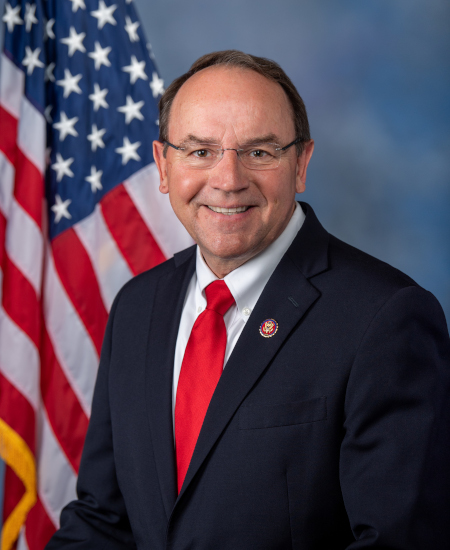
Rep. Thomas P. Tiffany
Sponsored bills
This resolution urges the U.S. Capitol Police Board to direct the Architect of the Capitol to remove the fencing installed around the perimeter of the U.S. Capitol complex in response to the attacks of January 6, 2021, and it recommends the end of the National Guard's mission in the District of Columbia in response to those attacks.
Taiwan PLUS Act This bill provides Taiwan with preferential treatment when receiving U.S. defense articles and services. Specifically, Taiwan shall be subject to the requirements and procedures that apply to certain U.S. partners and allies, such as North Atlantic Treaty Organization (NATO) member countries, South Korea, and Australia. Under this bill, certain defense transfers to Taiwan shall be subject to less stringent requirements, such as shorter waiting periods and higher minimum value thresholds before various oversight requirements kick in. Taiwan shall also be eligible to receive certain fee reductions and waivers related to defense transfers. Taiwan shall receive such treatment for the five-year period starting from this bill's enactment, and the Department of State may extend this treatment for additional five-year periods if doing so would support U.S. national security interests.
Stop Shielding Culpable Platforms Act This bill modifies provisions relating to the liability of a provider or user of an interactive computer service (e.g., a social media company) for material placed on its platform by another information content provider. Under current law, a provider or user of an interactive computer service is not considered the publisher or speaker of any information provided by another information content provider. The bill specifies that a provider or user of an interactive computer service may still be treated as a distributor of such information.
Whole Milk for Healthy Kids Act of 2021 This bill revises requirements for milk provided by the National School Lunch Program of the Department of Agriculture (USDA). Currently, schools participating in the program must provide milk that is consistent with the most recent Dietary Guidelines for Americans; USDA regulations require milk to be fat-free or low-fat and allow only fat-free milk to be flavored. The bill removes these restrictions and instead permits schools to offer students whole, reduced-fat, low-fat, and fat-free flavored and unflavored milk.
Huntington's Disease Disability Insurance Access Act of 2021 This bill expedites payment of Social Security Disability Insurance (SSDI) benefits and eligibility for Medicare coverage for those with Huntington's disease. This is an inherited disorder that causes brain cells to die, including in areas of the brain that help to control voluntary movement. Specifically, the bill eliminates the 5-month waiting period for SSDI benefits and the subsequent 24-month waiting period for Medicare coverage for individuals with Huntington's disease. Under current law, individuals generally must wait five months after the onset of disability to begin receiving SSDI benefits and an additional 24 months to become eligible for Medicare.
Responsible and Effective Spending Cuts of Undesirable Expenditures Act or the RESCUE Act This bill temporarily modifies the requirements for the sequestration process (i.e., automatic spending reductions) that is used to enforce the Statutory Pay-As-You-Go Act of 2010 (Statutory PAYGO Act), which generally prohibits revenue or direct spending legislation from increasing the deficit. With respect to the first sequestration order issued under the Statutory PAYGO Act after the enactment of this bill, the bill modifies the requirements to (1) require additional reductions to certain programs that were funded in the American Rescue Plan Act of 2021, including programs that are unrelated to the direct health care treatment and prevention of COVID-19 in the United States; and (2) exempt Medicare from the process.
This bill directs the Speaker of the House and the President pro tempore of the Senate to arrange for the award of three Congressional Gold Medals to the U.S. Capitol Police (USCP) and other law enforcement agencies that protected the U.S. Capitol on January 6, 2021. Following the award of these medals, one medal shall be given to the USCP, one medal shall be given to the Metropolitan Police Department of the District of Columbia, and one medal shall be given to the Smithsonian Institution and displayed with a plaque listing all law enforcement agencies that participated in protecting the Capitol on January 6, 2021.
Developing Responsible Individuals for a Vibrant Economy Act or the DRIVE-SAFE Act This bill directs the Department of Transportation to promulgate regulations to implement an apprenticeship program for licensed commercial motor vehicle drivers under the age of 21. Under the program, an apprentice must complete two probationary periods that total 400 hours of on-duty time, of which at least 240 hours must be driving time in a commercial motor vehicle. Additionally, the apprentice must be accompanied in the cab of the commercial motor vehicle by an experienced driver. Further, the bill requires all commercial motor vehicles used in the program for training to be equipped with safety technology such as active braking collision mitigation systems and video event capturing systems. An employer shall not knowingly allow, require, permit, or authorize a driver under the age of 21 to operate a commercial motor vehicle unless the driver is participating in, or has completed, an apprenticeship program that meets the requirements set forth in this bill.
Death Tax Repeal Act This bill repeals the estate and generation-skipping transfer taxes. It also makes conforming amendments related to the gift tax.