Healthy Forests for Hunters Act of 2021 This bill establishes categorical exclusions from environmental review requirements under the National Environmental Policy Act of 1969 for certain forest management activities relating to early successional forests or outdoor recreation.
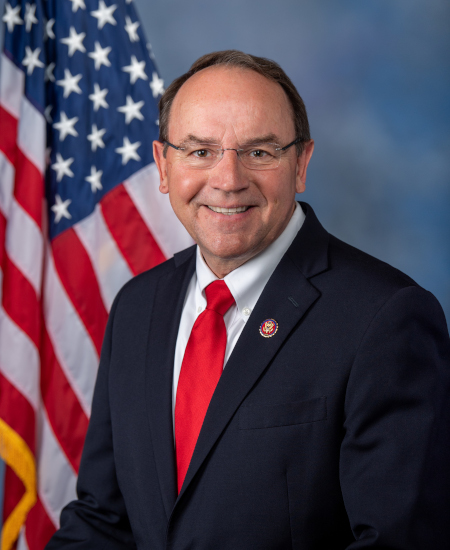
Rep. Thomas P. Tiffany
Sponsored bills
Forest Litigation Reform Act of 2021 This bill sets forth provisions regarding legal challenges to federal forest management activities on land suitable for timber production. The bill revises the standard of review for a court considering a request for injunctive relief applicable to an agency's qualified forest management activity. Specifically, a court must balance the impact to the ecosystem of undertaking the agency action against not undertaking the agency action. The bill also limits the length of preliminary injunctive relief and stays pending appeal in such cases to 60 days. Additionally, the bill directs the Department of Agriculture, with respect to National Forest System lands, and the Department of the Interior, with respect to public lands, to each establish a discretionary arbitration pilot program as an alternative dispute resolution process for challenges to qualified forest management activities. The bill prohibits amounts from being obligated or expended from the Claims and Judgment Fund and awards to pay any fees or other expenses to any plaintiff related to an action challenging a qualified forest management activity.
Salvaging American Lumber Via Action with Greater Efficiency Act or the SALVAGE Act This bill provides for certain activities related to salvage operations and certain reforestation activities conducted on National Forest System lands or public lands. The bill categorically excludes salvage operations carried out by the Department of Agriculture (USDA) and the Department of the Interior, on certain National Forest System lands or certain public lands, respectively, from the requirement to prepare an environmental assessment or an environmental impact statement. Each salvage operation covered by the categorical exclusion may not contain treatment units that exceed a total of 10,000 acres. An environmental assessment for a salvage operation or reforestation activity proposed to be conducted on National Forest System lands or public lands that are adversely impacted by a large-scale catastrophic event shall be completed within 60 days after the conclusion of the event. In the case of such reforestation activities USDA and Interior shall, to the maximum extent practicable, achieve reforestation of at least 75% of the impacted lands during the five-year period following the conclusion of the catastrophic event. No later than 60 days after a wildfire is contained on National Forest System lands, USDA shall convert any timber sales on lands impacted by such wildfire to salvage sales. No restraining order, preliminary injunction, or injunction pending appeal shall be issued by any U.S. court respecting any decision to prepare or conduct a salvage operation or reforestation activity in response to a large-scale catastrophic event.
Protecting and Restoring Our Trees by Enhancing Conservation and Treatments Act or the PROTECT Act This bill categorically excludes forest management activities carried out on specified public lands from requirements to conduct environmental assessments and environmental impact statements. In order to be excluded from environmental review, the primary purposes of such activities must be to address insect or disease infestations, reduce hazardous fuel loads, protect municipal water sources, protect critical habitats from catastrophic disturbances, increase water yield, remove dead or dying trees or trees at high risk of dying, or facilitate native species restoration. The bill limits the categorical exclusion to activities that manage up to 10,000 acres of land. However, activities that manage up to 30,000 acres of land may be categorically excluded from environmental review if the activities are developed through a collaborative process, proposed by certain resource advisory committees, or covered by community wildfire protection plans.
Active Forest Management, Wildfire Prevention and Community Protection Act This bill establishes forest management, forest conservation, and wildfire prevention programs and activities. The bill establishes a collaborative prescribed fire program, an incentive program for large, cross-boundary prescribed fires, a program to remove or treat bark beetle-killed or infested trees, the Restoration and Resilience Partnership Program, and Forest Reserve Revenue Areas to generate revenue for counties. The bill also provides for, among other things the removal of certain trees or parts of those trees that come within 500 feet of an electric power line as hazard trees, the selection and implementation of landscape-scale forest restoration projects, removing the maximum term limits on stewardship end result contracting projects, study of only two alternatives (action vs. nonaction) in proposed collaborative forest management activities, the balancing of the long- and short-term effects of forest management activities on the affected ecosystem while considering injunctive relief, categorical exclusions from certain environmental requirements for specified forest management activities, and the expansion of the fire regime areas outside the wildland-urban interface for which a collaborative restoration project may be conducted.
This resolution impeaches Secretary of Homeland Security Alejandro Nicholas Mayorkas for high crimes and misdemeanors related to his actions regarding border security and immigration.
This resolution expresses respect for and solidarity with the families and friends of those killed, tortured, and imprisoned for participating in prodemocracy demonstrations during the spring of 1989 in Tiananmen Square. It also reaffirms support for those who continue to work for political reform, rule of law, and human rights in China.
UNRWA Accountability and Transparency Act This bill makes changes to U.S. foreign policy in matters concerning the United Nations Relief and Works Agency for Palestine Refugees in the Near East (UNRWA). For purposes of this policy, the bill defines Palestinian refugee as a person who (1) resided from June 1946 to May 1948 in Mandatory Palestine (a region controlled by Britain until 1948), (2) was personally displaced as a result of the 1948 Arab-Israeli conflict, and (3) has not accepted citizenship or other permanent adjustment in status in another country. The bill withholds U.S. funding for the UNRWA unless the Department of State makes certifications concerning the UNRWA's staff, partners, and funding. Specifically, the State Department must certify that neither UNRWA staff and partners nor its funding and facilities are affiliated with terrorism or engaged in the dissemination of anti-American, anti-Israel, or anti-Semitic ideologies. Additionally, the State Department must certify that the UNRWA is subject to comprehensive financial audits by an independent auditing firm and is unaffiliated with any financial institutions that the United States considers to be complicit in money laundering or terror financing. The bill also requires the State Department to implement a plan to encourage other countries to align their activities and efforts regarding the UNRWA with U.S. policy objectives, including the phase out of the UNRWA by resettling Palestinian refugees in countries other than Israel and in territories not controlled by Israel. The State Department must report to Congress on this plan.

General Secretary Act This bill prohibits the federal government from creating or disseminating documents that refer to China's head of state as anything other than General Secretary of the Chinese Communist Party or General Secretary .
Lonnie Kilpatrick Central Pacific Relief Act This bill provides a presumption of service-connection for diseases associated with exposure to certain herbicide agents to veterans who served on (1) Guam or American Samoa, or in the territorial waters thereof, between January 9, 1962, and July 31, 1980; or (2) Johnston Atoll or a ship that went to Johnston Atoll between January 1, 1972, and September 30, 1977. Under a presumption of service-connection, specific diseases diagnosed in certain veterans are presumed to have been caused by the circumstances of their military service. Health care benefits and disability compensation may then be awarded. Additionally, the bill expands eligibility for hospital care, medical services, and nursing home care to veterans with a disability associated with exposure to certain herbicides during specified times of military service on Guam, American Samoa, or Johnston Atoll.