

Stop China's IP Theft Act This bill directs the Department of State and the Department of Homeland Security to deny entry into the United States to senior Chinese Communist Party officials, the spouses and children of such officials, members of the cabinet of the Chinese government, and active duty members of China's armed forces. This prohibition shall not apply in any year in which the Office of the Director of National Intelligence certifies to Congress that China's government has stopped sponsoring, funding, facilitating, and actively working to support efforts to infringe the intellectual property rights of U.S. citizens and companies.
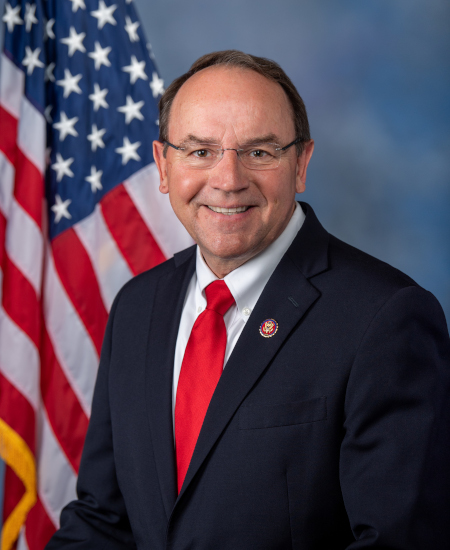
Rep. Thomas P. Tiffany
Sponsored bills
Maddy summaryThis bill bans all federal funding to the Wuhan Institute of Virology for any purpose. It also requires the Government Accountability Office (GAO) to study whether U.S. funds were provided to the institute or related Chinese entities (including affiliated researchers, China, the Chinese Communist Party, or their agencies) over the 15 years prior to enactment. The GAO must complete this study and report to Congress within two years of the bill becoming law. This directly affects U.S. funding decisions for the institute and its connections to Chinese research networks.
Maddy summaryHR 800, the "DO NOT Call Act of 2023," amends the Telephone Consumer Protection Act of 1991 to increase penalties for intentional telemarketing violations. It adds criminal penalties of up to one year in prison or fines for willfully and knowingly making unwanted calls, with harsher penalties (up to three years) for severe offenses like sending over 100,000 calls in 24 hours, causing $5,000+ in damages, or committing calls to further a felony. The bill also raises civil penalties for providing false caller identification information from $10,000 to $20,000 per violation. This directly affects telemarketers, debt collectors, and businesses making unsolicited calls, increasing legal consequences for repeated or large-scale violations.
Future Agriculture Retention and Management Act of 2023 or FARM Act of 2023 This bill makes solar and wind electricity ineligible for certain renewable energy tax credits if the electricity was generated by facilities that a public utility placed on agricultural land.
Maddy summaryHR 899 would end the U.S. Department of Education by requiring its termination on December 31, 2023. This bill directly affects the Department of Education itself, eliminating its federal structure and operations. The key provision is a specific termination date, ending the agency's existence as a standalone cabinet-level department. No other mechanisms or affected groups are specified in the bill text.
Maddy summaryHR 887, the Securing Our Students Act, allows public and private schools to use unused funds from the American Rescue Plan Act (ARP) for specific school safety improvements. Public schools (via state subgrants) and private schools (via governors) can amend their applications to include safety measures like bulletproof windows, metal detectors, security personnel, and crisis communication systems. Schools must submit evidence-based plans detailing how these measures address safety needs and include professional development requirements. States and governors must report the percentage of ARP funds used for these safety purposes, ensuring transparency in how the funds are applied.
Maddy summaryHR 935, the Safety and Opportunity for Girls Act of 2023, amends Title IX of the Education Amendments of 1972 to define "sex" as determined by reproductive biology and genetics at birth, and clarifies that "sex-segregated" means limited to or separated by that sex. The bill explicitly prohibits the Secretary of Education from requiring schools to eliminate sex-segregated bathrooms, locker rooms, or athletic/academic programs as a condition for receiving federal funding under Title IX. It directly affects educational institutions receiving federal funds by preventing federal enforcement actions that might compel them to abandon existing sex-segregated facilities or programs. The bill focuses on altering the legal interpretation of Title IX regarding sex-based accommodations, not creating new programs or services.
Maddy summaryHR 914, the Simplifying Grants Act of 2023, requires federal agencies to simplify grant application processes for small local governments (defined as those in areas with fewer than 50,000 people, per Census standards). Within 180 days of enactment, agencies must review and simplify complex grant requirements for existing programs and ensure new programs are designed with simplicity from the start. Agencies must also publish public checklists for each grant step and report annually to Congress on implementation progress, including how much technical assistance was provided and how many grants were awarded to small communities versus larger ones. This bill directly affects counties, towns, and other small local governments that receive federal grants but face bureaucratic hurdles.
Time of Service Act This bill adjusts the time limitation on the use of a veteran's educational assistance entitlement under the Post-9/11 GI Bill. Specifically, veterans' entitlements shall not expire for those who were discharged or released from active duty on or after January 1, 2001.
Maddy summaryHR 29, the Border Safety and Security Act of 2023, grants the Secretary of Homeland Security authority to restrict entry at U.S. land or maritime borders for certain immigrants deemed "covered aliens" (those inadmissible under immigration law due to lack of proper documentation). The bill requires the Secretary to suspend entry if they cannot detain or process these individuals as required by existing immigration law. It also allows state attorneys general to sue the Secretary in federal court if they believe border policies harm their state's residents. The law defines "operational control" using terms from the Secure Fence Act of 2006. This bill directly affects immigrants seeking entry who fall under the specified inadmissibility category.