

Maddy summaryThis bill requires the Bureau of Prisons to develop and implement a strategy for scanning all incoming mail at federal prisons to stop fentanyl and other synthetic drugs from entering facilities. It directs the Bureau to evaluate existing scanning technology within 180 days and submit a detailed plan to Congress within 90 days, including how to provide digital copies of mail to inmates within 24 hours and physical copies within 30 days (if safe). The strategy must achieve 100% mail scanning capacity at all federal prisons, prioritize high-security facilities, and include a budget proposal for fiscal years 2024-2026. This directly affects federal prisons, inmates, and Bureau employees by changing mail processing procedures to enhance safety and reduce staffing burdens from manual mail checks.
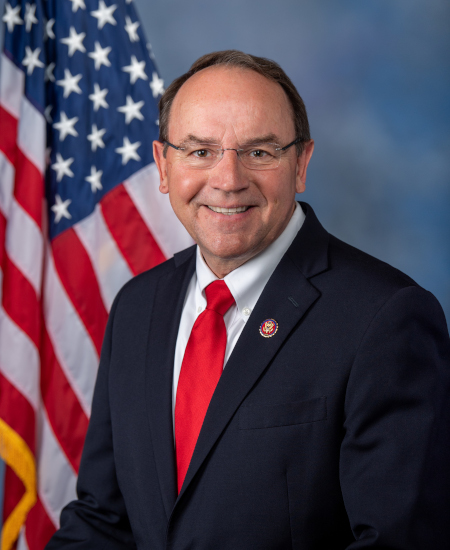
Rep. Thomas P. Tiffany
Sponsored bills
Maddy summaryHRES 651 is a non-binding House resolution condemning the Department of Education's decision to restrict funding for school archery and hunting programs under the Elementary and Secondary Education Act (ESEA) of 1965. It explicitly affirms that such programs - which teach safe firearm handling, environmental stewardship, and focus - are eligible for federal funding under ESEA. The resolution does not alter existing law but formally opposes the funding restriction and supports these educational initiatives. It directly addresses schools participating in archery/hunting programs that currently face eligibility concerns under ESEA.
Maddy summaryHR 5200, the HUNTER Act, requires the Secret Service Director to submit a report to Congress within 180 days of enactment. The report must detail steps taken to prevent controlled substances from entering the White House, identify security vulnerabilities allowing drugs inside, provide a full account of the 2023 cocaine investigation at the White House, and offer recommendations for oversight or resources. This bill directly affects the Secret Service’s reporting obligations and informs Congress on preventing illicit drug use in the Executive Branch. It does not create new laws but mandates a specific review of existing protocols.
This resolution condemns Iran for the 1988 massacre of political prisoners. It also urges the Biden Administration and U.S. allies to publicly condemn the massacre and to pressure Iran to provide information to the families of the victims.
Maddy summaryHRES 628 would terminate the Office of Diversity and Inclusion within the U.S. House of Representatives. The bill specifically eliminates the office and amends House Rules (including Rule II and Rule X) to remove all references to it. This resolution would end the office's existence and its role in overseeing diversity and inclusion initiatives for House staff and operations. The change applies solely to the House's internal structure and does not affect other legislative functions or external policies.
Preserving Safety Net Integrity Act of 2023 This bill enacts with the force and effect of law the final rule of the Department of Homeland Security titled Inadmissibility on Public Charge Grounds and published on August 14, 2019. The bill also nullifies the final rule issued by DHS titled Public Charge Ground of Inadmissibility and published on September 9, 2022. The 2019 final rule made it more likely that a non-U.S. national ( alien under federal law) would be denied admission or lawful permanent resident status because that individual is likely to become a public charge (i.e., receive certain public benefits). The 2022 final rule nullified the 2019 final rule.
Maddy summaryHR 4971, the Paycheck Protection Act, prohibits federal agencies and the U.S. Postal Service from deducting union dues, fees, or political contributions from employees' paychecks. This directly affects all federal employees and postal workers, ensuring their wages are not automatically reduced for these purposes. The bill amends existing law (Title 5, U.S. Code, Section 7115 and Title 39, U.S. Code, Section 1205) to explicitly state that such deductions are not permitted. The key provision is a clear ban on payroll deductions for labor organization-related payments, protecting employees' take-home pay from these specific withholdings.
Maddy summaryThis bill directs the U.S. Treasury to mint commemorative coins marking the Marine Corps' 250th anniversary in 2025. It authorizes three coin types: $5 gold coins (max 50,000), $1 silver coins (max 400,000), and half-dollar coins (max 750,000), with surcharges of $35, $10, and $5 respectively. The surcharge proceeds will fund the Marine Corps Heritage Center's educational programs, with no net cost to taxpayers as the Treasury must recover all minting costs through the surcharges. The coins can only be issued during 2025, and the Treasury must ensure all costs are covered before distributing funds to the Heritage Foundation.
Maddy summaryHR 4860, the PROTECT the Second Amendment Act, prevents landlords in specific federally assisted housing from banning or restricting residents' lawful possession of firearms in their private units or during travel between units and common areas. It directly affects tenants in housing funded by HUD or USDA programs, including public housing, Section 8 vouchers, and housing for veterans or people with disabilities. The bill prohibits landlords from imposing firearm bans or additional conditions on residents who lawfully carry firearms within their dwelling units or while moving through common areas to reach their units. This changes current policies in these housing programs by explicitly allowing firearm possession where state law permits.
Maddy summaryThis bill creates two tax credits to support local media and small businesses. It provides a credit for small businesses (under 50 full-time employees) that advertise in qualifying local newspapers or broadcast stations, covering 80% of first-year ad costs up to $5,000 and 50% of subsequent-year costs up to $2,500. It also establishes a payroll tax credit for employers hiring local news journalists, covering 50% of wages for the first four quarters (capped at $12,500 per journalist) and 30% thereafter, with a maximum of 1,500 journalists per employer. Both credits expire after five years and require strict definitions of "local media" (e.g., publishers with local journalists and community focus) to prevent misuse.