

Maddy summaryHR 1425, the "No WHO Pandemic Preparedness Treaty Without Senate Approval Act," requires the U.S. Senate to approve any World Health Organization (WHO) pandemic preparedness treaty through a two-thirds vote. The bill deems any convention, agreement, or international instrument on pandemic prevention drafted by the WHO’s International Negotiating Body (INB) as a treaty subject to Senate ratification, rather than allowing it to take effect as an executive agreement. This directly affects U.S. foreign policy implementation regarding WHO agreements, ensuring Congress has a formal role in approving such binding international commitments. The bill stems from congressional concerns about WHO’s pandemic response and public skepticism toward the organization, as outlined in its findings.
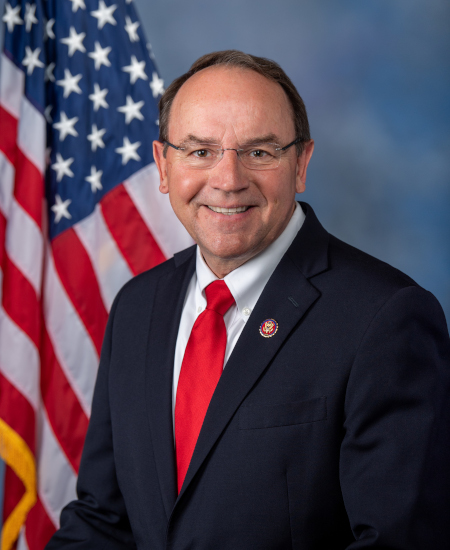
Rep. Thomas P. Tiffany
Sponsored bills
Maddy summaryHR 9586 prohibits federal funds from being used to provide or refer for specific medical procedures intended to change a person's physical characteristics to align with their gender identity. It directly affects individuals in U.S. Department of Homeland Security (DHS) or Department of Health and Human Services (HHS) custody, banning federal funding for procedures like hysterectomies, chest implants, puberty blockers, or hormone therapies at supraphysiologic doses. The bill defines "specified gender transition procedures" to include surgeries (e.g., mastectomy, phalloplasty) and certain medications, with "sex" defined by biological factors present at birth. This policy change restricts federal healthcare funding for these specific treatments within immigration and federal detention systems.
Maddy summaryHR 9534, the National Constitutional Carry Act, would prohibit states and localities from banning or restricting the public carrying of legally owned firearms by eligible U.S. citizens. It directly affects all gun owners who meet federal and state possession requirements, removing the need for permits or licenses to carry in public spaces. Key provisions state that any state law restricting public carry - such as requiring permits or imposing financial barriers - would be invalidated, with exceptions for privately-owned businesses that clearly prohibit firearms or locations with security screening. The bill bases this on Supreme Court rulings affirming the constitutional right to carry firearms for self-defense outside the home.
Maddy summaryThis symbolic resolution expresses congressional support for designating September 29, 2024, as "Veterans of Foreign Wars of the United States Day" to honor the organization's 125th anniversary. It requests the President issue a proclamation encouraging government agencies and the public to observe the day with ceremonies, though it creates no new laws or policy changes. The resolution recognizes the VFW's historical service to veterans but does not directly affect any individuals or programs.
Maddy summaryHR 8632, the BIOSAFE Act of 2024, directs the Secretary of the Interior to withdraw a specific proposed rule titled "National Wildlife Refuge System; Biological Integrity, Diversity, and Environmental Health" (published February 2, 2024, in 89 Fed. Reg. 7345). This rule would have established new standards for managing biodiversity and environmental health within National Wildlife Refuges. The bill directly affects the management of these refuges by halting the implementation of the proposed rule. It is a procedural measure that reverses an existing regulatory proposal without creating new policy.
Maddy summaryHR 7667, the MAPLE Act, amends the seniors farmers' market nutrition program to include maple syrup as an eligible product. This change directly affects seniors who receive nutrition benefits through participating farmers' markets, allowing them to purchase maple syrup with their benefits. The bill adds "maple syrup" to the list of qualifying items previously limited to herbs. It makes a specific, narrow adjustment to the program's eligibility rules without altering other program requirements. This is a procedural amendment focused solely on expanding the range of agricultural products covered.
This resolution supports the designation of National FFA Week. It also (1) recognizes the important role of the National FFA Organization (Future Farmers of America) in developing the next generation of globally conscious leaders who will change the world; and (2) celebrates the 10th anniversary of the Give the Gift of Blue program, which has donated more than 17,000 FFA blue jackets to FFA members in need.
Maddy summaryHR 7001, the Wabeno Economic Development Act, directs the Secretary of Agriculture to convey approximately 14 acres of National Forest System land in Wisconsin's Chequamegon-Nicolet National Forest to Tony’s Wabeno Redi-Mix, LLC if the company submits a market-value offer within 180 days of an approved appraisal. The conveyance requires the company to pay the appraised market value plus all associated costs (survey, appraisal, environmental analysis) and is made via quitclaim deed, subject to existing rights. The bill also limits the government’s environmental liability, requiring only disclosure of hazardous materials under CERCLA but not remediation. This bill directly affects the company and the specific parcel of land, with no broader policy changes beyond this land transfer.
Maddy summaryHR 6880, the Hardwood Products Access and Development Program Act, authorizes the Secretary of Agriculture to award competitive grants to eligible entities - including states, industry nonprofits, universities, and research institutions - to boost the domestic hardwood industry. The grants fund specific activities like research on hardwood’s carbon benefits, market promotion, consumer education, and demonstration projects showcasing hardwood’s sustainability. It allocates $5 million annually from 2024 to 2029 for these efforts, with grants requiring clear goals and expected outcomes like increased production or consumer awareness. The bill defines "domestically produced hardwood products" as those containing 90% domestic hardwood material and ensures it does not override state or tribal laws.
Maddy summaryThis resolution aims to block a rule issued by the National Highway Traffic Safety Administration (NHTSA) that sets new fuel efficiency standards for passenger cars, light trucks (starting in 2027), and heavy-duty pickup trucks/vans (starting in 2030). If passed, it would prevent this specific rule from taking effect by disapproving it under a congressional review process. The rule directly affects vehicle manufacturers by requiring them to meet these updated fuel economy targets for future model years. This is a procedural resolution, not a new law, focused solely on halting the implementation of the existing NHTSA rule.