

Maddy summaryThe FOCA Act of 2025 prohibits federal agencies from requiring or banning contractors from using union agreements in construction project bids or contracts. It directly affects federal agencies, contractors, and subcontractors working on federally funded or assisted construction projects (like buildings or infrastructure). The law requires bid documents to not favor or penalize contractors based on whether they have union agreements, aiming to promote open competition and prevent discrimination. This changes how agencies structure bids but does not affect union agreements themselves. The bill applies to all new contracts and subcontracts after enactment, with limited exemptions only for public health/safety emergencies or national security.
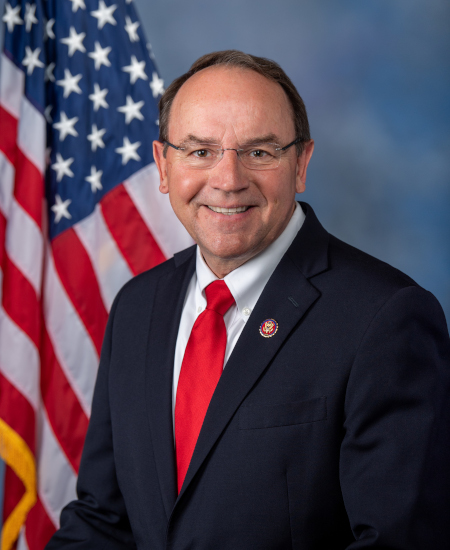
Rep. Thomas P. Tiffany
Sponsored bills
Maddy summaryHR 2113, the America Supports Taiwan Act, requires all U.S. federal agencies to replace the term "Chinese Taipei" with "Taiwan" in official communications and agency websites, effective within 14 days of enactment. This change applies broadly to all agency materials, except when explaining historical context of China's pressure on Taiwan or when coordinating with international organizations that use a different name for Taiwan. The bill aims to avoid the connotation that Taiwan is part of China, as the "Chinese Taipei" term may imply PRC sovereignty. It does not alter U.S. military or economic support for Taiwan but focuses solely on official U.S. government terminology. The legislation is driven by findings of increased Chinese military activity near Taiwan and a preference for terminology that aligns with U.S. policy supporting Taiwan's self-defense capability.
Safe Routes Act of 2025 This bill directs the Department of Transportation to waive vehicle weight limits for covered logging vehicles, thus allowing logging vehicles to travel on interstate highways in certain circumstances. The term covered logging vehicle means a vehicle that (1) is transporting raw or unfinished forest products, including logs, pulpwood, biomass, or wood chips; (2) is traveling a distance not greater than 150 air miles on interstate highways from origin to a storage or processing facility; and (3) meets state legal weight tolerances and vehicle configurations for transporting raw or unfinished forest products within the state boundaries in which the vehicle is operating.
Maddy summaryHR 2081, the Donut Dollies Congressional Gold Medal Act, authorizes a Congressional Gold Medal to honor the 627 women who served as Red Cross volunteers in the Supplemental Recreation Activities Overseas (SRAO) program during the Vietnam War. The bill directs the Treasury Secretary to design and strike the medal, which will be presented by Congress and then given to the Smithsonian Institution for display. It also allows the sale of bronze duplicates to cover costs, with proceeds going to the U.S. Mint fund. This commemorative act recognizes the volunteers' service supporting over 280,000 troops through recreation programs across Vietnam from 1965 to 1973.
Maddy summaryHR 2039, the Protecting the Right to Keep and Bear Arms Act of 2025, prevents the President and Health Secretary from using emergency declarations (under the National Emergencies Act or Public Health Service Act) to implement gun control measures. It amends disaster relief law to explicitly prohibit future rules that would ban firearm possession, sales, or accessories during emergencies. The bill directly affects federal agencies and future emergency declarations, blocking them from being used as a tool for gun regulation. It does not change existing gun laws but restricts how emergency powers can be applied to firearms policy.
Maddy summaryThe FLASH Act authorizes construction of navigable roads along federal border lands to improve U.S. Customs and Border Protection access and operational control. It requires federal agencies to develop protocols for reducing trash accumulation and environmental degradation from unauthorized border crossings, while targeting illegal cannabis cultivation sites with environmental response initiatives. The bill prohibits using federal funds to provide housing for undocumented immigrants on federal lands and establishes criminal penalties for illegal pesticide use. The legislation affects how federal land management agencies (National Park Service, Bureau of Land Management, etc.) operate along the southern border, with specific reporting requirements for environmental impacts and trash collection.
Maddy summaryHR 471, the Fix Our Forests Act, establishes a new system for identifying and managing high-risk wildfire areas called "firesheds" and creates a centralized Fireshed Center to coordinate wildfire risk management across federal agencies. The bill streamlines environmental reviews for wildfire risk reduction projects, allowing for faster implementation of hazardous fuels management activities in designated areas. It includes provisions for community wildfire risk reduction programs, water source protection, and specific initiatives for restoring white oak forests. The legislation also includes litigation reforms to expedite forest management projects and reduce delays from legal challenges. These provisions aim to reduce wildfire risk and improve forest health through more coordinated, data-driven management approaches.
Maddy summaryThis bill nullifies specific Department of Housing and Urban Development (HUD) rules and notices related to "Affirmatively Furthering Fair Housing," including the 2015 final rule, 2021 interim rule, and 2023 proposed rule, as well as a 2015 notice about housing disparity assessments. It prohibits federal funding for a geospatial database tracking racial disparities in housing access or community housing inequities. The bill requires HUD to consult with state, local, and public housing agency officials to develop recommendations for fair housing implementation, mandating consensus-based reporting and public comment periods. This directly affects local governments, state housing officials, and public housing agencies by limiting federal oversight of local zoning decisions and housing policy enforcement.
Maddy summaryHR 1792 prohibits U.S. federal funds from being provided to three United Nations agencies: the International Organization for Migration (IOM), the High Commissioner for Refugees (UNHCR), and the Relief and Works Agency for Palestine Refugees (UNRWA). The bill requires the Government Accountability Office (GAO) to conduct a study identifying all U.S. funding to these agencies from 2021-2025, including amounts and restrictions, and to assess any funds owed to the U.S. government. It also mandates an audit of the State Department’s Refugee Travel Loan Program. The GAO must submit a report to Congress within 180 days of the bill’s enactment detailing these findings. This bill directly affects federal funding mechanisms for international refugee and migration programs.
Federal Firearms Licensee Protection Act of 2025 This bill modifies criminal penalties for an offense involving the theft of a firearm from a licensed importer, manufacturer, or dealer, or from their business premises. Specifically, the bill does the following: increases from 10 to 20 years the maximum prison term, and creates a 3- or 5-year mandatory minimum prison term for an offense that occurs during the commission of a burglary or robbery. An attempt to commit an offense is subject to the same penalties as a substantive offense.