Fairness for Federal Contractors Act of 2021 This bill prohibits executive agencies from requiring contractors to receive a COVID-19 vaccination. The bill also requires the Government Accountability Office to study the degree to which Executive Order 14042 (Ensuring Adequate COVID Safety Protocols for Federal Contractors) caused disruptions to federal contracts, supply chains, and transportation systems.
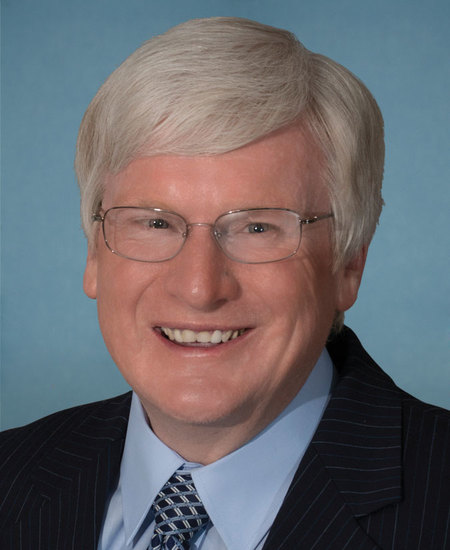
Rep. Glenn Grothman
Sponsored bills
This joint resolution nullifies a Department of Labor emergency temporary standard for preventing the transmission of COVID-19 in employment settings. Under the standard issued on November 5, 2021, employers with 100 or more employees must require their onsite employees to either be fully vaccinated against COVID-19 or undergo weekly COVID-19 testing.
This resolution recognizes the importance, effectiveness, and need for veteran-to-veteran sponsorship programs and encourages the use and practice of such programs within the federal government.
Veterans and Consumers Fair Credit Act This bill applies certain military consumer credit protections to all consumers. Specifically, the bill caps the interest rate on extensions of consumer credit at 36%.
This concurrent resolution declares that Congress should not impose any new performance fee, tax, royalty, or other charge relating to the public performance of sound recordings on a local radio station for broadcasting sound recordings over the air, or on any business for such public performance of sound recordings.
Maddy summaryHRES 386 is a symbolic resolution introduced in the U.S. House of Representatives that expresses support for recognizing "National Police Week" each year. The resolution acknowledges law enforcement officers' sacrifices, particularly during the pandemic, and encourages the public to honor their service. As a non-binding statement, this resolution does not create new law or change policy but serves as a formal expression of support for law enforcement officers across the United States.
Pell Grant Modernization Act This bill revises eligibility requirements under the Federal Pell Grant Program. Specifically, the bill reduces from 12 to 10 the total number of semesters during which a student may receive a Pell Grant. In addition, the bill increases the number of credits that a student must complete each semester in order to be considered a full-time student.
Protecting America From Spies Act This bill expands the grounds for barring aliens who have engaged in acts relating to espionage or sabotage from entering the United States. Specifically, any alien shall be inadmissible if the alien has engaged in or will engage in an act that (1) violates a U.S. law relating to espionage or sabotage; (2) would violate any U.S. law relating to espionage or sabotage if it occurred in the United States; or (3) violates any U.S. law prohibiting the export of goods, technology, or sensitive information. Currently, an alien shall be inadmissible if the alien seeks to enter the United States to engage in such an action. Furthermore, the bill expands these grounds of inadmissibility and other security-related grounds to cover the spouse or child of the barred alien if the act occurred in the last five years. The bill also modifies the authority of the Department of Justice to waive certain security-related grounds of inadmissibility for an alien applying for a nonimmigrant visa.
Uyghur Stop Oppressive Sterilizations Act or the Uyghur SOS Act This bill expands existing visa-blocking sanctions to cover certain high-ranking foreign government officials who are responsible for coercive population control policies, such as forced abortions, with a focus on those responsible for such policies against ethnic minority groups in China. Specifically, the Department of State may not issue a visa to a foreign national who is a head of state, head of government, or cabinet-level minister and responsible for establishing or enforcing such policies if the policies are (1) imposed with the intent to destroy a national, ethnic, racial, or religious group; or (2) targeting ethnic minority groups (e.g., Uyghurs, Kazakhs, or Tibetans) or individuals peacefully expressing internationally-recognized human rights in China. (Currently, these sanctions do not apply to any foreign government officials at these higher ranks.) The State Department must make a public announcement each time sanctions are imposed under this bill. The bill also requires the State Department to provide all appropriate assistance to women who belong to an ethnic minority group in China and who have experienced sexual violence, torture, or coercive population control policies.

Ending Sanctuary Cities Act of 2021 This bill makes state or local governments that violate immigration laws ineligible for federal financial assistance. A governmental entity shall be ineligible if it(1) violates federal law by prohibiting its officials from communicating with the Department of Homeland Security (DHS) about the immigration status of any individual, (2) restricts compliance with DHS detainer requests, or (3) has any laws or policies that violate immigration laws. (A DHS detainer request is an order or request to a state or local government to temporarily hold or transport an alien for transfer into federal custody or notify DHS before releasing an alien from custody.) A government or law enforcement officer that complies with a DHS detainer request shall be acting under the color of federal authority, for the purposes of liability or immunity in a lawsuit filed by the detained individual. The bill makes it unlawful for a state or local government to discharge or discriminate against one of its law enforcement officers for complying with a DHS detainer request.