

Maddy summaryHR 976, the TCJA Permanency Act, makes permanent many tax provisions from the 2017 Tax Cuts and Jobs Act (TCJA) that were scheduled to expire after 2025. The bill affects individual taxpayers by keeping lower tax rates, higher standard deductions, increased child tax credits, and other key changes permanently. Key provisions include permanent modifications to income tax brackets, repeal of personal exemptions, limits on state and local tax deductions, and increased estate and gift tax exemptions. These changes would prevent the tax code from reverting to pre-TCJA rates and rules for millions of taxpayers.
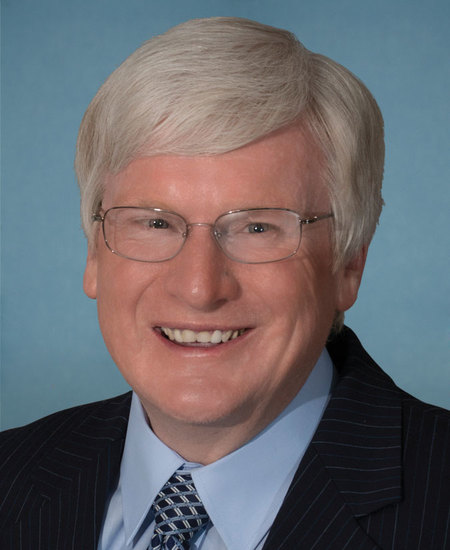
Rep. Glenn Grothman
Sponsored bills
Maddy summaryHR 800, the "DO NOT Call Act of 2023," amends the Telephone Consumer Protection Act of 1991 to increase penalties for intentional telemarketing violations. It adds criminal penalties of up to one year in prison or fines for willfully and knowingly making unwanted calls, with harsher penalties (up to three years) for severe offenses like sending over 100,000 calls in 24 hours, causing $5,000+ in damages, or committing calls to further a felony. The bill also raises civil penalties for providing false caller identification information from $10,000 to $20,000 per violation. This directly affects telemarketers, debt collectors, and businesses making unsolicited calls, increasing legal consequences for repeated or large-scale violations.
Maddy summaryHR 621, the PART Act, requires catalytic converters on vehicles to be stamped with a visible vehicle identification number (VIN) using special high-visibility paint to deter theft. It creates a federal grant program to help auto dealers, repair shops, and law enforcement implement this stamping at no cost to vehicle owners. The bill also mandates that sellers of catalytic converters retain buyer identification and vehicle details for two years, and adds new federal criminal penalties for stealing or trafficking in catalytic converters.
This resolution recognizes that current retirees and those nearing retirement expect certain Social Security commitments to be made. It further expresses the policy of the House of Representatives to exclude cuts to Social Security from debt ceiling negotiations.
Maddy summaryHR 936, the Tanning Tax Repeal Act of 2023, repeals a 10% federal excise tax on indoor tanning services that was originally enacted under the Affordable Care Act. This bill directly affects tanning salons and businesses providing indoor tanning services by eliminating their obligation to pay this tax on customer services. The repeal applies to services performed after the bill's enactment date, removing the tax provision from the Internal Revenue Code. The bill does not create new requirements or alter other tax policies, solely removing this specific tax.
Maddy summaryHR 887, the Securing Our Students Act, allows public and private schools to use unused funds from the American Rescue Plan Act (ARP) for specific school safety improvements. Public schools (via state subgrants) and private schools (via governors) can amend their applications to include safety measures like bulletproof windows, metal detectors, security personnel, and crisis communication systems. Schools must submit evidence-based plans detailing how these measures address safety needs and include professional development requirements. States and governors must report the percentage of ARP funds used for these safety purposes, ensuring transparency in how the funds are applied.
Maddy summaryHR 935, the Safety and Opportunity for Girls Act of 2023, amends Title IX of the Education Amendments of 1972 to define "sex" as determined by reproductive biology and genetics at birth, and clarifies that "sex-segregated" means limited to or separated by that sex. The bill explicitly prohibits the Secretary of Education from requiring schools to eliminate sex-segregated bathrooms, locker rooms, or athletic/academic programs as a condition for receiving federal funding under Title IX. It directly affects educational institutions receiving federal funds by preventing federal enforcement actions that might compel them to abandon existing sex-segregated facilities or programs. The bill focuses on altering the legal interpretation of Title IX regarding sex-based accommodations, not creating new programs or services.
Maddy summaryHR 914, the Simplifying Grants Act of 2023, requires federal agencies to simplify grant application processes for small local governments (defined as those in areas with fewer than 50,000 people, per Census standards). Within 180 days of enactment, agencies must review and simplify complex grant requirements for existing programs and ensure new programs are designed with simplicity from the start. Agencies must also publish public checklists for each grant step and report annually to Congress on implementation progress, including how much technical assistance was provided and how many grants were awarded to small communities versus larger ones. This bill directly affects counties, towns, and other small local governments that receive federal grants but face bureaucratic hurdles.
Maddy summaryHRES 110 is a non-binding resolution supporting the designation of "Career and Technical Education (CTE) Month" to recognize CTE's role in preparing students for high-demand careers. It encourages educators, school counselors, and parents to promote CTE as a respected pathway for students seeking credentials in fields like healthcare, technology, and skilled trades. The resolution highlights CTE's benefits, including reducing high school dropout rates and aligning education with workforce needs, without creating new funding or policy changes. It directly affects schools, educators, and students by affirming CTE's value in workforce development.
Protecting Individual Sovereignty Through Our Laws Act or the PISTOL Act This bill modifies the definition of rifle for purposes of the National Firearms Act to exclude from such definition a pistol equipped with a rear brace or rear attachment designed to assist the shooter in controlling the pistol. The bill also directs the Department of Justice to amend applicable regulations governing pistols to provide that the presence or absence of rear mounted braces or attachments that can assist a user in controlling the pistol shall not cause a firearm to be considered a pistol.