

Maddy summaryHJRES 165 is a congressional resolution seeking to block a Department of Education rule issued in April 2024 that updated protections against sex discrimination in schools receiving federal funding. The resolution aims to disapprove this specific rule (published as 89 Fed. Reg. 33474), which would have required schools to address sex-based discrimination in educational programs. If passed, the rule would no longer be in effect, meaning schools would not need to comply with its requirements. This resolution directly affects all schools and educational programs receiving federal financial assistance, as it targets the implementation of the new nondiscrimination standard.
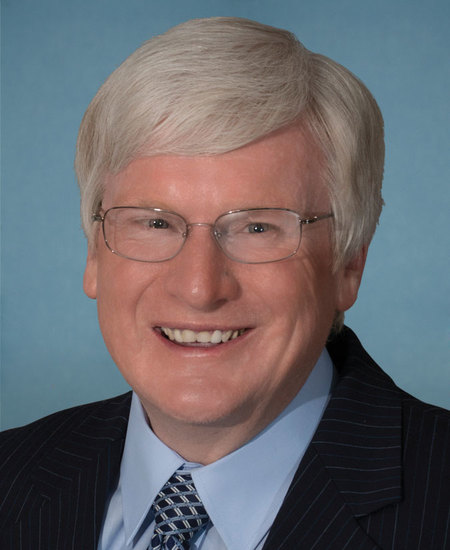
Rep. Glenn Grothman
Sponsored bills
Maddy summaryHR 9111 redesignates Apostle Islands National Lakeshore as "Apostle Islands National Park and Preserve," creating two distinct areas: Apostle Islands National Park (where hunting and trapping are prohibited) and Sand Island National Preserve (which maintains existing hunting and fishing rules from the previous lakeshore designation). The bill updates all federal references to the area to reflect the new name, clarifies that the Ashland Harbor Breakwater Light is not included in park boundaries, and requires the National Park Service to add interpretive features about regional history at visitor centers. It does not create new regulations but formalizes the existing administrative structure under the National Park System. The change affects park management, visitors' activities, and federal documents referencing the area.
Maddy summaryHJRES 164 is a congressional resolution seeking to block a rule issued by the Department of Commerce regarding firearms license requirements. It directly targets the rule published in the Federal Register (89 Fed. Reg. 34680), which would have revised licensing procedures for firearms dealers. If passed, the resolution would prevent this rule from taking effect by invoking the congressional disapproval process under federal law. The bill does not create new regulations but aims to halt an existing rule affecting gun license applicants and dealers.
Universal Savings Account Act of 2024 This bill creates a new tax-exempt savings account to be known as a Universal Savings Account (USA). The bill allows eligible taxpayers to open an account and contribute up to $10,000 (adjusted for inflation) to an account each year. Contributions must be in cash and the allowable amount of contributions is subject to a phaseout based upon the taxpayer's modified adjusted gross income. Distributions from a USA are excludible from gross income, for income tax purposes, and may be transferred to a taxpayer's spouse or child upon the death of the taxpayer.
Maddy summaryHJRES 182 is a joint resolution that disapproves a rule issued by the Department of Health and Human Services (HHS) regarding placement requirements for LGBTQI+ children in foster care. The rule, published in the Federal Register on April 30, 2024, would have set specific standards for how foster care agencies must place these children. If enacted, this resolution would make the HHS rule unenforceable, blocking its implementation nationwide. The bill directly targets the HHS rule, preventing it from affecting foster care systems and related policies.
Maddy summaryThis bill amends the Federal Employees' Compensation Act to include physician assistants and nurse practitioners as eligible providers for injured federal workers. It defines "other eligible provider" as a nurse practitioner or physician assistant within their state-authorized scope of practice. The law updates key sections to replace "physician" with "physician or other eligible provider" for treatment, certification, and claim processes. The Secretary must finalize implementing regulations within six months of enactment.
Maddy summaryHJRES 170 is a resolution seeking congressional disapproval of a federal rule that would have required new housing projects financed by the Department of Housing and Urban Development (HUD) or the Department of Agriculture (USDA) to meet specific energy efficiency standards. The rule, published in April 2024, aimed to set these standards for new construction in federally subsidized housing. If passed, this resolution would block the rule under the Congressional Review Act, making it legally void. It directly affects developers and builders of HUD- and USDA-financed housing by removing the requirement to comply with these energy standards.
Maddy summaryHRES 1325 is a non-binding resolution supporting the designation of June 2024 as "National Men's Health Month" to raise awareness about health disparities affecting men. It does not create new laws or programs but requests the President issue a proclamation urging public observance through events and activities focused on men's health. The resolution highlights that men face higher risks for conditions like heart disease, cancer, and suicide compared to women, and emphasizes the importance of early detection through screenings and preventive care. This symbolic measure aims to encourage men to engage in health checkups and education, without altering existing policies or funding.
Maddy summaryThis bill rescinds unspent funds from specific federal programs. It targets leftover money from pandemic relief (like the CARES Act and American Rescue Plan) and certain infrastructure initiatives (including education stabilization funds and transportation programs like the Congestion Mitigation Program). The rescission is limited to amounts already allocated for Israel, Ukraine, and Indo-Pacific security supplements under recent appropriations. Unspent funds must be returned to the Treasury, with no new spending created.
Maddy summaryThis bill amends the Northern Border Security Review Act to establish a new annual deadline for threat analysis (September 2, 2025, and each year after) and requires the Department of Homeland Security to update its northern border strategy within 90 days of each analysis. It mandates that the Secretary provide a classified briefing to congressional committees within 30 days of each threat analysis and develop performance measures for U.S. Customs and Border Protection's Air and Marine Operations to secure the northern border in air and maritime areas within six months of enactment. The bill directly affects the Department of Homeland Security and congressional committees by imposing specific reporting deadlines and review requirements. These changes focus on improving the frequency and structure of security assessments without altering existing border security operations.