

Maddy summaryThis bill (HR 3820) renames the women's health clinic at Milwaukee's Clement J. Zablocki VA Medical Center as the "Anna Mae Robertson VA Well Woman Clinic." It directly affects the clinic's official designation and all future references to it in U.S. government documents, maps, and records. The key provision is a simple name change requiring all federal materials to update the clinic's name to honor Anna Mae Robertson, with no policy or service changes to the clinic itself.
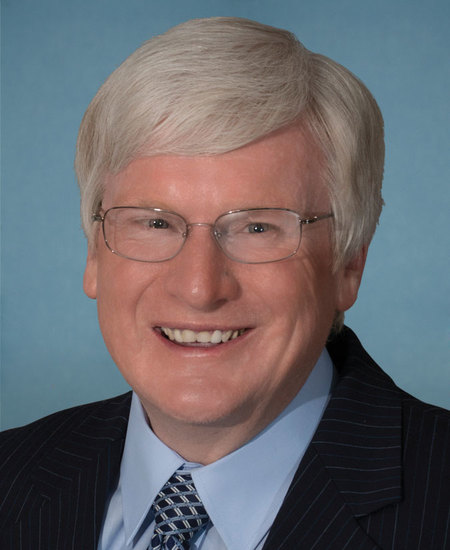
Rep. Glenn Grothman
Sponsored bills
Maddy summaryThe FIRM Act (HR 2702) prohibits federal banking agencies from considering "reputational risk" in supervising banks and credit unions. It requires agencies to remove all references to reputational risk - defined as concerns about negative publicity affecting an institution's reputation - from regulations, examinations, and enforcement actions. The bill directly affects depository institutions (banks and credit unions) and federal regulators like the FDIC and CFPB, banning them from using reputational risk as a basis for supervision or enforcement. This policy change aims to limit regulatory actions based on subjective public opinion rather than financial safety and soundness.
Maddy summaryHR 4021, the Patriotism Not Pride Act, prohibits federal agencies from using government funds to promote or recognize Lesbian, Gay, Bisexual, Transgender, Queer, and Intersex Pride Month through events, communications, or educational programs. It also bans the display of flags representing sexual orientation or gender identity on all federal property and grounds. The bill directly affects all federal agencies, requiring them to cease any activities related to Pride Month recognition or the display of such flags. This legislation enacts concrete policy changes by restricting federal funding and property use for specific LGBTQ+ observances.
Maddy summaryThis bill requires major internet companies (including social media, streaming services, and app stores) and broadband providers to contribute to the Universal Service Fund, which subsidizes affordable broadband in rural and high-cost areas. It exempts smaller companies that transmit less than 3% of U.S. broadband data or earn under $5 billion annually. The Federal Communications Commission must create a new support mechanism to help rural broadband providers cover costs, while ensuring contributions remain fair and predictable. The bill explicitly states it does not grant the FCC new authority over these companies.
Maddy summaryH.J.Res. 88 disapproves an Environmental Protection Agency (EPA) rule that would have allowed California to enforce its "Advanced Clean Cars II" vehicle emission standards. This rule, submitted by the EPA on January 6, 2025, sought to grant California a waiver to override federal preemption for its stricter vehicle pollution controls. The resolution, passed by Congress and signed into law on June 12, 2025, formally nullifies the EPA rule, preventing California from implementing its Advanced Clean Cars II program under this specific waiver. The bill directly affects California's ability to set its own vehicle emission standards for passenger cars and light trucks.
Maddy summaryHJRES 89 is a congressional disapproval resolution that blocks an Environmental Protection Agency (EPA) rule concerning California's vehicle and engine pollution standards. The resolution specifically targets the EPA's "Omnibus Low NOX Regulation" and waiver of preemption, which would have allowed California to enforce stricter emissions rules. By disapproving this rule under Chapter 8 of Title 5 U.S. Code, Congress has nullified the EPA's action, meaning the regulation will have no legal effect. This directly affects the EPA's authority to approve California's state-level pollution control standards for motor vehicles.
Maddy summaryHR 3946, the FIGHT Act of 2025, amends the Animal Welfare Act to specifically prohibit gambling on animal fighting events and restrict the interstate transport of roosters used in such ventures. It defines "rooster" as male chickens over six months old and makes it unlawful to sponsor, exhibit, attend (for those under 16), or gamble on animal fighting events - whether in-person or broadcast. The bill creates a civil enforcement mechanism allowing any person to file a lawsuit to stop violations after providing 60 days' notice to authorities, with potential fines up to $5,000 per violation. It also establishes seizure of property used to facilitate violations and clarifies that state laws on animal fighting remain in effect unless directly conflicting with federal provisions.
Maddy summaryThe CREATE JOBS Act changes business tax rules to provide more immediate deductions. It allows businesses to immediately deduct 100% of the cost for qualifying equipment and machinery (instead of depreciating over time), eliminates the 60-month amortization requirement for research costs (allowing immediate deduction), and creates a new real estate depreciation system that adjusts deductions based on inflation with a minimum annual 3% increase. These changes primarily affect businesses that purchase equipment, conduct research, or own rental properties. The bill's provisions apply to property placed in service before, on, or after enactment, with research-related changes applying to taxable years beginning after December 31, 2021.
Maddy summaryHR 3999, the American Flags to Honor Our Veterans Act of 2025, amends federal law to allow permanent, upright American flags to be displayed adjacent to the graves of deceased veterans. It directly affects families of veterans and cemetery operators by permitting this flag placement at burial sites. The key provision modifies Title 4, U.S. Code, to specifically authorize secured flag displays next to graves of veterans (as defined in Title 38) or Armed Forces members (as defined in Title 10), replacing temporary flag displays with a permanent, standardized practice.
Maddy summaryHR 3787, the Emergency Spending Accountability Act, requires the Office of Management and Budget to implement mandatory spending cuts equal to 20% of all emergency spending approved in a fiscal year. These cuts would occur over five years (starting October 1 of the next fiscal year) and apply to most federal programs, though they exempt Social Security benefits, national defense (budget function 050), Department of Veterans Affairs programs, and Medicare. The bill also mandates that any congressional measure containing emergency spending must include a detailed justification explaining why the spending qualifies as "emergency" under existing budget laws. This aims to create accountability for spending that bypasses standard budget limits.