

Maddy summaryThe REPAIR Act requires motor vehicle manufacturers to provide car owners and independent repair shops with full access to vehicle data and repair information, prohibiting technological or legal barriers that restrict this access. It mandates that manufacturers share vehicle-generated data, critical repair information, and tools on equal terms with dealers and authorized service providers, without requiring consumers to use specific brands of parts or tools. The law establishes an advisory committee to monitor implementation and ensure fair competition in vehicle repair, while giving the Federal Trade Commission authority to enforce these requirements as unfair or deceptive practices. This legislation directly affects car owners, independent repair facilities, aftermarket parts manufacturers, and motor vehicle manufacturers by shifting control of repair information and data from manufacturers to consumers.
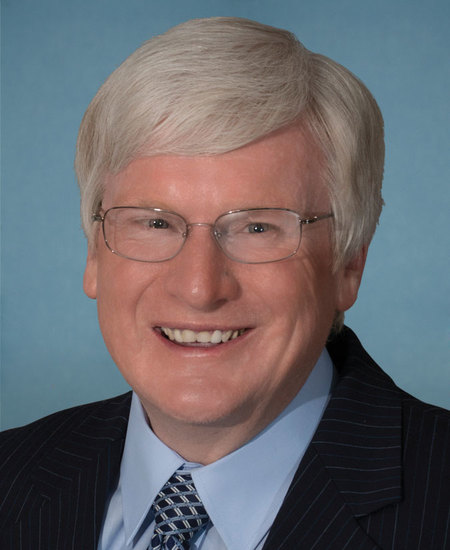
Rep. Glenn Grothman
Sponsored bills
Maddy summaryThis bill modifies federal budget rules for unspent agency funds. It requires federal agencies to allocate 49% of unused funds to the next fiscal year, 49% toward paying the national debt, and 2% for retention bonuses (capped at 10% of an employee's base pay). Agencies must also limit future budget requests to the previous year's amount adjusted for inflation. The bill directly affects all executive branch agencies (excluding the Red Cross), altering how they manage leftover budget authority. It does not create new savings programs for individuals but changes government fiscal management procedures.
Maddy summaryThis bill prevents state or local governments from banning or restricting energy connections (like installation, modification, or access) based on the type or source of energy, such as electricity, natural gas, or renewable fuels. It directly affects consumers choosing energy providers and energy companies seeking to offer services. The key provision prohibits local laws, regulations, or policies that limit energy services sold in interstate commerce, covering all energy types listed in the bill’s definitions. It does not create new programs but limits regulatory authority at the state or local level. The law aims to ensure open access to diverse energy sources without source-based restrictions.
Maddy summaryThe Make Elections Great Again Act (HR 7300) would require voters to present photo identification to cast ballots in person or by mail for federal elections, with limited exceptions for religious objections or military voters. It would establish new requirements for proving U.S. citizenship during voter registration, including documentary proof of citizenship and proof of state residency. The bill would change mail-in ballot procedures by requiring voters to request mail-in ballots (rather than universal mail-in voting), implementing barcode tracking for mail-in ballots, and setting strict deadlines for ballot receipt. These provisions would apply to all states for federal elections held in 2027 or later, affecting how voters register, vote in person, and submit mail-in ballots for federal office elections.
Maddy summaryThis bill would revoke the tax-exempt status of nonprofit organizations (like charities or health groups) that provide or fund abortions, except in specific cases. It directly affects organizations currently classified under Section 501(c)(3) of the tax code, such as some healthcare providers or advocacy groups. Key provisions define "abortion" as intentionally terminating a pregnancy (excluding cases where the mother’s life is at risk, or the pregnancy resulted from rape or incest), and deny tax exemption to groups meeting this definition. The change would take effect for tax years starting after the bill’s enactment date.
Maddy summaryHR 1295, the Reorganizing Government Act of 2025, amends federal law to streamline executive branch operations. It requires all executive departments (like the Departments of Defense or Education) to eliminate unnecessary programs, reduce federal employee numbers, and cut burdensome regulations that increase compliance costs. The bill updates deadlines for reorganization plans from 1984 to 2026 and explicitly mandates that all government operations must serve the public interest. These changes apply broadly across the federal government, focusing on efficiency and cost reduction.
Maddy summaryHR 7213, the *Safeguarding Benefits for Americans Act of 2026*, requires U.S. citizenship or nationality for eligibility for most federal assistance programs (like SNAP, housing aid, or Medicaid). It mandates applicants to submit a written declaration under penalty of perjury and provide documentary proof (e.g., birth certificate, SSN) verified through Social Security Administration and DHS databases. The bill affects individuals applying for or receiving federal benefits, with exceptions for children in households where at least one member meets the requirement (e.g., children in SNAP or elderly housing programs). It takes effect 1 year after enactment, requiring all current recipients to meet the new rules within 2 years.
Maddy summaryHR 7156, the SCAM Act, would expand grounds for revoking U.S. citizenship (denaturalization) for naturalized citizens who commit specific offenses within 10 years of becoming citizens. It targets individuals convicted of defrauding federal, state, or local governments (e.g., $10,000+ in public benefit fraud), affiliating with foreign terrorist organizations, or committing aggravated felonies or espionage. If convicted in these categories, the government could automatically revoke citizenship retroactively (as if it never existed) based on evidence that the person lacked good moral character or loyalty to the U.S. at the time of naturalization. This bill directly affects naturalized citizens who commit these offenses within a decade of gaining citizenship, with revocation triggering immediate deportability.
Maddy summaryHR 7137, the Shutdown Fairness Act, requires federal agencies to pay covered employees (including most federal workers and military personnel) and covered contractors their regular pay during government shutdowns. It appropriates funds from the Treasury to cover standard employee compensation and contractor payments for work performed during a lapse in regular appropriations, ensuring pay continues without delay (within 7 days if a shutdown is ongoing at enactment) and aligns with regular pay schedules. The bill applies only to individuals employed or with accepted offers before the shutdown began and mandates that these payments be charged to future appropriations. It does not change agency obligations under existing contracts or authorize new spending beyond the specified shutdown period.
Maddy summaryThis bill creates new federal criminal penalties for intentionally coercing minors (under 18) through interstate means (like mail or online platforms) to engage in harmful acts. It specifically prohibits forcing minors to commit self-harm (including suicide attempts), animal cruelty, abusive nonsexual conduct, sexually explicit acts, or obscene speech. Violations carry fines and prison terms of up to 10 years, with harsher penalties (up to 20 years or life) if serious injury or death results. The law directly protects minors from coercion by perpetrators using interstate communication or commerce, with enforcement under existing federal criminal code.