

Protect Equality And Civics Education (PEACE) Act This bill prohibits the use of FY2021 federal education funding for the priorities noticed in the Department of Education's proposed rule titled Proposed Priorities-American History and Civics Education , published on April 19, 2021, or for a priority or requirement related to the teaching of critical race theory under a grant, contract, or cooperative agreement.
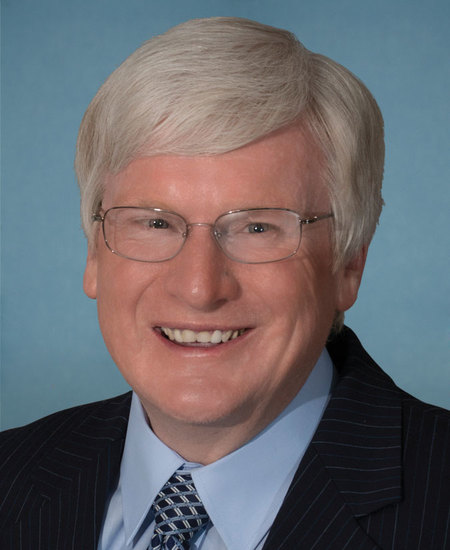
Rep. Glenn Grothman
Sponsored bills
Help Wanted Act This bill eliminates certain work search exceptions and flexibilities in the Pandemic Unemployment Assistance (PUA) program. Specifically, the bill prohibits states participating in PUA from modifying unemployment work search requirements on an emergency basis to respond to COVID-19. The bill also eliminates a requirement that states be flexible regarding work search requirements for individuals who are unable to search for work because of COVID-19. Similarly, the bill makes individuals who decline to work on the basis of safety concerns related to COVID-19 and claimants who quit working as a direct result of COVID-19 ineligible for PUA.
Combatting Racist Training in the Military Act of 2021 This bill prohibits the Armed Forces and academic institutions of the Department of Defense from promoting specified anti-American and racist theories (e.g., that any race is inherently superior or inferior to any other race). Specifically, the bill prohibits including anti-American and racist theories or materials in curricula, reading lists, seminars, workshops, trainings, or other educational or professional settings in a manner that could appear as sponsorship, approval, or endorsement; contracting with, hiring, or otherwise engaging speakers, consultants, diversity trainers, and other persons for the purpose of advocating anti-American and racist theories; compelling members of the Armed Forces to affirm or profess belief in anti-American and racist theories; and segregating members of the Armed Forces by race in any setting, including educational and training sessions.
Get Americans Back To Work Act This bill makes an individual ineligible for federal pandemic unemployment compensation (FPUC) after June 30, 2021. It also reduces the amount of FPUC to $150.00 for weeks of unemployment ending after May 31, 2021, and ending on or before June 30, 2021. Under current law, an individual is eligible for FPUC for weeks of employment ending on or before September 6, 2021 in the amount of $300.
Repealing Illegal Freedom and Liberty Excises Act or the RIFLE Act This bill repeals the excise tax on the transfer of firearms. The bill shall not be construed as placing any regulated firearms under the jurisdiction of the U.S. Consumer Product Safety Commission.
This resolution (1) expresses support for the designation of Motorcycle Safety Awareness Month; (2) recognizes the contribution of motorcycles to the transportation mix; (3) encourages motorcycle awareness by all road users; (4) recognizes that motorcyclists have a right to the road and that all motorists should safely share the roadways; (5) encourages rider safety education, training, and proper gear for safe motorcycle operation; and (6) supports the goals of Motorcycle Safety Awareness Month.
Taiwan International Solidarity Act This bill requires the Department of State to annually report to Congress on efforts by China to undermine Taiwan's participation in international organizations or Taiwan's relationships with other countries.
No Taxpayer Funding for the U.N. Population Fund This bill prohibits the use of funds to provide contributions directly or indirectly to the United Nations Population Fund (UNFPA). The UNFPA is a United Nations agency that supports access to sexual and reproductive health services, including voluntary family planning, maternal health care, and sexuality education.
Creating Opportunities Now for Necessary and Effective Care Technologies (CONNECT) for Health Act of 2021 or the CONNECT for Health Act of 2021 This bill expands coverage of telehealth services under Medicare. Among other provisions, the bill allows the Centers for Medicare & Medicaid Services (CMS) to waive certain restrictions, such as restrictions on the types of technology that may be used; permanently removes geographic restrictions on originating sites (i.e., the location of the beneficiary) and allows the home of the beneficiary to serve as the originating site for all services; permanently allows federally qualified health centers and rural health clinics to serve as the distant site (i.e., the location of the health care practitioner); and allows the CMS to generally waive coverage restrictions during any public health emergency. Additionally, the CMS must report on the effects of expanded telehealth services during the COVID-19 public health emergency, including with respect to the utilization, quality, and outcomes of services. The Center for Medicare and Medicaid Innovation may also test alternative payment models relating to expanded telehealth services.
Homecare for Seniors Act This bill allows tax-exempt distributions from health savings accounts (HSAs) to be used for qualified home care. Qualified home care means a contract to provide three or more of the following services in the residence of the service recipient assistance with eating, assistance with toileting, assistance with transferring, assistance with bathing, assistance with dressing, assistance with continence, and medication adherence. The Department of Health and Human Services must carry out a campaign to increase public awareness of the in-home service expenses that are eligible for tax-free distribution from HSAs.