

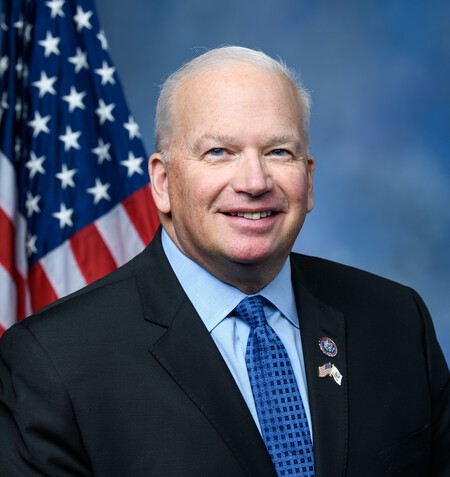
Photo of Scott Fitzgerald
R United States House · District 5 · Wisconsin On the 2026 ballot

Rep. Scott Fitzgerald

Compare
Total votes
2,837
all sessions
Attendance
99%
29 missed
Near the chamber average
With party
95%
of cast votes
Near the chamber average
Bipartisan score
3%
crosses aisle rarely
Near the chamber average
Sponsored
624
bills & resolutions
Near the chamber average
Committees
6
assignments
624 bills and resolutions

Sponsored bills

Total
624
Primary
74
Co-sponsor
550
This page
624
matching current filters
Primary HR 7131
In committee · Indiana House · Lead sponsor
Middle Class Home Tax Elimination Act

Maddy summaryThis bill removes the current $250,000 (single filers) and $500,000 (married couples) limit on tax-free profit when selling a primary residence. It directly affects homeowners who sell their homes by eliminating these dollar caps under Internal Revenue Code Section 121. The key provision amends the tax code to allow full exclusion of capital gains from principal residence sales without the previous monetary limits. The change would apply to home sales occurring after the bill's enactment date.

In committee Jan 16, 2026 0 co-sponsors
Co-sponsor HR 7130
In committee · Indiana House · Co-sponsor
McCarran-Ferguson Restoration Act

Maddy summaryThe McCarran-Ferguson Restoration Act eliminates the Federal Insurance Office and creates a "United States Insurance Representative" within the Treasury Department to coordinate federal insurance policy and represent the U.S. internationally. This position would determine when state insurance regulations might be preempted by international agreements, while maintaining state authority over most insurance matters including health, long-term care, and crop insurance. The bill requires the Representative to consult with states, publish notices, and allow a 30-day period before any preemption takes effect. This legislation aims to streamline international insurance regulatory coordination while preserving state-level oversight of insurance regulation.

In committee Jan 16, 2026 1 co-sponsor
Co-sponsor HR 7015
In committee · Indiana House · Co-sponsor
Protecting TPLF From Abuse Act

Maddy summaryHR 7015, the "Protecting TPLF From Abuse Act," requires transparency in civil lawsuits involving third-party litigation funders (TPLFs). It mandates that parties disclose to the court and other parties the identity of any third party funding a case (e.g., investors who fund lawsuits in exchange for a share of winnings), along with their funding agreements, within 10 days of signing the agreement or by the deadline for standard case disclosures. Exceptions apply to simple loans, reasonable interest rates, attorney fee reimbursements, or grants. The bill aims to prevent hidden financial interests from influencing litigation by ensuring courts and opposing parties can review funding arrangements, while protecting certain sensitive information like donor lists unless directly tied to the funding agreement. It applies to all civil cases filed or pending after enactment.

In committee Jan 12, 2026 1 co-sponsor
Co-sponsor HR 4837
In committee · Indiana House · Co-sponsor
Written Informed Consent Act

Maddy summaryHR 4837, the Written Informed Consent Act, requires the Veterans Health Administration (VHA) to update its existing directive on informed consent to include additional medication classes. Specifically, it mandates that written informed consent must be obtained before prescribing antipsychotics, stimulants, antidepressants, anti-anxiety medications (anxiolytics), and narcotics (opioids) to veterans. This expansion directly affects veterans receiving these medications through the VA system, ensuring they are informed about specific treatment risks and alternatives. The key mechanism is amending VHA Directive 1005 to broaden its application beyond long-term opioid therapy to cover the newly listed medication types.

In committee Dec 19, 2025 1 co-sponsor
Co-sponsor HR 1230
In committee · Indiana House · Co-sponsor
AG VETS Act

Maddy summaryThe AG VETS Act (HR 1230) creates a new federal grant program to help military veterans enter or expand farming and ranching careers. It authorizes $5 million annually (2026-2030) for competitive grants to eligible entities like land-grant colleges, cooperative extensions, nonprofits, and state agriculture departments. These grants must be matched with non-Federal funds and will fund training, curriculum development, workshops, and field experiences focused on farm business management. The program directly affects veterans seeking agricultural careers by providing structured education and support through partner organizations.

In committee Dec 19, 2025 1 co-sponsor
Co-sponsor HRES 967
In committee · Indiana House · Co-sponsor
Expressing the sense of the House of Representatives that European laws and regulations unfairly and unreasonably burden American speech and innovation.

Maddy summaryHRES 967 is a non-binding resolution expressing the House's disapproval of European digital regulations like the EU's Digital Services Act and Digital Markets Act. It claims these laws unfairly burden American speech, innovation, and tech companies (citing examples like Meta and Alphabet), while harming U.S. workers and consumers. The resolution calls on the Trump administration to use diplomatic and economic tools to protect U.S. free speech rights and prevent foreign laws from undermining First Amendment principles. It also urges the Department of Justice and FTC to reject European antitrust principles and avoid cooperating with foreign enforcement of such regulations. This resolution directly affects American tech companies and free expression interests by framing European policies as a threat to U.S. digital freedoms.

In committee Dec 18, 2025 1 co-sponsor
Co-sponsor HR 6086
In committee · Indiana House · Co-sponsor
Aviation Funding Solvency Act

Aviation Funding Solvency Act This bill provides continuing appropriations to the Federal Aviation Administration (FAA) if (1) an appropriations bill for the FAA has not been enacted before a fiscal year begins, or (2) a law making continuing appropriations for the FAA is not in effect. Specifically, the bill provides appropriations from the Aviation Insurance Revolving Fund at the rate of operations that was provided for the prior fiscal year to continue programs, projects, and activities that were funded in the preceding fiscal year. The FAA may use the balance of the fund, minus $1 billion. If the FAA determines that the amounts from the fund are insufficient to continue all programs, projects, or activities, then the FAA must prioritize compensation payments for employees of the Air Traffic Organization (e.g., air traffic controllers). The bill provides the appropriations until the date on which either (1) specified appropriations legislation for the fiscal year becomes law, or (2) a bill making continuing appropriations becomes law. Finally, the bill permanently extends the FAA Non-premium War Risk Insurance Program. This program provides aviation insurance without a premium to eligible air carriers at the request of the Department of Defense or another federal agency, provided that the agency agrees to indemnify the FAA from all losses covered under the insurance. Eligible air carriers include those whose operations are under a federal contract and are necessary for national security or to carry out U.S. foreign policy.

In committee Dec 18, 2025 1 co-sponsor
Co-sponsor HR 845
Passed · Indiana House · Co-sponsor
Pet and Livestock Protection Act

Maddy summaryThis bill, titled "Pet and Livestock Protection Act," is misleading; it actually focuses on gray wolf management. It requires the Secretary of the Interior to reissue a 2020 rule removing gray wolves from the endangered species list within 60 days of enactment. The bill also prohibits courts from reviewing this reissuance. This directly affects gray wolf populations and management policies in states where wolves are present, shifting regulatory control away from federal endangered species protections.

Passed Dec 18, 2025 1 co-sponsor
Co-sponsor HR 6766
In committee · Indiana House · Co-sponsor
Essential Caregivers Act of 2025

Essential Caregivers Act of 2025   This bill prohibits certain health care facilities from limiting the access of essential caregivers to residents of those facilities, including during designated emergency periods.   Specifically, the bill generally prohibits Medicare skilled nursing facilities, Medicaid nursing facilities, Medicaid intermediate care facilities, and associated inpatient rehabilitation facilities from restricting the access of essential caregivers to residents of the facilities, including during emergency periods in which visitation rights are otherwise restricted. During emergency periods, facilities may restrict access for an initial period of up to seven days and for one additional maximum seven-day period (if the additional period is approved by the state health department). Facilities may restrict access for a total of 7 days (or 14 days with the approval of the state health department) during an emergency period. Essential caregivers must agree to comply with any safety protocols set by the facility, which may be no more stringent for caregivers compared to those for staff. Caregivers who fail to comply with these requirements may be denied access, subject to an appeals process.

In committee Dec 16, 2025 1 co-sponsor
Co-sponsor HR 2528
In committee · Indiana House · Co-sponsor
Association Health Plans Act

Maddy summaryThis bill allows groups of small businesses or self-employed individuals to form a single health plan that treats all members as one employer for coverage purposes. It directly affects small business associations and self-employed people who can join such groups to access pooled health coverage, provided they meet specific requirements (e.g., 51+ total employees, 2+ years in existence, no health-based discrimination). Key mechanisms include permitting modified community rating for premiums (based on pooled claims) while prohibiting health status-related discrimination in enrollment, premiums, or pre-existing condition coverage. The plan remains subject to federal ERISA rules, and self-employed members must meet defined criteria to participate as both employers and employees.

In committee Dec 15, 2025 1 co-sponsor
Showing 71 to 80 of 624 bills
Previous 1 … 7 8 9 … 63 Next