

This resolution modifies requirements for written statements required of nongovernmental witnesses who appear before standing committees of the House of Representatives. Specifically, the resolution eliminates a requirement that a witness disclose whether they are a fiduciary of an organization or entity that has an interest in the subject matter of the hearing, in favor of a requirement that they disclose whether they are a fiduciary of an entity that has received payments from a specified foreign entity. The resolution also requires nongovernmental witnesses to disclose in their written statement certain contracts with specified foreign persons or entities. If the committee determines that a witness knowingly and willfully failed to truthfully comply with such disclosure requirements, the witness is prohibited from testifying before the committee for three years.
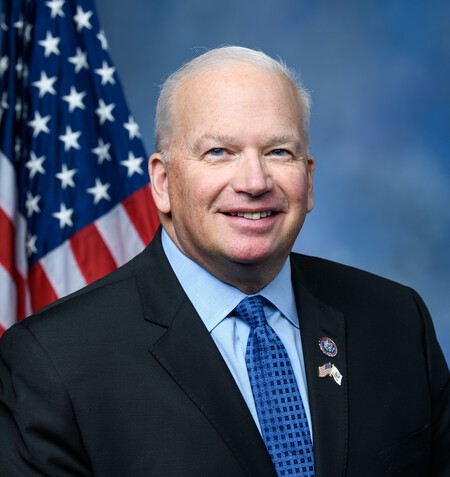
Rep. Scott Fitzgerald
Sponsored bills
This bill prohibits the Small Business Administration from directly making a loan under the 7(a) Program, which authorizes loans and loan guaranties to small businesses that meet certain requirements.
This joint resolution nullifies a Department of Labor emergency temporary standard for preventing the transmission of COVID-19 in employment settings. Under the standard issued on November 5, 2021, employers with 100 or more employees must require their onsite employees to either be fully vaccinated against COVID-19 or undergo weekly COVID-19 testing.
This resolution recognizes the importance, effectiveness, and need for veteran-to-veteran sponsorship programs and encourages the use and practice of such programs within the federal government.
Creating Hope and Opportunity for Individuals and Communities through Education Act or the CHOICE Act This bill expands school choice programs for elementary and secondary school students. Specifically, the bill authorizes the Department of Education (ED) to award grants to support the design and implementation of state programs that allow the parent of a child with a disability to choose the appropriate public or private school for their child. It also outlines the requirements for program eligibility. Further, if the state has established a program that allows parents to use public or private funds to assist with the cost of their child attending a private school, then the state may supplement those funds with federal special education funds. Additionally, the Department of Defense must carry out a five-year pilot program to award scholarships to enable military dependent students who live on military installations to attend the public or private elementary or secondary schools their parents choose. The bill also requires ED to return to the Treasury specified amounts made available for salaries and expenses.
Waiver Authorization Streamlining Act of 2021 This bill revises the process whereby a government contract awarded to a small business concern may still be awarded when ownership of the concern has been transferred.
This bill directs the Department of the Treasury to consider sanctioned transactions involving precious metals when assessing whether a jurisdiction, financial institution, class of transactions, or type of account is of primary money laundering concern for purposes of reporting, recordkeeping, and certain account restrictions.
Prohibiting Unrealized Capital Gains Taxation Act This bill prohibits the Department of the Treasury or any other federal official from imposing a tax on unrealized capital gains (i.e., not sold or otherwise disposed of).
Maximum Pressure Act This bill expands sanctions and economic penalties on Iran. It also restricts the President from unilaterally lifting or waiving the sanctions or penalties and increases congressional oversight of them. Specifically, the bill requires the President to impose visa- and asset-blocking sanctions. Additionally, it modifies existing sanctions, including by (1) providing statutory authority for executive orders imposing sanctions; (2) applying sanctions to additional sectors of Iran's economy; and (3) broadening sanctionable conduct to cover, for example, assisting Iran with the acquisition of ballistic missiles and the complicity of Iranian officials in human rights violations in specified countries. The bill also requires reporting on licenses that authorize activities subject to sanctions. The bill prohibits U.S. representatives at the International Monetary Fund from voting to allow Iran's access to special drawing rights (a currency support tool) and places restrictions on financial transactions with Iran. The restrictions include requiring domestic financial institutions to implement special measures with respect to foreign financial institutions that conduct significant transactions connected to the Instrument in Support of Trade Exchanges (a European mechanism that bypasses U.S. sanctions when carrying out trade with Iran). The Department of State must maintain the Islamic Revolutionary Guard Corps' designation as a terrorist organization and must designate Ansharallah (or Houthis), which operates in Syria, as a foreign terrorist organization. The bill also requires reports on U.S. sanctions concerning Iran, the status of Iran's nuclear weapons program, and other matters.
Stopping Overdoses of Fentanyl Analogues Act This bill adds five fentanyl analogues and the entire category of fentanyl-related substances to schedule I of the Controlled Substances Act. A schedule I controlled substance is a drug, substance, or chemical that has a high potential for abuse; has no currently accepted medical value; and is subject to regulatory controls and administrative, civil, and criminal penalties under the Controlled Substances Act.