

Maddy summaryHR 553, the Workplace Choice and Flexibility for Individuals with Disabilities Act, amends the Rehabilitation Act of 1973 to clarify what counts as "competitive integrated employment" for people with disabilities. It updates the definition to explicitly include social interactions with colleagues and customers in regular workplace settings (not just isolated work units) and specifies that jobs paid through federal or state government contracts prioritizing disability employment support - such as those awarded to contractors or subcontractors meeting certain criteria - qualify as competitive. This change ensures state vocational rehabilitation programs can count these jobs as legitimate employment outcomes, aligning with Congressional intent that such roles be considered part of the broader labor market. The bill directly affects state agencies managing vocational rehabilitation services and government contractors providing disability-focused employment support.
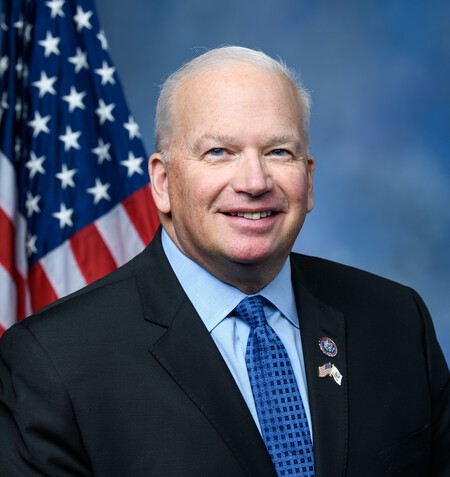
Rep. Scott Fitzgerald
Sponsored bills
Maddy summaryThe Educational Choice for Children Act creates tax credits for individuals and corporations that contribute to scholarship granting organizations providing education scholarships. Individuals can claim a credit up to $5,000 or 10% of their income, while corporations can claim up to 5% of taxable income. The scholarships are available to students from households with income up to 300% of the area median income, and can be used for private school tuition, tutoring, and other educational expenses at elementary and secondary schools. The bill includes strict requirements for scholarship organizations to verify income, conduct audits, and prevent misuse of funds, while also prohibiting government control over these organizations and protecting private and religious schools from discrimination in the program. It establishes a $10 billion annual cap on the total tax credits available.
Maddy summaryThis bill requires the Small Business Administration (SBA) to annually report on the microloan program starting in 2023. It mandates detailed public reports covering loan default rates, rural lending, underserved borrower participation, interest rates, fees, loan sizes, and technical assistance spending - without including personal borrower data. These reports target SBA intermediaries (like community lenders) and will be submitted to Congress and published online. The law directly affects how SBA administers microloans to small businesses, particularly those in rural areas or underserved communities.
This concurrent resolution calls on the President to abandon the One China policy in favor of one that recognizes Taiwan as an independent country that is not a part of China. The resolution also urges the President to bolster diplomatic and economic relations between the United States and Taiwan through specified means.
Maddy summaryThis bill requires healthcare providers to give the same medical care to infants born alive during abortions as they would to any newborn, and to immediately admit such infants to a hospital. It mandates reporting of non-compliance to law enforcement and imposes penalties including up to 5 years in prison for violations. Women who undergo abortions can file civil lawsuits seeking money damages for injuries, three times the abortion cost, and punitive damages if care standards are not met. The bill also clarifies that abortion includes intentionally killing an unborn child or terminating pregnancy without specific exceptions (e.g., after viability to preserve life or removing a dead fetus).
Maddy summaryHR 23, the Family and Small Business Taxpayer Protection Act, rescinds unobligated funds previously allocated to the Internal Revenue Service (IRS) under the Inflation Reduction Act of 2022. Specifically, it cancels unused balances from certain IRS funding provisions (sections 10301(1)(A)(ii), (iii), (B), (2), (3), (4), and (5)) of the Inflation Reduction Act. This bill does not change tax laws or directly affect taxpayers; it only redirects unspent IRS budget authority. The provision applies solely to funds that were not obligated by the IRS as of the bill’s enactment date.
Maddy summaryHR 22, the *Protecting America’s Strategic Petroleum Reserve from China Act*, blocks the U.S. government from selling petroleum from the Strategic Petroleum Reserve to entities under Chinese Communist Party control or unless sellers guarantee the oil won’t be exported to China. It directly affects the Department of Energy’s management of the reserve and any foreign entities seeking to purchase reserve petroleum. The key mechanism requires the Secretary of Energy to prohibit sales to China-linked entities or impose strict export restrictions on any sale. This policy change aims to prevent strategic petroleum resources from reaching entities tied to China’s government.
Maddy summaryThe Putting Investors First Act of 2023 requires proxy advisory firms (companies that provide voting recommendations to investors) to register with the Securities and Exchange Commission and disclose potential conflicts of interest. It mandates these firms to establish procedures ensuring recommendations are based on accurate information, provide public companies with reasonable time to review data used in recommendations, and maintain an ombudsman for complaint resolution. The bill also requires investment advisors and asset managers with over $100 million in assets to report how they use proxy advice and provide economic analysis for votes not aligned with board recommendations. Additionally, it prohibits "robovoting" (automatically voting based on proxy advice) and mandates ESG funds to disclose performance comparisons with standard index funds. The legislation aims to increase transparency and accountability in the proxy advisory industry to better protect investor interests.
Maddy summaryHR 175, the Heartbeat Protection Act of 2023, prohibits physicians from performing abortions without first checking for a detectable fetal heartbeat using standard medical practice and informing the patient of the results. It allows exceptions only for abortions necessary to save a mother’s life due to physical conditions (not psychological ones), or for pregnancies resulting from rape or incest against an adult or minor, which require specific documentation like counseling records or police reports. Physicians violating the law face up to five years in prison, while patients cannot be prosecuted. The bill defines "unborn child" as beginning at fertilization and mandates detailed medical documentation for all exceptions. It explicitly excludes psychological conditions from life-threatening exceptions and requires physicians to retain records per federal health privacy rules.
Maddy summaryHCONRES 3 is a non-binding congressional resolution expressing support for pro-life facilities, groups, and churches targeted by vandalism and threats following the Supreme Court's Dobbs decision. It condemns specific incidents like graffiti, window-smashing, and arson at pregnancy centers and churches (e.g., in Frederick, MD, and Portland, OR), while recognizing the role of these organizations in supporting pregnant women. The resolution calls on the Biden Administration to use law enforcement to protect these facilities but does not create new laws or policies. As a symbolic measure, it has no legal effect on the incidents described.