Maddy summaryThis bill amends the National School Lunch Act to require schools participating in the program to offer flavored milk to students. It directly affects public schools receiving federal funding for lunches, changing the existing provision to mandate flavored milk availability. The key mechanism is adding a new clause (iii) stating schools "shall offer students flavored milk," replacing previous language that allowed discretion. This is a procedural change to program requirements, not a substantive policy shift in nutrition standards.
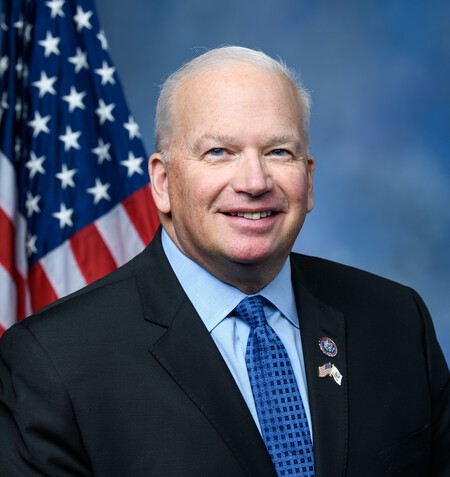
Rep. Scott Fitzgerald
Sponsored bills
Maddy summaryThe HALT Fentanyl Act expands the definition of fentanyl-related substances in the Controlled Substances Act to include many structurally similar compounds, making it easier to regulate new fentanyl analogs without individual listing. It defines these substances based on specific chemical modifications to fentanyl, with limited exceptions for substances already controlled or listed elsewhere. The bill also streamlines research procedures for schedule I substances by creating expedited registration processes and allowing multiple studies under one registration, while requiring the Attorney General to publish a list of substances meeting the new definition.
Maddy summaryThis bill amends the Federal Trade Commission Act to restrict the FTC's ability to act when all remaining commissioners belong to the same political party. Specifically, it modifies Section 1 of the FTC Act to state that if all commissioners are from the same party (as determined at their appointment), they cannot exercise the commission's powers. The bill directly affects the FTC's operational capacity, preventing it from functioning when partisan alignment exists among commissioners. This change aims to ensure bipartisan representation is maintained for the FTC to make decisions.
Maddy summaryHR 3624, the Travel Trailer and Camper Tax Parity Act, amends the tax code to include certain towable travel trailers and campers under floor plan financing rules. This change directly affects recreational vehicle (RV) dealers and manufacturers who sell trailers designed for temporary living quarters (like camping or seasonal use) that are towed by or attached to a motor vehicle. The key provision expands the definition in tax law so these vehicles qualify for the same business tax treatment as other floor plan inventory, allowing dealers to deduct financing costs over time instead of upfront. The law applies to taxable years starting after December 31, 2022.
Maddy summaryThis bill requires the President to appoint a Vice Chair of Supervision with direct experience in banking. Specifically, it mandates that the appointee must have "demonstrated primary experience working in, or supervising, insured depository institutions, bank holding companies, or savings and loan holding companies." The bill amends the Federal Reserve Act to add this qualification standard for the position. It applies only to appointments made on or after the bill's enactment date.
Maddy summaryThis bill requires that AM radio receivers be included as standard equipment in all new motor vehicles (such as cars and trucks) sold in the United States, with a rule to be issued by the Department of Transportation within one year. The rule must ensure AM radio is easily accessible on the dashboard and allows manufacturers to use digital AM radio technology instead of traditional AM. During the one-year period between the bill's enactment and the rule's effective date, manufacturers must clearly label vehicles without AM radio. The bill also directs a study to evaluate whether an alternative system could deliver emergency alerts as reliably as AM radio across the country, especially during crises.
Maddy summaryThis bill creates a reimbursement program for businesses that handle permanently dyed diesel fuel or kerosene previously taxed under highway fuel tax rules but exempt from those taxes. The IRS will pay eligible businesses the amount of tax they paid on this fuel when it was removed from terminals, provided the fuel meets specific criteria (previously taxed but exempt under Section 4082). It directly affects fuel distributors and businesses using non-highway fuel, such as for agricultural or construction purposes. The payment applies to fuel removed 180 days after the bill becomes law.
Maddy summaryThis bill allows utility companies (like electricity, gas, and internet providers) and landlords to report payment history for essential services to credit bureaus, expanding credit reporting beyond traditional loans. It directly affects consumers who pay these bills regularly but may lack traditional credit history, potentially helping them build credit. Key provisions limit reporting to actual payment behavior (not usage data) and prevent utilities from reporting late payments if a consumer is on a valid payment plan. The bill also requires a government study to assess the impact of this reporting on consumers within two years.
Safe Access to Cash Act of 2023 This bill establishes a new federal statutory framework to govern robbery offenses involving ATMs and related conduct. Currently, the federal bank robbery statute makes it a federal crime to take or attempt to take by force and violence or by intimidation, money or other property from any bank, credit union, or savings and loan association. A violation is punishable by a statutory maximum prison term of 20 years (or 25 years, if the offense includes assault or use of a dangerous weapon). However, federal circuit courts have split on whether forcing someone to withdraw money from an ATM qualifies as an offense under the federal bank robbery statute. In United States v. Chavez, the Fifth Circuit Court of Appeals held that the bank customer, rather than the bank, had possession of the funds when the robbery occurred, so a necessary element of the federal bank robbery statute--that the money belonged to the bank--was not satisfied. In contrast, the Tenth, Seventh, and Fourth Circuits have held that directly forcing a bank customer to withdraw money from an ATM constitutes a federal bank robbery because the funds belonged to the bank when the withdrawal occurred. This bill establishes new statutory criminal offenses for ATM robbery and related offenses such as ATM theft. A violation is subject to the same criminal penalties as an offense under the federal bank robbery statute--a statutory maximum prison term of 20 years (or 25 years, if the offense includes assault or use of a dangerous weapon).

Maddy summaryThe NDO Fairness Act (HR 3089) amends federal law to strengthen court oversight when law enforcement seeks to delay or prevent service providers from notifying customers about warrants for their communications data. It requires courts to issue written findings showing specific risks (like evidence destruction or witness intimidation) before granting a 90-day delay, and mandates that delays must be narrowly tailored with no less restrictive alternatives. After a delay ends, law enforcement must provide customers with a copy of the warrant and detailed notice about the investigation within five business days, plus the option to request disclosed data within 180 days. The bill also adds annual reporting requirements for the Attorney General on how often these delayed notice orders are used, including data on cases involving media or First Amendment activities.