

Dairy Farm Resiliency Act This bill updates the Dairy Margin Coverage (DMC) program. (The DMC program was enacted in the 2018 farm bill to support dairy operations by allowing producers to buy a guaranteed margin for their milk production. The margin is the difference between the Department of Agriculture's [USDA's] national all milk price and a calculated feed cost, which provides producers optional risk protection on price and feed costs.) The bill requires that a dairy operation's production history for DMC be based on the most recent three-year history and be recalculated every five years. (A participating dairy producer must have an established milk production history with USDA's Farm Service Agency.) The bill also increases Tier 1 margin coverage for annual milk production to 6 million pounds or less (currently 5 million pounds or less) and Tier 2 margin coverage to over 6 million pounds (currently over 5 million pounds).
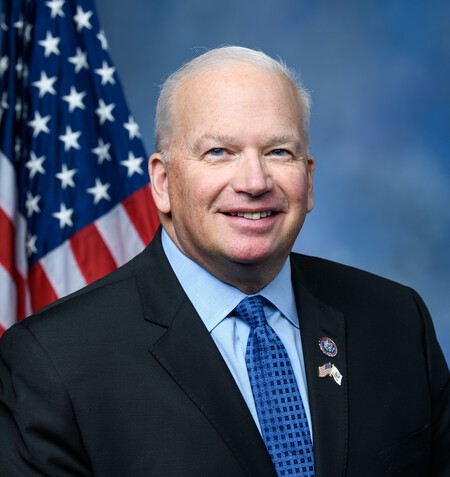
Rep. Scott Fitzgerald
Sponsored bills
Maddy summaryThis bill expands employee ownership in S corporations by extending tax deferral for selling company stock to employee ownership plans (ESOPs), creating a Treasury Department office to provide education and technical assistance for ESOPs, and amending small business rules to maintain eligibility for government programs after ESOP ownership exceeds 49%. It establishes a new Labor Department "Advocate for Employee Ownership" to coordinate federal efforts, educate stakeholders, and recommend policy improvements. The bill directly affects S corporations using ESOPs, their employees who become owners, and small businesses that might lose government program access due to ESOP acquisitions. Key provisions include tax incentive extensions, new support offices, and updated small business classification rules.
Maddy summaryHR 3933, the TAP Promotion Act, requires standardized presentations about Veterans Affairs (VA) benefits during military transition counseling for service members separating from the armed forces. These presentations must be approved by the VA, delivered by authorized veterans service organizations (VSOs), and include information on how VSOs assist with VA claims - without encouraging membership in specific organizations. The bill mandates a one-hour limit per presentation and requires the VA to submit annual reports to Congress detailing which VSOs presented, attendance numbers, and recommendations for improvement. This policy directly affects service members preparing for civilian life and the VSOs providing these transition resources.
Maddy summaryThis bill directs the U.S. Treasury to mint commemorative coins marking the Marine Corps' 250th anniversary in 2025. It authorizes three coin types: $5 gold coins (max 50,000), $1 silver coins (max 400,000), and half-dollar coins (max 750,000), with surcharges of $35, $10, and $5 respectively. The surcharge proceeds will fund the Marine Corps Heritage Center's educational programs, with no net cost to taxpayers as the Treasury must recover all minting costs through the surcharges. The coins can only be issued during 2025, and the Treasury must ensure all costs are covered before distributing funds to the Heritage Foundation.
Maddy summaryThis bill would prohibit government employees from directing or encouraging social media platforms to censor protected speech. It defines "covered information" to include phone calls, digital communications, photos, shopping history, location data, and other user information. The bill creates a private right of action for people affected by government interference with their speech, requires government agencies to report communications with platforms about content moderation, and terminates the Disinformation Governance Board. It directly affects government employees, social media platforms, and users whose speech might be impacted by government requests to moderate content.
Maddy summaryThis bill creates two tax credits to support local media and small businesses. It provides a credit for small businesses (under 50 full-time employees) that advertise in qualifying local newspapers or broadcast stations, covering 80% of first-year ad costs up to $5,000 and 50% of subsequent-year costs up to $2,500. It also establishes a payroll tax credit for employers hiring local news journalists, covering 50% of wages for the first four quarters (capped at $12,500 per journalist) and 30% thereafter, with a maximum of 1,500 journalists per employer. Both credits expire after five years and require strict definitions of "local media" (e.g., publishers with local journalists and community focus) to prevent misuse.
Stopping Teachers Unions from Damaging Education Needs Today Act or the STUDENT Act This bill revises the federal charter for the National Education Association. The bill specifies that the corporation and its state and local affiliates may only accept payment of membership dues or fees from a state or local government employee if the employee (1) has been notified of the employee's right under the First Amendment to refrain from membership and payment of associated dues or fees, (2) has clearly and affirmatively consented to membership and payment of associated dues or fees, and (3) has authorized the transmittal of membership dues or fees without the use of payroll deduction. Further, the corporation and its state or local affiliates must process and honor cancellation requests for membership or payment of dues as soon as practicable following receipt of the request. The bill also outlines requirements for the corporation, such as prohibiting the corporation or its directors or officers from contributing to, supporting, or participating in political activities; requiring each officer of the corporation to be a U.S. citizen; requiring the corporation to submit annual reports to Congress; prohibiting the corporation and its affiliates from requiring staff, officers, affiliates, or members to affirm, adopt, or adhere to certain principles related to race or sex; and prohibiting the corporation and its affiliates from calling or participating in a strike, work stoppage, or slowdown affecting a state or local government. The bill repeals the corporation's exemption from District of Columbia property taxes.
Maddy summaryHR 4721, the Main Street Tax Certainty Act, makes a permanent the 20% tax deduction for eligible small business owners under Section 199A of the tax code. This provision directly affects pass-through business owners (like S-corps, partnerships, and sole proprietorships) who qualify for the deduction. The bill achieves this by removing the temporary expiration language (subsection (i)) from the existing tax code provision. The key change is ending the need for annual congressional extensions of this deduction, providing long-term tax certainty for small businesses.
Maddy summaryThis bill, the Veteran Care Improvement Act of 2023, establishes new standards for when veterans can receive care from private providers instead of the Department of Veterans Affairs (VA). It requires the VA to allow veterans to seek community care if they cannot get an in-person appointment within 30 days for primary care or 60 days for specialty care at a VA facility within a 30 or 60-minute drive, respectively. The legislation also mandates that the VA notify veterans of their eligibility for community care within two business days, provide information about telehealth options, and explain reasons for denied care requests along with appeal instructions. Additional provisions include requiring the VA to conduct outreach to inform veterans about community care options, mandate the use of value-based reimbursement models for community care, and establish a pilot program to improve care administration through scheduling improvements and provider incentives. The bill also extends the deadline for health care entities to submit claims under the prompt payment standard from 180 days to one year, and requires the VA Inspector General to assess VA medical center performance in implementing community care programs within three years of enactment.
Maddy summaryHR 2768, the PFC Joseph P. Dwyer Peer Support Program Act, establishes a VA grant program to fund peer-to-peer mental health support for veterans. It provides up to $250,000 per grant to eligible nonprofits, veteran service organizations, or state/local Tribal agencies to create programs where veterans serve as peer specialists offering 24/7 nonclinical support. The program requires adherence to VA-developed standards for volunteer training and service delivery, while prohibiting the collection of veterans' personally identifying information. The bill authorizes $25 million over three years to implement this initiative, directly benefiting veterans seeking accessible mental health assistance through peer networks.