

Maddy summaryThis bill clarifies the Consumer Financial Protection Bureau's (CFPB) authority to enforce rules against "unfair, deceptive, or abusive acts or practices" (UDAAP) affecting consumers. It defines "abusive" acts as those intentionally interfering with consumer understanding or taking unreasonable advantage of consumer vulnerabilities, requiring the CFPB to provide a clear definition within 180 days. Financial institutions must now receive written notice and 180 days to correct potential violations before penalties are imposed, and the CFPB must conduct cost-benefit analyses for new rules. The bill also prohibits the CFPB from treating discrimination as part of UDAAP enforcement and limits penalties for past conduct to the most recent compliance rating period.
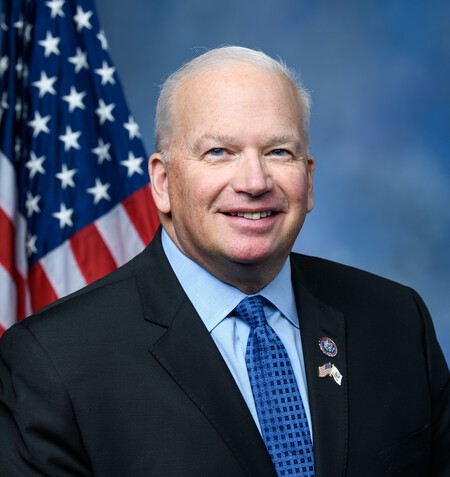
Rep. Scott Fitzgerald
Sponsored bills
Maddy summaryHR 6734 prohibits the use of federal funds to finalize, implement, or enforce the Bureau of Alcohol, Tobacco, Firearms, and Explosives' (ATF) proposed rule (2022R-17) defining "engaged in the business as a dealer in firearms." This bill directly affects the ATF by blocking funding for this specific regulatory rule, which was proposed in August 2023. The legislation does not create new requirements but prevents federal resources from being used to advance this particular ATF regulation.
Maddy summaryThe Main Street Growth Act (HR 6623) creates a new type of securities exchange called a "venture exchange" to facilitate trading of stocks from early-stage companies. It allows companies that haven't had an initial public offering (IPO) and have a small public float (under $2 billion) to list their shares on these specialized exchanges, where they can trade under modified rules. The bill requires specific disclosures about the unique risks of these "venture securities" and prohibits trading them on regular exchanges while they're listed on a venture exchange. This primarily affects early-stage startups seeking capital and investors buying their shares, with the goal of improving access to capital markets for smaller businesses.
Maddy summaryH.J.Res. 66 disapproves a specific rule issued by the Consumer Financial Protection Bureau (CFPB) regarding small business lending under the Equal Credit Opportunity Act (Regulation B). The resolution, if passed, would prevent this CFPB rule from taking effect by declaring it "have no force or effect." The rule in question (88 Fed. Reg. 35150) aimed to clarify how lenders must evaluate small business loan applications under existing equal credit laws. This disapproval directly affects the CFPB's regulatory authority and would block the rule's implementation for small business lenders and financial institutions.
Maddy summaryHRES 884 is a non-binding House resolution honoring the six victims killed and 62 injured in the November 21, 2021, Waukesha, Wisconsin, Christmas parade attack. It specifically recognizes Wilhelm Hospel, Virginia Sorenson, LeAnna Owen, Tamara Durand, Jane Kulich, and Jackson Sparks, while acknowledging their community roles and the Waukesha community's healing efforts. The resolution offers condolences to families, applauds first responders, and recognizes the community's resilience through memorials like a 2023 parade memorial and blue-light tributes. As a commemorative resolution, it has no legislative effect but formally honors the victims and community response.
Maddy summaryHR 6300, the Veterans Education is Timeless Act of 2023, removes expiration dates for all Department of Veterans Affairs (VA) education benefits. It directly affects veterans and their dependents who use programs like the Post-9/11 GI Bill, Survivors' Benefits, and others, allowing them to access education benefits at any time without a deadline. The bill amends multiple sections of Title 38 to state that benefits "shall be afforded... at any time and are not subject to any delimiting date." It also requires the VA to refund veterans for contributions if they apply for a refund, and applies retroactively to all eligible individuals.
Maddy summaryHJRES 103 is a congressional resolution seeking to block a Department of Labor rule updating the Davis-Bacon Act regulations. It specifically targets the rule published in the Federal Register on August 23, 2023 (88 Fed. Reg. 57526), which would have modified requirements for paying prevailing wages on federal construction projects. The resolution invokes Chapter 8 of Title 5, U.S. Code, to formally disapprove the rule, stating it "shall have no force or effect" if passed. This procedural measure directly affects federal contractors and the Department of Labor, aiming to prevent the implementation of the updated wage regulations.
Maddy summaryThe SHIP Act imposes sanctions on foreign entities that knowingly handle Iranian petroleum, targeting those involved in port operations, transportation, refining, or ship-to-ship transfers of Iranian oil. Starting 90 days after enactment, the President must block assets, deny visas, and impose penalties on individuals or companies engaging in these activities, including family members or owners of sanctioned entities. It requires annual reports tracking Iran's oil exports, revenues, and key players like shipping companies and ports. The sanctions terminate if the President certifies Iran has stopped supporting terrorism and dismantled weapons programs.
Maddy summaryHR 5404, the Countering Chinese Espionage Reporting Act, requires the U.S. Attorney General to submit annual reports to Congress detailing the Department of Justice's efforts to counter Chinese espionage threats. The reports must describe DOJ activities related to trade-secret theft, intellectual property protection, and threats from researchers at universities and defense facilities, along with accounting for resources dedicated to these programs and their effectiveness. This procedural bill directly affects the Department of Justice, mandating transparency about its current counter-espionage initiatives without creating new legal penalties or policies.
Maddy summaryHRES 801 is a symbolic resolution recognizing the cultural significance of the Hmong New Year. It does not create new laws or policies but formally acknowledges the traditions of Hmong Americans celebrating this holiday. The resolution expresses respect for Hmong Americans observing the New Year and wishes them a happy celebration. It directly affects Hmong American communities by affirming their cultural practices through official congressional recognition. This is a ceremonial gesture with no binding obligations or policy changes.