

Maddy summaryHJRES 122 is a resolution seeking to block a rule by the Consumer Financial Protection Bureau (CFPB) that would have regulated credit card penalty fees. The rule, published on March 15, 2024, aimed to limit how credit card companies charge fees for late payments or other violations. If approved, this resolution would disapprove the rule under a specific legal process, preventing it from taking effect. This directly affects credit card issuers (banks and financial institutions) by allowing them to continue current fee practices without the proposed restrictions.
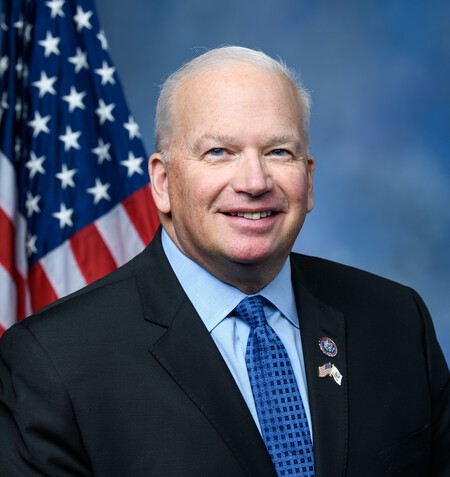
Rep. Scott Fitzgerald
Sponsored bills
Maddy summaryThis bill reauthorizes the Debbie Smith DNA Backlog Grant Program, which provides federal funding to state and local law enforcement agencies to reduce backlogs in processing DNA evidence from crime scenes. It extends the program's funding period from fiscal years 2024 through 2029 (previously ending in 2024). The bill also updates audit requirements to ensure grant funds are used properly through 2029. This directly affects law enforcement agencies that receive these grants to accelerate DNA analysis for criminal investigations.
Maddy summaryHRES 1371 is a House resolution condemning the Biden Administration and Vice President Kamala Harris for failing to secure the U.S. border. It cites statistics including over 9.7 million illegal immigration encounters since 2021 and the end of the Remain in Mexico program as evidence. As a symbolic resolution with no policy changes, it publicly expresses the House's disapproval of current border policies without altering any laws or enforcement actions.
Ensuring State Attorney General Accountability Act This bill prohibits a tax-exempt charitable organization from providing direct funding to state attorneys general for the purpose of a lawsuit, investigation, or remuneration of personnel.
Maddy summaryHR 9111 redesignates Apostle Islands National Lakeshore as "Apostle Islands National Park and Preserve," creating two distinct areas: Apostle Islands National Park (where hunting and trapping are prohibited) and Sand Island National Preserve (which maintains existing hunting and fishing rules from the previous lakeshore designation). The bill updates all federal references to the area to reflect the new name, clarifies that the Ashland Harbor Breakwater Light is not included in park boundaries, and requires the National Park Service to add interpretive features about regional history at visitor centers. It does not create new regulations but formalizes the existing administrative structure under the National Park System. The change affects park management, visitors' activities, and federal documents referencing the area.
Maddy summaryHR 1631, the Pro Codes Act, requires standards development organizations (like ANSI or IEEE) to make technical standards publicly accessible online for free if those standards are referenced in federal, state, or local laws or regulations. This directly affects the organizations that create these standards and government agencies that incorporate them into rules. The key provision mandates that organizations must provide free, online access to all referenced standards within a reasonable time after learning they’re incorporated, without charging users or requiring payment. It ensures the public can access current standards used in government rules while allowing organizations to maintain revenue models through paid subscriptions for other users. The law balances public access with the need for standards organizations to fund their work through copyright licensing.
Maddy summaryThis bill expands the U.S. Secret Service's authority to investigate cybercrime-related money laundering by adding Section 1960 (money laundering) to its jurisdiction and updating definitions for financial institutions. It requires financial institutions to report suspicious activity for 10 years (up from 5) under FinCEN rules and increases the number of international financial institutions targeted for cooperation from 5 to 10. The law directly affects financial institutions, law enforcement agencies, and international financial bodies by modifying reporting timelines, investigative powers, and cross-border collaboration requirements. These changes aim to strengthen efforts against cybercrime money laundering through updated legal frameworks and extended oversight periods.
Maddy summaryHRES 1345 is a ceremonial resolution recognizing the 100th anniversary of diplomatic relations between the United States and Ireland, established on October 7, 1924. It commemorates the historical milestone, highlighting the strong cultural ties (with over 30 million Americans claiming Irish heritage), economic partnership (over $1 trillion in annual trade), and shared values supporting peace in Northern Ireland. The resolution does not create new laws or directly affect any individuals or entities, as it is purely symbolic. It affirms congressional support for continued U.S.-Ireland friendship and the enduring people-to-people connections between the two nations.
Maddy summaryThis bill prohibits federal funding for elementary and secondary schools that partner with Chinese government-funded programs, including Confucius Institutes, Confucius Classrooms, or other entities receiving support from China's government (e.g., through teaching materials, personnel, or funds). It directly affects schools with these specific ties to the People's Republic of China. The prohibition takes effect one year after enactment, with the Education Secretary required to notify schools and provide compliance guidance within 90 days of enactment. The policy change blocks federal education funds for schools meeting the defined criteria, without altering existing educational content or curriculum standards.
Maddy summaryHJRES 171 is a joint resolution seeking congressional disapproval of a proposed rule by the Department of Health and Human Services (HHS) regarding the Unaccompanied Children Program. The rule, published in the Federal Register on April 30, 2024, aimed to update regulations governing the placement, care, and services for unaccompanied alien children (children entering the U.S. without a parent or guardian). This resolution would block the rule from taking effect, preserving existing regulations under the current program framework. It uses a standard congressional disapproval process under Title 5 of the U.S. Code to halt the rule without altering the program’s underlying policy.