

Boundary Waters Wilderness Protection and Pollution Prevention Act This bill protects and preserves approximately 225,504 acres of federal land and waters in a specified area in the Rainy River Watershed of Superior National Forest in Minnesota from certain mining, such as sulfide-ore copper mining. (The area is upstream from the Boundary Waters Canoe Area Wilderness.) Specifically, the bill withdraws those acres from entry, appropriation, and disposal under the public land laws; location, entry, and patent under the mining laws; and operation of the mineral leasing, mineral materials, and geothermal leasing laws. However, the Forest Service is authorized to permit the removal of sand, granite, iron ore, and taconite from national forest system lands within such area if the removal is not detrimental to the water quality, air quality, and health of forest habitat within the Rainy River Watershed. Land or interest in land within such area that is acquired by the United States must be immediately withdrawn in accordance with this bill.
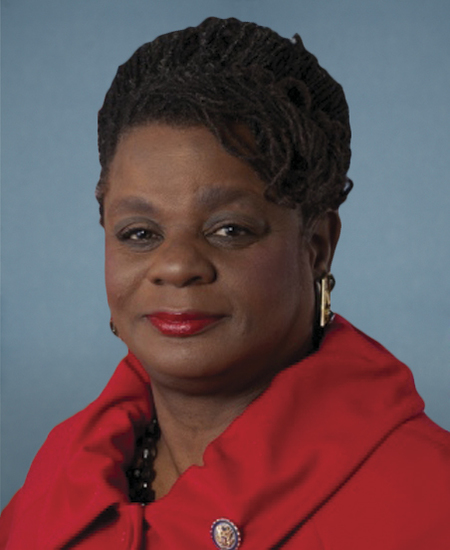
Rep. Gwen Moore
Sponsored bills
Maddy summaryHR 485, the Muhammad Ali Congressional Gold Medal Act, authorizes Congress to award a gold medal in recognition of Muhammad Ali's lifetime contributions to sports, civil rights, and humanitarian causes. The bill directs the Treasury Secretary to strike the medal and present it to Ali's widow, Lonnie Ali, following his death in 2016. It also permits the sale of bronze duplicates to cover costs, with proceeds going to the U.S. Mint. This is a commemorative measure with no policy impact, solely honoring Ali's legacy through a symbolic medal.
Maddy summaryThis bill creates special tax rules for certain Taiwanese residents with income from U.S. sources, primarily addressing double taxation concerns. It reduces withholding tax rates on interest, dividends, and royalties from 30% to 10% (or 15% for certain dividends) for qualified Taiwanese residents, and eliminates tax on certain wages paid to Taiwanese workers in the U.S. It also sets a $30,000 annual limit on tax-free income from entertainment or athletic activities. To qualify, individuals must meet specific residency and ownership criteria, and the bill requires reciprocal tax benefits from Taiwan before taking effect. This legislation is designed to facilitate economic activity between the U.S. and Taiwan without requiring a formal tax treaty.
Maddy summaryHR 429, the Rosie the Riveter Commemorative Coin Act, authorizes the U.S. Treasury to mint and sell three types of commemorative coins ($5 gold, $1 silver, and half-dollar) to honor women who worked on the U.S. home front during World War II. The coins will be sold at face value plus surcharges ($35 for gold, $10 for silver, $5 for half-dollar), with all surcharge revenue directed to the Rosie the Riveter Trust to support the Rosie the Riveter WWII Home Front National Historical Park and related educational programs. The coins must be issued between January 1, 2028, and December 31, 2028, in specified quantities (50,000 gold, 400,000 silver, 750,000 half-dollar), with all costs covered by the sales revenue to avoid net government expense.
Maddy summaryHR 423 would change bankruptcy law to allow private student loan debt to be discharged (forgiven) in bankruptcy cases. It amends a section of the Bankruptcy Code that currently makes most student loans non-dischargeable, specifically removing the exception for private loans by revising the language around loan programs. This change would directly affect borrowers with private student loans who file for bankruptcy after the law takes effect. The bill applies only to bankruptcy cases filed on or after its enactment date, not to existing cases.
Maddy summaryThe End Oil and Gas Tax Subsidies Act of 2025 would eliminate several tax benefits currently available to oil and gas companies, including credits for enhanced oil recovery, deductions for intangible drilling costs, and percentage depletion allowances. It would also prohibit major integrated oil companies (defined as those meeting specific production and revenue thresholds) from using last-in, first-out accounting for inventory purposes. These changes would take effect for taxable years beginning after December 31, 2024, directly affecting oil and gas producers who currently claim these tax benefits. The legislation removes specific tax advantages that have been available to the oil and gas industry, potentially increasing their tax burden.
Maddy summaryThis bill reauthorizes the Great Lakes Restoration Initiative (GLRI) through fiscal year 2031, providing $500 million annually for Great Lakes cleanup and restoration projects. It directly affects federal agencies (like the EPA), state governments, tribes, and environmental groups working on Great Lakes water quality, habitat restoration, and pollution prevention. The key provision extends existing funding levels for five additional years (2027-2031), ensuring continued support for projects addressing invasive species, toxic pollutants, and coastal wetlands restoration across the Great Lakes region. This is a funding authorization bill, not a policy change to the program's scope.
Maddy summaryThe Proxy Voting for New Parents Resolution (HRES 23) would allow U.S. House Members who have given birth or whose spouse has given birth to appoint another Member as a proxy to cast their vote or record their presence in the House and committees for up to 12 weeks after childbirth. To use this, the new parent must submit a signed letter to the Clerk detailing the birth or medical condition and naming the proxy; the proxy must vote exactly as instructed and announce the vote as "by proxy." The proxy vote does not count toward quorum, and the new parent can revoke the proxy at any time by submitting a new letter or casting their own vote. This resolution applies to all House Members, including Delegates and the Resident Commissioner, though they cannot cast votes for the House itself.
This resolution honors the life, achievements, legacy, and distinguished public service of former President Jimmy Carter. The resolution also (1) acknowledges President Carter's contributions to the state of Georgia, the United States, and the world; and (2) establishes his legacy as one of the great leaders and statesmen of the United States.
Maddy summaryThis bill increases healthcare affordability for low- and middle-income people by expanding eligibility for premium tax credits under the Affordable Care Act. It removes the previous 400% of poverty level cap for subsidy eligibility and replaces it with a new sliding scale based on income tiers, ranging from 0% to 8.5% of household income for coverage costs. The scale adjusts linearly across income levels, with households earning 300-400% of poverty paying 6.0%-8.5% of income (up from the prior fixed 400% cap), while lower-income households pay progressively less. These changes apply to tax years beginning after December 31, 2025, directly affecting individuals purchasing health insurance through marketplace plans.