

Maddy summaryThis bill authorizes the use of Emancipation Hall in the Capitol Visitor Center on April 29, 2025, for a ceremony to present Congressional Gold Medals awarded to the 6888th Central Postal Directory Battalion (known as the "Six Triple Eight" WWII unit) under the 2021 law (Public Law 117-97). It directly affects the organizers of this ceremony, which honors the unit's service. The resolution specifies the venue and date but does not create new policy or affect broader legislation. Preparations must follow guidelines set by the Architect of the Capitol.
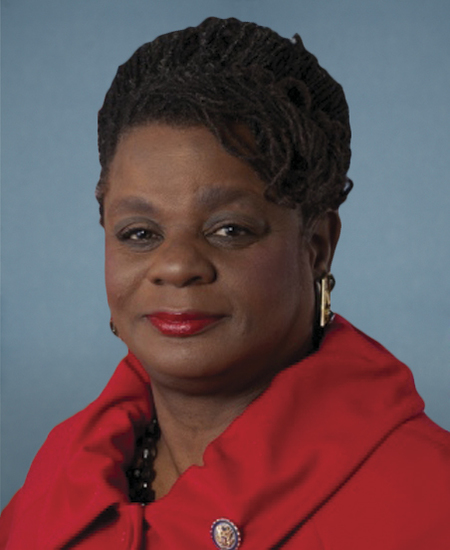
Rep. Gwen Moore
Sponsored bills
Maddy summaryHRES 332 is a resolution designating April 11-17, 2025, as "Black Maternal Health Week" to raise awareness about maternal health disparities affecting Black women and birthing people in the U.S. It references CDC data showing Black women are 2-3 times more likely to die from pregnancy-related causes than White women and that the U.S. has the highest maternal mortality rate among developed nations. The resolution emphasizes the need to address systemic inequities contributing to these outcomes without creating new laws or funding. It serves as a symbolic recognition to amplify community-led efforts, such as those by the Black Mamas Matter Alliance, rather than implementing policy changes.
Maddy summaryThe DRIVE Act of 2025 requires the Department of Veterans Affairs (VA) to set mileage reimbursement rates for veterans at the federal government's current standard rate for employees using personal vehicles on official business, replacing the previous fixed rate of 41.5 cents per mile. It also mandates that the VA process and pay these reimbursements within 90 days of a veteran's valid request. This directly affects veterans who travel for VA medical appointments or services using their personal vehicles. The bill aligns veteran travel reimbursements with federal employee standards and ensures timely payments.
Maddy summaryHRES 327 is a procedural resolution requesting the President to provide the House of Representatives with specific documents about Social Security Administration (SSA) operations after March 12, 2025. It seeks information on policies ending phone applications for benefits (effective March 18 and 26, 2025), office closures/consolidations, and staffing reductions. The resolution does not change laws but asks for records related to how these changes may affect public access to SSA services. This is a request for information, not a policy change.
Maddy summaryHRES 326 is a non-binding resolution designating April 10 as "Dolores Huerta Day" to honor the late labor and civil rights leader Dolores Huerta. It recognizes her foundational work co-founding the United Farm Workers, leading grape boycotts that secured union contracts, advocating for farm workers' safety, and championing women's rights and Latino political representation. The resolution has no policy impact or direct effect on any group, as it solely serves to commemorate Huerta's legacy. It was introduced by multiple House members in recognition of her contributions to civil rights and equality.
Maddy summaryHR 2833 makes the federal adoption tax credit refundable, meaning qualifying adoptive parents can receive cash payments even if they owe no federal income tax. This directly affects low- and middle-income adoptive families who previously could only reduce their tax bill with the credit but couldn’t get cash back. The bill moves the credit from a non-refundable to a refundable status in the tax code and adds standardized verification forms for adoptions. It takes effect for tax years beginning after December 31, 2025.
Working for Immigrant Safety and Empowerment Act or the WISE Act This bill expands eligibility for U nonimmigrant visas (victims of criminal activity) and prohibits immigration enforcement activities in specified areas. Generally, U visas are for victims of specified crimes (e.g., rape, trafficking, or domestic violence) who assist with the investigation or prosecution of the crime. The bill adds hate crimes, child abuse, and elder abuse as crimes that may qualify a victim for a U visa and removes criteria related to the victim's assistance with the investigation or prosecution of the crime. Furthermore, the Department of Homeland Security (DHS) must provide work authorization to U visa applicants, whereas currently DHS may grant work authorization but is not required to do so. The bill also eliminates the annual numerical cap on U visas. The bill establishes a rebuttable presumption that certain individuals, including U visa applicants and T visa (victims of human trafficking) applicants, shall not be detained while the application is pending. Additionally, the bill provides immigration-related protections, such as by extending the admission period and providing work authorization, to the spouse or child of a nonimmigrant visa holder who subjected that spouse or child to battery or extreme cruelty. Further, the bill prohibits, with some exceptions for exigent circumstances, U.S. Immigration and Customs Enforcement or U.S. Customs and Border Protection from conducting immigration enforcement actions within 1,000 feet of a school, health care facility, place of worship, or other location specified in the bill.
Maddy summaryThe Pursuing Equity in Mental Health Act (HR 2904) aims to reduce mental health disparities affecting racial and ethnic minority groups by modifying federal grant programs, requiring research on disparities, and funding targeted initiatives. It directs the Health and Human Services Secretary to prioritize grants for community health organizations serving minority populations, mandates a National Institutes of Health study on mental health research gaps in these groups, and establishes training programs for health professionals to address cultural competency in mental health care. The bill also requires a public outreach strategy developed with community input to reduce stigma and improve access to culturally appropriate care, alongside $20 million annually (2026-2031) for this effort. Additional funding includes $150 million yearly for NIH mental health research and $750 million yearly for the National Institute on Minority Health.
Maddy summaryHR 2888, the "Stopping a Rogue President on Trade Act," terminates specific executive orders imposing tariffs (EOs 14257, 14193, and 14194) and requires congressional approval for new tariffs or trade restrictions. It directly affects the President, who can no longer unilaterally impose or increase tariffs without Congress passing a joint resolution approving the action. Key mechanisms include mandating a formal joint resolution process for tariff decisions (with limited exceptions for existing antidumping duties and trade agreements) and applying expedited congressional procedures. This bill shifts authority from the executive branch to Congress for major trade policy changes.
Maddy summaryHRES 314 is a resolution requesting the President and Secretary of Health and Human Services to provide documents to the House of Representatives about the so-called Department of Government Efficiency (DOGE) seeking access to two federally protected data systems: the National Directory of New Hires (NDNH) and Federal Parent Locator Service (FPLS). The resolution seeks records on DOGE's requests for taxpayer and child support data, data security measures, legal opinions, and staff changes related to these systems, which store sensitive information on over 40 million Americans. This procedural resolution focuses on transparency around access to legally protected data, not on enacting new policy.