

Maddy summaryHR 3593, the Title VIII Nursing Workforce Reauthorization Act of 2025, reauthorizes and expands federal funding for nursing education programs to address workforce shortages. It directly affects nursing schools, nurse practitioner, nurse-midwifery, nurse anesthesia, and clinical nurse specialist programs by expanding grant eligibility to include these specific training pathways. Key provisions include increasing annual funding from $137 million to $184 million (2026-2030), requiring schools to use funds for simulation/technology resources and faculty/student expansion, and adding clinical partnerships with healthcare facilities. The bill also updates terminology and adds protections for survivors of domestic violence and sexual assault in nursing education settings.
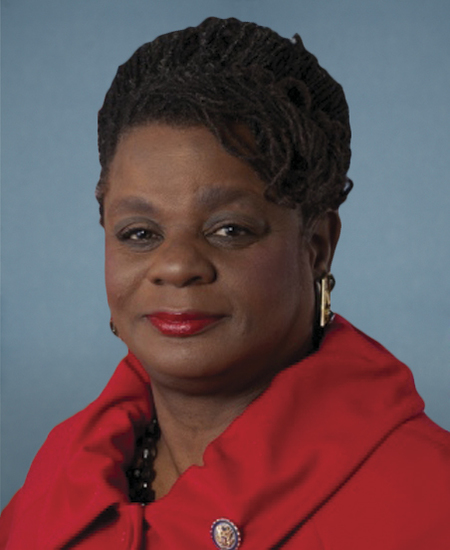
Rep. Gwen Moore
Sponsored bills
Maddy summaryThis bill amends the Social Security Act to remove a payment limitation for certain Medicaid Home and Community-Based Services (HCBS) waivers. Specifically, it strikes a provision (subparagraph (C) of Section 1915(c)(11)) that restricted how states could fund these waivers under Medicaid. The change directly affects state Medicaid programs that use HCBS waivers to provide home and community care for people with disabilities or elderly individuals. By removing this restriction, states gain more flexibility in allocating Medicaid funds for these services, without altering eligibility or service requirements.
Maddy summaryThe Endometrial Cancer Research and Education Act of 2025 requires the National Institutes of Health (NIH) to expand research on endometrial cancer, ensure African-American women are represented in clinical trials proportional to their higher incidence rates, and coordinate with health agencies focusing on minority health and women’s health. It also directs the Centers for Disease Control and Prevention (CDC) to develop public education materials about endometrial cancer risk factors, treatments, and disparities, with specific resources targeted to African-American women. The bill authorizes $1 million annually for NIH research and necessary funding for CDC programs from 2026 through 2028. These measures directly affect federal health agencies and aim to address documented disparities in diagnosis and mortality rates among women, particularly African-American women.
Sickle Cell Disease Comprehensive Care Act This bill allows state Medicaid programs to establish health homes to provide coordinated care for individuals with sickle-cell disease. (Under current law, state Medicaid programs may establish health homes to provide coordinated care for individuals with specified chronic conditions.) States must ensure that such care includes dental and vision services. The Centers for Medicare & Medicaid Services must issue best practices for states on how to design and implement such health homes.
Maddy summaryThis bill extends preferential U.S. trade benefits for Haitian exports until 2037 (previously ending in 2025) under the Caribbean Basin Economic Recovery Act. It requires Haitian producers to comply with core labor standards and Haitian labor laws related to minimum wages, working hours, and safe conditions to maintain these benefits. The bill also creates a new technical assistance program where the U.S. Trade Representative will work with Haitian government agencies, businesses, labor groups, and trade support institutions to boost exports - focusing on agricultural processing, apparel sector competitiveness, and export strategy development. These changes directly affect Haitian exporters seeking U.S. trade preferences and U.S. agencies administering trade programs.
Maddy summaryThis bill requires most health insurance plans to cover HIV prevention services - including PrEP and PEP drugs, related lab tests, counseling, and monitoring - without cost-sharing (like copays or deductibles) or prior approval. It applies to private insurance, Medicare, Medicaid/CHIP, and federal employee health plans, directly affecting people who use HIV prevention medications. Key provisions mandate 100% coverage for FDA-approved HIV prevention drugs, eliminate cost-sharing for these services, and prohibit insurers from requiring preauthorization for them. The bill defines covered services to include all necessary components of HIV prevention care as outlined in current public health guidelines.
Maddy summaryHR 5126, the HIV Prevention Now Act, appropriates $2.165 billion for the CDC's National Center for HIV, Viral Hepatitis, STD, and Tuberculosis Prevention for fiscal year 2026. This funding is in addition to existing CDC appropriations and must be used exclusively by that specific center for its programs, with no transfer to other entities. The bill directly affects the CDC's public health operations by providing dedicated resources for prevention and treatment programs targeting HIV, viral hepatitis, STDs, and tuberculosis. It does not create new policies or alter eligibility but ensures sustained funding for existing prevention efforts at the federal level.
Maddy summaryThis bill repeals the provision allowing the President to assume emergency control of the District of Columbia's police force. It directly affects the District of Columbia government by transferring full authority over police emergency management from the federal government to local DC officials. The key mechanism is removing Section 740 of the District of Columbia Home Rule Act, which previously permitted the President to intervene in police operations during emergencies. This change formalizes DC's local control over its police department during crises.
Maddy summaryThis bill (HJRES 115) terminates a presidential emergency declaration made on August 11, 2025, which claimed a "crime emergency" in Washington, D.C. It directly affects the District of Columbia by ending federal restrictions that prevented D.C. from using $1 billion in locally-raised funds for public safety, law enforcement, fire services, and schools. The resolution cites that the emergency declaration was legally flawed - section 740 of the DC Home Rule Act does not permit federalizing the Metropolitan Police Department - and notes that D.C. violent crime has reached a 30-year low. The bill formally ends the emergency under the DC Home Rule Act, restoring D.C.'s authority over its own budget and public safety resources.
Maddy summaryThis bill requires the removal of a statue honoring Albert Pike from its current location near Judiciary Square in Washington D.C. The National Park Service must take down the statue, which was erected in 1898. The Secretary of the Interior may donate the statue to a museum or similar institution for indoor display only, with the condition that if it is ever displayed outdoors, ownership reverts to the federal government. The bill directly affects the physical location of the statue and the National Park Service's management of it.