

Maddy summaryThe PART Act requires new vehicles to have catalytic converters marked with a unique identification number that links directly to the vehicle's identification number, stored in a law enforcement-accessible database. It establishes a $7 million grant program to help repair shops, dealers, law enforcement, and fleet owners purchase equipment for marking converters with visible, durable identifiers (using die or pin stamping and high-visibility paint). The bill also mandates that businesses buying catalytic converters keep detailed seller records (including vehicle information) for two years and use traceable payments, banning cash or cryptocurrency transactions. Additionally, it creates new federal criminal penalties for stealing or trafficking in catalytic converters, with potential sentences of up to five years in prison.
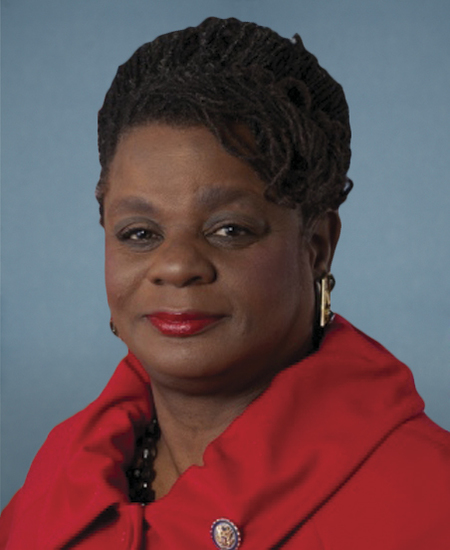
Rep. Gwen Moore
Sponsored bills
Safe Vehicle Access for Survivors Act This bill requires providers of connected vehicle services, upon the request of a domestic violence survivor, to terminate or disable an identified domestic abuser’s access to a vehicle’s connected capabilities and data. Specifically, within two business days of receiving a request from a survivor, a covered provider must, if technically feasible (1) terminate or disable the connected vehicle account associated with the identified abuser or the relevant vehicle, or the vehicle’s connected capabilities; or (2) instruct the survivor on how to terminate or disable connected services directly. Covered providers may not make the termination of connected vehicle services or accounts contingent on any requirement other than the provision of specified information by the survivor. For example, a provider may not require a survivor to pay a fee or extend their contract with the provider. Under the bill, an abuser is an individual identified by a survivor who committed or allegedly committed certain acts against the survivor, including domestic violence, sexual assault, stalking, and sex trafficking. A survivor is an adult against whom such an act was committed. Further, a covered provider is a vehicle manufacturer, affiliate, or entity acting on behalf of a manufacturer that provides a connected vehicle service. Connected vehicle service is any capability that enables a person to remotely access data from or send commands to a vehicle. Finally, the Federal Communications Commission must prescribe regulations governing how covered providers address survivors’ requests related to connected vehicles.
Maddy summaryHRES 1047 designates January 2026 as "National Mentoring Month" to highlight the importance of mentoring relationships for youth development. The resolution does not create new laws or allocate funding but encourages public awareness and support for existing mentoring programs that help young people build skills, confidence, and educational opportunities. It emphasizes mentoring's role in improving academic performance, career readiness, and mental health outcomes without imposing any new obligations on individuals or organizations.
Maddy summaryHR 7417 reauthorizes and expands the WISEWOMAN program to include heart health screenings and education for low-income women. The bill directs the CDC to award grants for blood pressure and cholesterol screenings, health education, and referrals for heart disease prevention, building on existing breast and cervical cancer services. It specifically targets low-income women who are already served by the WISEWOMAN program or meet new eligibility criteria set by the Secretary. The expansion is funded with $250 million over five fiscal years (2027-2031), with services to be provided by current WISEWOMAN grantees or approved alternative providers.
Maddy summaryHR 7419, the Foster Care Stabilization Act of 2026, provides $1 million demonstration grants to 3 foster care stabilization agencies to improve emergency relief and pre-placement services for foster youth under age 26. Agencies can use funds for hiring staff, providing up to $250 yearly in clothing/personal items per youth, preparing food, preventing abuse/neglect, and other emergency support. Grants must be spent within 3 years, with agencies required to report on how funds were used for youth needs and outcomes. The bill aims to stabilize placements by addressing immediate needs before and during foster care, targeting agencies serving youth under 26 in state or tribal care.
Maddy summaryThe Affordable Housing Bond Enhancement Act modifies key provisions related to affordable housing bonds and mortgage credit certificates. It increases the financing limit for qualified home improvement loans from $15,000 to $75,000 (with annual inflation adjustments), eliminates restrictions on refinancing certain mortgages for eligible homeowners, and extends the period for mortgage credit certificates to remain in effect. The bill simplifies reporting requirements by removing lender reporting obligations and shortening public notice periods from 90 to 30 days. These changes primarily affect state and local housing authorities that issue affordable housing bonds and homeowners who qualify for mortgage credit certificates. The legislation aims to make affordable housing financing more accessible and efficient through concrete policy modifications.
Maddy summaryThis bill requires the National Highway Traffic Safety Administration to establish new safety standards for side underride guards on trucks and trailers within 18 months, with full compliance required within two years. The standards mandate that these guards prevent passenger vehicles from sliding under trucks during collisions, improve safety for vulnerable road users like motorcyclists, and include aerodynamic features to aid fuel efficiency. The bill also creates an advisory committee to monitor underride safety and mandates studies to better understand and prevent these crashes. It aims to reduce the thousands of deaths and injuries from underride crashes that have occurred over the past 50 years, as documented by the National Transportation Safety Board.
Maddy summaryHRES 1035 is a non-binding House resolution condemning recent and proposed workforce reductions at FEMA, which the resolution states endanger the agency's ability to prepare for, respond to, and recover from disasters. It specifically cites a 35% staffing shortage at FEMA (per GAO) and notes that over 2,000 permanent staff left FEMA in 2025, weakening disaster response during events like Hurricanes Helene and California wildfires. The resolution expresses concern that staffing cuts would delay aid, reduce assistance to vulnerable communities (including rural, coastal, and wildfire-prone areas), and undermine counterterrorism programs supporting first responders. It calls for a stable, adequately resourced FEMA workforce to ensure effective disaster management, without proposing new legislation or policy changes.
Maddy summaryHR 7385 establishes a federal grant program to expand access to HIV prevention through PrEP (pre-exposure prophylaxis) for uninsured individuals at high risk of HIV infection. The bill authorizes $400 million annually (2027-2031) to fund grants for eligible entities like clinics, community organizations, and tribal governments to cover PrEP-related costs - including medication, testing, counseling, and transportation - without requiring patient payment. Priority is given to programs serving rural areas, uninsured populations, or high-risk demographic groups, with grantees required to contribute 10% of program costs (except for certain health centers). The program also mandates a "PrEP Pass" card system to streamline access and requires annual reports tracking usage by race, gender, age, and location to measure impact on HIV prevention disparities.
Maddy summaryThis bill would impose a 100% tax on civil damages received by a former President or their family members (spouse or relatives covered under tax code rules) from lawsuits filed against the U.S. government during their presidency. It applies to all settlement, verdict, or judgment amounts received while the individual served as President, covering damages from cases filed by them against the government. The tax treats these damages as taxable income, with no exclusion from gross income calculations. The bill amends the Internal Revenue Code to add this specific tax provision for such civil action awards.