Promoting Sustainable Energy Projects for Tribal Communities Act of 2021 This bill allows Indian tribal governments to elect to receive payments, in lieu of tax credits, for energy property and electricity produced from certain renewable resources.
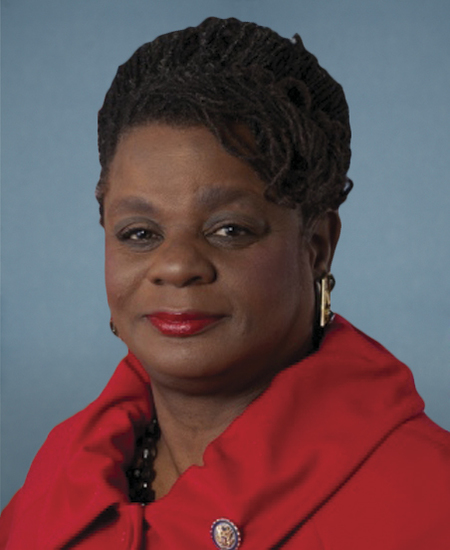
Rep. Gwen Moore
Sponsored bills
21st Century Civilian Conservation and Climate Corps Act This bill temporarily authorizes and provides funding for the President to establish and operate a Civilian Conservation and Climate Corps to employ young adults (ages 16-25) in connection with public conservation and climate projects. If available funds are insufficient to employ every eligible individual seeking employment with the corps, preference must be given, in order, to (1) unemployed veterans, (2) unemployed individuals who have exhausted their unemployment benefits, (3) individuals who are otherwise eligible for unemployment benefits, (4) members of groups determined to have suffered economic or social disadvantages to finding decent work, and (5) other unemployed individuals. The corps must pay employees wages comparable to wages paid to public-sector employees. The corps may also provide room, board, and clothing for employees, but the cost of these accommodations must be deducted from wages.
This bill expands the tax credit for nonbusiness energy property to include a credit for home energy audits. The amount of such credit is 30% of the cost of a home energy audit, not to exceed $150. The bill defines home energy audit to mean an inspection and written report for a dwelling located in the United States that is owned and used by a taxpayer as the taxpayer's principal residence. The audit must identify the most significant and cost-effective energy efficiency improvements for such dwelling, including an estimate of the energy and cost savings for each improvement, and be conducted and prepared by a certified home energy auditor.
Medicare Negotiation and Competitive Licensing Act of 2021 This bill establishes several requirements relating to the prices of prescription drugs. Specifically, the bill requires the Centers for Medicare & Medicaid Services (CMS) to negotiate with pharmaceutical companies regarding prices for drugs covered under Medicare. (Current law prohibits the CMS from doing so.) If the CMS is unable to negotiate the price of a drug, such drug is subject to competitive licensing in order to further its sale under health insurance programs, notwithstanding existing government-granted exclusivities. The negotiated prices also apply to other federal health care programs, private health insurance, and the uninsured; pharmacies that charge more than the negotiated price for uninsured individuals are subject to civil penalties. Manufacturers must also comply with specified reporting requirements relating to prices and licensing, subject to civil penalties. The bill also institutes an excise tax on drugs for which the price spikes beyond a certain limit, subject to specified exemptions, as well as on drugs for which the price exceeds the negotiated price.
Veterans' Agricultural Apprenticeship Act of 2021 This bill requires the Department of Agriculture to establish a program to make direct loans to farmers and ranchers who will provide mentorship and apprenticeship opportunities for veterans who have not previously operated a farm or ranch. The Government Accountability Office must report on the effectiveness of the program in assisting veterans in becoming farmers and ranchers.
Protecting Access to Lifesaving Screenings Act of 2021 or the PALS Act This bill makes a series of changes relating to health insurance coverage of screening mammography. Specifically, the bill requires that any provision of law referring to current recommendations of the U.S. Preventive Services Task Force (USPSTF) with respect to breast cancer screening mammography be administered as if (1) the provision referred to USPSTF recommendations last issued before 2009; and (2) those recommendations applied to any screening mammography modality, including any digital modality of such a procedure. This requirement shall also apply to the Veterans Health Administration's policy on mammography screening for veterans. In addition, the bill preserves Medicare coverage for screening mammography, without a requirement for coinsurance, and expands the definition of screening mammography to include any digital modality of such a procedure. Further, the Centers for Medicare & Medicaid Services may not decrease the frequency with which screening mammography may be paid by Medicare for a woman over 39 years of age. In 2009, the USPSTF updated its guidelines to recommend against routine screening mammography for women between 40 to 49 years of age and to recommend biennial, instead of annual, screening mammography for most women between 50 to 74 years of age. In 2015, through the appropriations process, a three-year moratorium was placed on implementing the guidelines; the moratorium was subsequently renewed until January 1, 2023.

Fair COLA for Seniors Act This bill bases cost-of-living adjustments for certain benefits available through federal and military retirement programs, Social Security, and specified programs for veterans on a price index that tracks the spending patterns of older consumers. The Bureau of Labor Statistics of the Department of Labor must publish that price index on a monthly basis.
Voices for Veterans Act This bill expands the membership of the Advisory Committee on Minority Veterans to include veterans who are lesbian, gay, bisexual, transgender, gender diverse, gender non-conforming, intersex, or queer. Among other responsibilities, the committee advises the Department of Veterans Affairs on the administration of benefits and provision of health care, benefits, and services to minority veterans.
Schools Preventing Hunger in At-Risk Kids Act or the SPARK Act This bill expands automatic eligibility for free school lunches and breakfasts to include children who have been placed in kinship care with a relative or family friend with the involvement of the state child welfare agency. To enroll in the program, a family must document the child's status to the appropriate local educational agency.
Prohibition of Medicaid Funding for Conversion Therapy Act This bill prohibits state Medicaid programs from covering conversion therapy. The bill defines conversion therapy as any practice or treatment that seeks to change a person's sexual orientation or gender identity in exchange for monetary compensation.