

Maddy summaryHR 5408, the Faster Labor Contracts Act, requires employers to begin negotiating a first contract with a newly certified union within 10 days of written request. If no agreement is reached within 90 days, the parties must seek mediation, and if unresolved after 30 days of mediation, the dispute moves to binding arbitration by a three-member panel. The arbitration decision, based on factors like employer finances, industry standards, and cost of living, becomes binding for two years. This bill directly affects newly certified unions and their employers during initial contract negotiations, aiming to reduce delays that currently average 465 days.
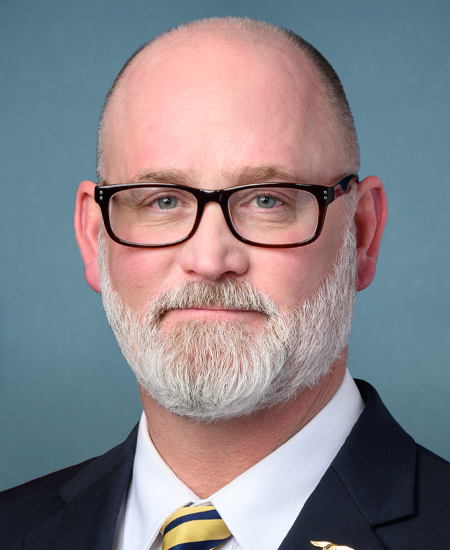
Rep. Derrick Van Orden
Sponsored bills
Maddy summaryThe TSP Modernization Act allows individuals to electronically transfer money from their Thrift Savings Fund accounts to qualified retirement plans at brokerage firms, a change that takes effect one year after the law is passed. To initiate this transfer, account holders must provide the necessary information to the Federal Retirement Thrith Investment Board. Additionally, the bill requires the board to submit a report to Congress one year after enactment detailing how the electronic transfer process was implemented.
Maddy summaryThe Veterans Hearing Aid Improvement Act of 2026 directs the Department of Veterans Affairs to run a two-year demonstration project evaluating the cost and effectiveness of covering FDA-cleared, over-the-counter hearing aids for eligible veterans with mild-to-moderate hearing loss. To participate, veterans must be enrolled in the VA system, receive a clinical clearance from an audiologist, and have access to a smartphone or Wi-Fi to operate the devices. The project will compare these over-the-counter options against traditional prescription hearing aids at selected VA facilities and require the Secretary to submit interim and final reports on the fiscal impact and health outcomes. Additionally, the bill mandates a separate study by the Comptroller General to analyze the current coverage of hearing aids for veterans and provide recommendations for potential program changes.
Maddy summaryThe Abraham Accords Expansion Act of 2026 updates the legal framework for the Special Envoy to include Central Asia and the Caucasus in normalization efforts alongside existing regions. This change formally recognizes Kazakhstan as the first Central Asian nation to join the Abraham Accords and defines specific countries within the Caucasus and Central Asia regions. The bill requires the Special Envoy to coordinate with other federal agencies like Defense and Commerce while implementing these goals using existing authorities without requesting new funding. Additionally, the act allows the Special Envoy to appoint a Deputy Special Envoy with relevant regional expertise to assist in these expanded diplomatic activities.
Maddy summaryThis resolution proposes to officially designate June as "Family Month" to highlight the importance of the traditional nuclear family. It also calls for the House of Representatives to stop recognizing Pride Month, which it argues has replaced the celebration of family values. The bill is sponsored by a group of representatives who believe that strengthening traditional marriage is essential for societal stability and population growth.
Maddy summaryThis bill increases monthly disability compensation for veterans eligible for aid and attendance by adding a $833.33 supplemental payment, effective December 2026. It also creates an automatic adjustment for dependency and indemnity compensation (DIC) payments, tying them to Social Security benefit increases plus an additional 1%, for up to five years starting December 2026. Additionally, it temporarily allows the VA to collect fees for certain housing loans from veterans with a 70% or lower disability rating (2025-2035), effective August 2026. These changes directly affect veterans receiving disability compensation, surviving family members receiving DIC, and veterans applying for VA-guaranteed housing loans.
Maddy summaryHR 1041, the Veterans 2nd Amendment Protection Act, prevents the Department of Veterans Affairs (VA) from automatically sending veterans' personal information to the national background check system (NICS) solely because a court has appointed a fiduciary (like a guardian) to manage their benefits. This directly affects veterans who have a fiduciary appointed due to mental health or cognitive challenges but are not deemed a danger to themselves or others. The bill requires a court order finding the veteran poses a danger before any such information can be shared with the NICS. It changes VA procedures to block unnecessary barriers to firearm ownership for veterans who qualify for fiduciary support without a judicial determination of danger.
Maddy summaryThe Firearm Freedom Act of 2026 removes the federal ban on the possession and transfer of machineguns by repealing a specific section of the United States Code. This change would allow individuals who currently possess these weapons to keep them and would enable the legal transfer of machineguns between private citizens. The bill directly affects existing owners of machineguns and would alter the rules governing how these firearms can be sold or given away. By eliminating this restriction, the legislation aims to expand the types of firearms that are legally transferable under federal law.
Maddy summaryThe Recycling Infrastructure and Accessibility Act of 2025 establishes a competitive federal grant program to fund projects improving recycling access in underserved communities. It authorizes $30 million annually (2025-2029) for grants to states, local governments, tribes, or public-private partnerships to build infrastructure like transfer stations, expand curbside collection, or reduce transport costs. Grants must be $500,000-$15 million, with 70% reserved for projects in communities lacking a materials recovery facility within 75 miles. The program requires grantees to report on implementation and outcomes, excluding funding for recycling education.
Maddy summaryThis bill authorizes the U.S. Mint to produce commemorative $5 gold and $1 silver coins marking the 25th anniversary of the September 11, 2001, terrorist attacks. The coins must feature designs honoring victims and first responders (including the inscription "Never Forget") and will be sold only during 2027-2028. All surcharges ($35 per gold coin, $10 per silver coin) collected from sales will fund the National September 11 Memorial and Museum at the World Trade Center, with no net cost to the federal government. The coins are legal tender but primarily intended for collectors, not circulation.