

Maddy summaryHR 4838 extends and enhances federal block grants for specialty crop producers (like fruits, vegetables, and nuts) through 2028, directly affecting state agricultural agencies and farmers. The bill requires states to consult with producers and groups when designing grant programs and outlines how funds must be used to boost competitiveness. It sets annual funding at $100 million starting in fiscal year 2024, replacing previous funding levels that expired in 2023. The law aims to support state-level initiatives through structured planning and stakeholder input.
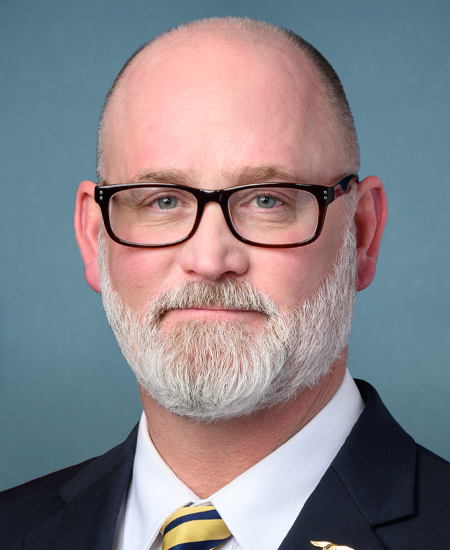
Rep. Derrick Van Orden
Sponsored bills
Maddy summaryHR 1435, the Preserving Choice in Vehicle Purchases Act, amends the Clean Air Act to restrict states from implementing vehicle emissions rules that limit the sale or use of new gasoline-powered cars. It directly affects states with stricter emissions standards (like California) by adding a new definition that blocks state rules "directly or indirectly" limiting internal combustion engine vehicles as defined in federal regulations as of January 1, 2023. The bill requires the EPA to revoke existing state emissions waivers granted between January 2022 and the bill’s enactment if they don’t comply with this new definition. This creates a concrete federal standard preventing states from advancing policies that could reduce demand for conventional vehicles.
Maddy summaryHR 5465, the Congressional Access to Bureaucratic Offices Act (CABO Act), requires federal agency heads to allow Members of Congress and their staff access to agency headquarters buildings during regular business hours. It mandates that access be granted upon presentation of valid congressional identification (for Members) or a staff badge while accompanied by the employing Member (for staff), with exceptions for areas requiring secret-level security clearance. The bill also ensures this access applies during declared emergencies (like national emergencies under the National Emergencies Act or public health emergencies), without imposing additional costs by using existing agency funds. This directly affects how federal agencies manage physical access for congressional personnel.
Maddy summaryHR 5437, the Protecting Infrastructure Investments for Rural America Act, modifies federal transportation grant rules to better support small rural communities. It redefines "small community" as areas outside urbanized zones with 5,000 or fewer residents (down from 20,000) and requires at least 5% of annual program funds to support projects in these areas. The bill increases federal funding for eligible projects in small communities from 80% to 90% of costs and mandates that projects must improve economic development or quality of life for residents. This directly affects rural towns and villages with populations under 5,000 seeking highway, road, bridge, or tunnel improvements.
Maddy summaryHR 3152, the "Fight CRIME Act," aims to maintain international restrictions on Iran's missile-related activities by requiring diplomatic efforts to extend these restrictions before they expire in October 2023. The bill mandates annual reports detailing U.S. diplomatic strategies, potential impacts of expiration, and measures to deter missile technology transfers to Iran. It establishes sanctions against foreign individuals or entities that knowingly support Iran's missile or drone programs, including asset freezes and visa restrictions. These sanctions apply regardless of whether UN restrictions remain in effect after their expiration, directly affecting foreign entities involved in these activities.
Pollution-Free Aviation Sites Act or the PFAS Act This bill directs the Department of Transportation (DOT) to provide grants to Part 139 airports for a per- and polyfluoroalkyl substances (PFAS) replacement program for firefighting foams and related equipment. (Part 139 airports include airports that serve scheduled and unscheduled air carrier operations for aircraft with more than 30 seats or serve scheduled air carrier operations for aircraft with 10-30 seats.) DOT must establish the PFAS replacement program within 90 days of the Department of Defense approving a fluorine-free firefighting agent (i.e., an agent that does not contain any PFAS). Under the program, DOT must reimburse eligible airport sponsors for the reasonable and appropriate costs associated with the one-time initial acquisition of fluorine-free firefighting alternatives, the disposal of PFAS products as part of the transition to a fluorine-free agent, cleaning or disposal of existing equipment or components, and replacement of aircraft rescue and firefighting equipment. DOT must prioritize grants of up to $2 million to replace aircraft rescue and firefighting vehicles at specific smaller airports (i.e., Index A airports) that do not have existing capabilities to produce fluorine-free foam. DOT must determine the eligibility of costs payable under the PFAS replacement program by taking into account all engineering, technical, and environmental protocols and generally accepted industry standards that are developed or established for fluorine-free foams.
Maddy summaryHR 5355, the Save Our Airports Reporting Act, requires the FAA Administrator to submit biannual progress reports to Congress on developing a national transition plan for fluorine-free firefighting foam at airports. The reports must detail progress in providing certified commercial airports (part 139 airports) and local authorities with EPA guidance on environmental limits, DoD transition plans, decontamination best practices, and implementation timelines. The reporting continues until the FAA notifies Congress the transition plan is complete. This bill directly affects FAA operations, certified airports, and local airport safety oversight authorities. It is a procedural requirement focused on transparency, not a direct policy change to firefighting standards.
Maddy summaryHR 5383, the GIVE MILK Act, amends the Child Nutrition Act to allow WIC participants with young children to choose their preferred milk type (whole, low-fat, or nonfat) instead of receiving a default option. This change directly affects WIC participants caring for children aged 12 months to 4 years, aligning with dietary guidelines for that age group. The key provision requires the Secretary of Agriculture to issue the milk type elected by the participant or their guardian, updating WIC program regulations under Section 17(f) of the Child Nutrition Act. The bill focuses on enabling participant choice based on established nutritional recommendations for childhood development.
Maddy summaryThe Jobs in the Woods Act creates a federal grant program to train workers for forestry jobs in rural communities. It provides competitive grants (ranging from $500,000 to $2 million) to eligible groups like states, tribes, nonprofits, or schools for career training programs in forestry operations and products. Priority is given to projects addressing aging workforces, youth engagement through school partnerships, and job placement. The program is funded at $10 million annually from 2024 through 2028, targeting low-income rural areas with populations under 50,000.
Maddy summaryHR 4959 requires the Comptroller General to submit a report to Congress within one year of enactment on the condition and safety of dams funded through USDA watershed programs. The report must detail each dam's location, structural status, compliance with environmental guidelines, safety risk classification, whether it meets its intended purpose, and if decommissioning is warranted due to safety, cost, or environmental factors. It applies specifically to dams supported under four USDA watershed laws, including the Watershed Protection Act and the 1944 Flood Prevention Act. This is a data-gathering measure focused on transparency, not a policy change or mandate for action.