

Maddy summaryHR 3112, the Better CARE for Animals Act of 2025, strengthens enforcement of the federal Animal Welfare Act by requiring dealers and exhibitors to hold valid licenses for animal sales or transport (Section 4). It expands enforcement authority by allowing the Attorney General to sue violators for up to $10,000 per day, seize animals, and seek injunctions (Section 20), while clarifying that courts can address violations of related rules and regulations. The bill directly affects animal dealers, exhibitors, the USDA, and the Department of Justice, creating clearer pathways for holding violators accountable. Key provisions include updating definitions, broadening inspection powers to cover all regulations, and directing penalty funds toward temporary animal care costs during legal proceedings.
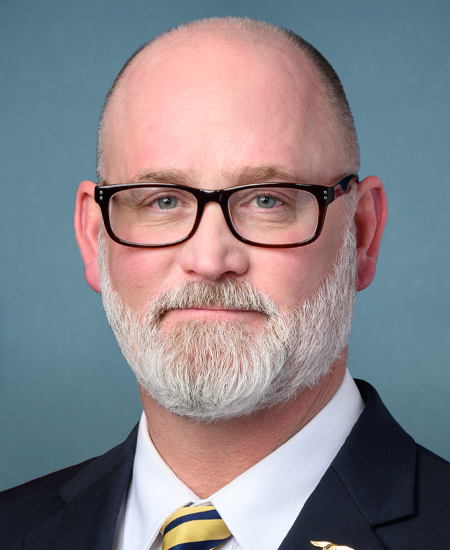
Rep. Derrick Van Orden
Sponsored bills
Maddy summaryThis bill expands access to employee ownership by modifying the Small Business Act to allow S corporations owned by employee stock ownership plans (ESOPs) to retain small business status, even when an ESOP owns over 49% of the company. It creates a new Treasury Department office to provide education and technical assistance for S corporations establishing ESOPs, and establishes a Labor Department Advocate for Employee Ownership to coordinate outreach and resolve disputes. These changes directly affect S corporations transitioning to ESOP ownership and their employees, who gain retirement benefits through ESOP accounts. The bill aims to increase employee ownership by removing eligibility barriers and improving support for businesses adopting this model.
Maddy summaryThis bill requires most private health insurance plans to cover diagnostic and supplemental breast exams with no out-of-pocket costs (like deductibles or copays) for enrolled patients. It specifically covers exams used to evaluate abnormalities found in screenings (diagnostic) or for high-risk screening without abnormalities (supplemental), based on medical guidelines. Plans can still require prior authorization for these exams, and state laws offering stronger protections remain in effect. The rule takes effect for plan years starting January 1, 2026.
Maddy summaryThe BUILD Act of 2025 creates two federal grant programs to help small communities improve public safety infrastructure. It provides up to $4 million per project for law enforcement agencies serving communities under 50,000 residents to upgrade facilities focused on emergency services, officer training, recruitment, or community safety. Similarly, it offers grants for fire departments (career, combination, or volunteer) in the same size communities to enhance facilities for firefighting, emergency medical services, personnel training, or community safety. The bill authorizes $250 million annually from 2026 through 2028 for each program and requires annual reports on grant usage and infrastructure needs.
Hot Foods Act of 2025 This bill expands the Supplemental Nutrition Assistance Program (SNAP) to permit the use of SNAP benefits to purchase hot foods or hot food products ready for immediate consumption.
Maddy summaryThis bill creates a new program within the Supplemental Nutrition Assistance Program (SNAP) to provide point-of-sale incentives for purchasing specific dairy products. It targets SNAP households by offering incentives at checkout for fluid milk, yogurt, and cheese made from cow’s milk (defined as "naturally nutrient-rich dairy" under the bill). The program will fund competitive grants to state/local governments and nonprofits to implement these incentives, with $10 million allocated annually for implementation and evaluation. It also transitions existing dairy incentive projects into this new framework and repeals the previous program after a one-year transition period.
Maddy summaryHR 2819, the DRIVE Act, prohibits the Federal Motor Carrier Safety Administration from requiring speed limiting devices on trucks weighing over 26,000 pounds operating in interstate commerce. This directly affects commercial truck drivers and carriers that operate large vehicles across state lines. The bill blocks the agency from implementing any rule mandating speed limiters that would cap these trucks' maximum speed. It prevents a potential new federal requirement for trucking companies without altering existing safety standards.
Maddy summaryHR 1526 (NORRA of 2025) limits U.S. district courts' power to issue injunctions. It prohibits courts from granting court orders that stop actions affecting parties outside the specific lawsuit, restricting injunctions to apply only to the immediate parties involved in the case. This change would directly affect federal district courts and the parties seeking injunctive relief in litigation. The bill adds Section 1370 to Title 28 of the U.S. Code, requiring that any injunction be limited to the specific case parties. It does not alter other court powers or affect existing legal procedures beyond this specific restriction.
Maddy summaryThe VETT Act (HR 981) improves transparency for veterans using education benefits by changing how educational institutions share program details. It requires schools to provide veterans with a clear notice if they cannot supply complete information about program costs or terms, including what is missing and the best available estimate for that information. The bill also mandates the Department of Veterans Affairs to create a central website for regularly updating training resources for school officials who handle veterans' education benefits. These changes directly affect veterans seeking education assistance and the colleges/universities participating in VA programs.
Maddy summaryHR 2767, the BRAIN Act, aims to advance brain tumor research and improve patient care by requiring the NIH to create a public database of tumor samples collected with federal funding. It authorizes $50 million annually for a Glioblastoma Therapeutics Network to accelerate treatment development and $10 million for cellular immunotherapy research (including CAR-T therapies) targeting brain tumors. The bill also mandates a national awareness campaign to increase understanding of cancer clinical trials and biomarker testing, plus $5 million yearly for pilot programs studying survivor care coordination and follow-up services. Additionally, it directs the FDA to issue guidance ensuring brain tumor patients can access clinical trials. These provisions directly affect patients, researchers, and healthcare providers focused on brain tumors and rare cancers.