

Maddy summaryThis bill creates a tax credit for businesses selling products made with U.S.-grown cotton. The credit equals 24% of the cotton's market value if processed only in the U.S. or in countries with U.S. trade deals, or 18% for other processing locations. To qualify, cotton must be digitally traced from U.S. farms to finished products and certified by the USDA as meeting origin requirements. It directly affects clothing and textile manufacturers selling qualifying products in the U.S. market.
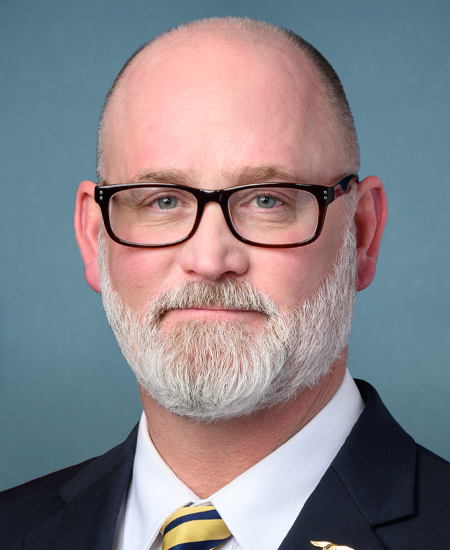
Rep. Derrick Van Orden
Sponsored bills
Maddy summaryThe AI OVERWATCH Act requires U.S. exporters to obtain a license for sending certain high-performance integrated circuits (defined by specific technical specifications like processing power or bandwidth) to countries designated as "concerns," including China, Russia, Iran, and North Korea. Before approving such licenses, the Commerce Department must submit detailed certifications to Congress, including assurances the export won’t support military/intelligence capabilities of the recipient country and won’t harm U.S. semiconductor availability or AI leadership. The bill also creates an exemption for U.S. companies meeting strict security and ownership standards ("trusted United States persons") to export these chips to non-target countries without a license. Additionally, it mandates a national security strategy assessing how such exports affect U.S. AI competitiveness, particularly regarding China’s semiconductor production and capabilities.
Maddy summaryHR 4105, the VET Act of 2025, establishes a federal grant program to help veterans, active-duty service members transitioning out of the military, and their spouses secure jobs in the energy industry. The program provides grants to energy companies (including manufacturers of solar, wind, or nuclear equipment) to cover costs like job training, recruitment, and relocation for eligible individuals - prioritizing those with military energy experience, in opportunity zones, or facing barriers like homelessness. Grants are capped at $10,000 per hire, with a maximum $500,000 annual limit per company, funded at $60 million yearly from 2026-2031. Companies must report on job retention, employee satisfaction, and program outcomes to the Department of Labor, with a final evaluation due to Congress by 2030.
Maddy summaryHR 7154, the Streamlining Small Business Contracts Act of 2026, raises the maximum dollar limit for certain sole-source contracts awarded to small businesses under the Small Business Act. The bill amends four specific sections (8(a)(1)(D)(i)(II), 8(m)(7)(B), 8(m)(8)(B), 31(c)(2)(A)(ii), and 36(c)(2)) to increase the threshold from $7 million to $10 million for these contracts. This change directly affects small business concerns that qualify for the specified contracting authorities, allowing them to secure larger contracts without competitive bidding. The key mechanism is simply adjusting the dollar limit in the relevant provisions of the Small Business Act.
Maddy summaryThe FAST VETS Act (HR 4446) modifies how the Department of Veterans Affairs (VA) updates vocational rehabilitation plans for veterans. It requires the VA to rework a veteran’s individualized plan only if two conditions are met: (1) the veteran’s job-related challenges have changed, making the original goals unachievable, and (2) a new plan would better achieve their long-term employment goals. Veterans currently enrolled in VA vocational rehabilitation programs are directly affected, as this change limits automatic plan revisions to cases where specific, documented shifts in their circumstances occur. The law does not alter eligibility or funding but refines the process for adapting plans to evolving veteran needs.
Maddy summaryHR 7137, the Shutdown Fairness Act, requires federal agencies to pay covered employees (including most federal workers and military personnel) and covered contractors their regular pay during government shutdowns. It appropriates funds from the Treasury to cover standard employee compensation and contractor payments for work performed during a lapse in regular appropriations, ensuring pay continues without delay (within 7 days if a shutdown is ongoing at enactment) and aligns with regular pay schedules. The bill applies only to individuals employed or with accepted offers before the shutdown began and mandates that these payments be charged to future appropriations. It does not change agency obligations under existing contracts or authorize new spending beyond the specified shutdown period.
Maddy summaryHR 7112, the Veterans’ Bill of Rights Act of 2026, requires the Department of Veterans Affairs (VA) to clearly inform veterans about their rights regarding VA healthcare, benefits, and services. It codifies 10 specific rights, including access to care (from VA or community providers), respect and dignity, informed consent, awareness of benefits, and the right to file complaints without retaliation. The bill mandates that the VA integrate these rights into all policies, train employees annually, prominently display them at facilities and online, include them in transition programs, and make them accessible via VA apps and portals within 180 days of enactment. This law focuses on improving transparency and accountability in VA interactions but does not create new legal rights or change eligibility requirements for benefits.
Maddy summaryThe Domestic Organic Investment Act of 2025 establishes a new grant program to strengthen the U.S. domestic organic supply chain. It provides federal grants (up to $2 million for facility projects, $100,000 for equipment) to eligible entities like organic producers, cooperatives, and tribal governments for expanding storage, processing, and distribution capacity. Grants require matching funds (50% for major projects, 25% for equipment) but may waive requirements for beginning farmers and veterans. The program aims to reduce reliance on imported organic products, modernize supply chain systems, and help entities meet certification and food safety standards. Funding is authorized for fiscal years 2026-2030.
Maddy summaryThis bill requires state agencies administering the SNAP (food stamp) program to provide recipient-level data to the USDA Secretary upon request. It directly affects state SNAP agencies, which must submit this data within 30 days (or sooner for urgent cases) in secure electronic formats. Key provisions include mandatory data sharing for program oversight and integrity, strict privacy safeguards under the Privacy Act, and potential withholding of federal funds for non-compliance. The bill also clarifies that this does not limit the USDA's existing authority to access state data for program administration.
Maddy summaryHR 4782, the Local Farmers Feeding our Communities Act, establishes a USDA program to connect local farmers with food distribution networks. It requires eligible entities (like state agriculture agencies) to use funds to purchase unprocessed or minimally processed local foods from covered producers - including at least 25% from small-size, mid-size, beginning, or veteran farmers - while providing technical assistance for food safety and supply chains. The bill allocates $200 million annually (2026-2030) from the Commodity Credit Corporation, mandating 10% for Tribal governments and 1% per state before distributing remaining funds. This directly supports regional food security by boosting economic opportunities for local farmers and improving access to fresh, nutritious food through established distribution channels.