

PrEP Assistance Program Act This bill establishes a grant program to provide pre-exposure prophylaxis (PrEP) and related services to individuals at no cost. PrEP is medication given to individuals at risk of HIV to reduce their likelihood of contracting the virus. The Department of Health and Human Services must award the grants to state, tribal, and local governments; certain health clinics; and community-based organizations.
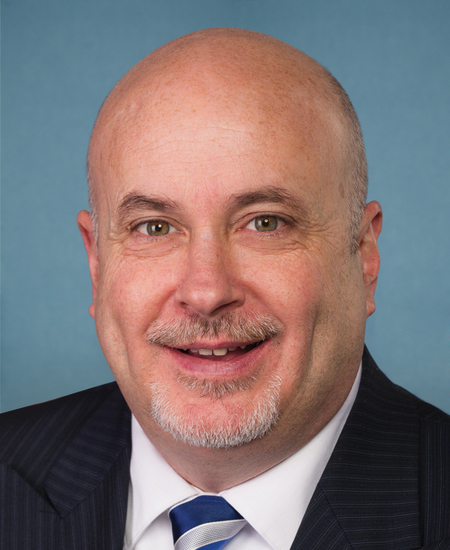
Rep. Mark Pocan
Sponsored bills
Reducing Waste in National Parks Act This bill directs the National Park Service to establish a program for the National Park System to reduce disposable plastic products and, if applicable, eliminate the sale and distribution of disposable plastic products. Each regional office of the National Park Service must eliminate the sale of water in disposable plastic products and the sale and distribution of other disposable plastic products after consideration of several specified factors (e.g., the costs and benefits to overall operations). Each regional office must develop a proactive visitor education strategy to address visitor expectations of water availability and explain the rationale for the program and its implementation.
Reconciliation in Place Names Act This bill directs the Department of the Interior to establish the Advisory Committee on Reconciliation in Place Names to advise the Board on Geographic Names with regard to renaming geographic features with offensive place names. The board shall rename a geographic feature with an offensive name in accordance with a recommendation of the committee unless the board determines that (1) there is a compelling reason and substantial public interest in rejecting the recommendation, or (2) approving the recommendation would violate federal law. The board shall accept or reject a recommendation within three years of receiving the recommendation.
This resolution condemns the atrocities against religious and ethnic minority women in the Xinjiang Uyghur Autonomous Region in China. It also calls on China to end all coercive policies, including coercive population-control practices, and to release all individuals detained in internment camps and forced-labor programs.
This resolution supports the designation of National Co-Op Month, commends the cooperative business model for its contributions to the economy, and expresses confidence in cooperatives to continue their successes.
Maddy summaryHR 5537, the Toxic-Free Beauty Act of 2021, bans specific chemicals in cosmetics under federal law. It prohibits the use of substances like certain PFAS (water-repellent chemicals), phthalates (e.g., dibutyl phthalate), formaldehyde, mercury, and specific parabens in cosmetic products. The ban directly affects cosmetic manufacturers, requiring them to reformulate products, and benefits consumers by removing these chemicals from beauty items. The law takes effect on January 1, 2025, with the ban applying to products bearing or containing the listed substances.
Stabilizing Medicare Access to Rehabilitation and Therapy Act or the SMART Act This bill modifies the application of a certain Medicare payment methodology for outpatient physical therapy services and outpatient occupational therapy services that are furnished by a therapy assistant. Under current law, effective January 1, 2022, payment for such services is 85% of the otherwise applicable rate. The bill delays this effective date by one year and excludes services that are furnished in rural or medically underserved areas from this payment methodology. The bill also specifies that supervision requirements for outpatient physical therapy services that are furnished through private practice may not be more stringent for purposes of Medicare coverage than under state law.
Equal Access to the Right Nutrition for Military Families (EARN) Act of 2021 This bill facilitates the participation of military households in the Supplemental Nutrition Assistance Program (SNAP) by excluding from income limits the housing allowance provided to members of the Armed Forces and modifying administration and other aspects of the program.
This concurrent resolution (1) recognizes the 131 years of significant and meaningful contributions the 1890 Institutions (i.e., historically Black universities established under the Second Morrill Act of 1890) have made to the United States, (2) supports the efforts of the Department of Agriculture and other federal agencies to build stronger partnerships with such institutions, and (3) commits to working in a bipartisan way to address the past funding and program inequities of such institutions.
Animal Freedom from Testing, Experiments, and Research Act of 2021 or the AFTER Act of 2021 This bill requires federal research facilities to facilitate the adoption or nonlaboratory placement of certain warm-blooded animals (e.g., dogs, cats, monkeys, guinea pigs, hamsters, and rabbits) with animal rescue organizations, animal sanctuaries, animal shelters, or individuals. In order to be adopted or placed, the animals must (1) no longer be needed for research; (2) be suitable for release; (3) not be birds, rats, or mice.