

Maddy summaryThis resolution (HRES 356) expresses the U.S. House of Representatives' condemnation of police brutality worldwide, including excessive force, extrajudicial killings, and disproportionate harm to racial minorities, women, migrants, and LGBTQIA+ communities. It urges the U.S. government to stop arms sales to countries with documented police brutality, end militarized policing tactics domestically and abroad, and redirect funds toward community programs. As a symbolic resolution, it does not create new laws but calls for specific policy actions from the executive branch and businesses.
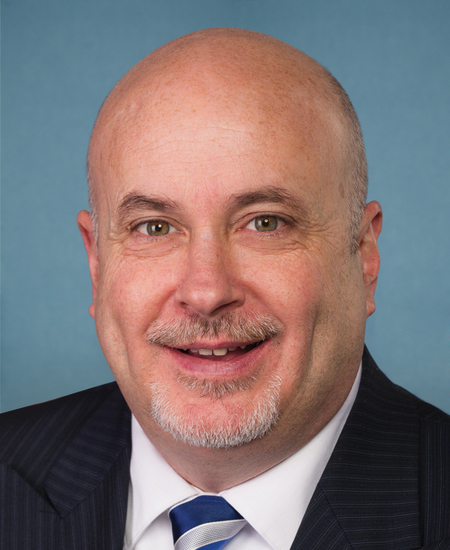
Rep. Mark Pocan
Sponsored bills
Maddy summaryHRES 344 is a non-binding resolution that declares racism a public health crisis in the United States, directly affecting Black, Latino, Native American, and other communities of color who experience severe health disparities. It cites historical and ongoing systemic racism as a root cause of unequal health outcomes, including higher infant mortality, chronic disease rates, and barriers to care. The resolution commits the federal government to developing a national strategy to address health inequities, dismantle systemic racism, and tackle social determinants of health affecting marginalized groups. It does not create new laws or funding but urges cross-government action based on established public health criteria.
This resolution calls for the creation of a Green New Deal with the goals of achieving greenhouse gas and toxic emissions reductions needed to stay under 1.5 degrees Celsius of warming; establishing millions of high-wage union jobs and ensuring economic security for all; investing in infrastructure and industry; securing clean air and water, climate and community resiliency, healthy food, access to nature, and a sustainable environment for all; and promoting justice and equality. The resolution calls for accomplishment of these goals through a 10-year national mobilization effort. The resolution also enumerates the goals and projects of the mobilization effort, including building smart power grids (i.e., power grids that enable customers to reduce their power use during peak demand periods); upgrading all existing buildings and constructing new buildings to achieve maximum energy and water efficiency; removing pollution and greenhouse gas emissions from the transportation and agricultural sectors; cleaning up existing hazardous waste and abandoned sites; ensuring businesspersons are free from unfair competition; and providing higher education, high-quality health care, and affordable, safe, and adequate housing to all.
This resolution recognizes the opportunity for Black Maternal Health Week to raise national awareness of the state of Black maternal health in the United States.
Protecting the Rights Of Towns against federal Enforcement contrary to Constitutional Tenets for Immigration Act of 2021 or the PROTECT Immigration Act of 2021 This bill establishes that the authority to investigate, apprehend, or detain aliens for the purposes of immigration enforcement is limited to immigration officers and authorized Department of Homeland Security employees, except when such authority is provided to other individuals under specified statutes. Specifically, this restriction does not apply in certain instances involving (1) an actual or imminent mass influx of aliens, (2) persons bringing in and harboring aliens in violation of immigration laws, or (3) an alien illegally present in the United States who had previously left or was deported after being convicted of a felony. The bill repeals the authority allowing the Department of Justice to enter into agreements authorizing state or local government employees to perform immigration enforcement functions.
Families Belong Together Act This bill provides various immigration benefits for eligible alien parents (or legal guardians) and minor children who were separated by the Department of Homeland Security (DHS) between January 20, 2017, and January 20, 2021. Generally, to be an eligible parent or minor child under this bill, the alien must not be inadmissible for certain crime- or security-related grounds, though DHS may waive certain grounds for humanitarian or public interest reasons. Furthermore, an eligible child who was separated as a minor remains eligible for the immigration benefits after reaching majority. DHS must grant humanitarian parole into the United States to an eligible alien who requests such parole, regardless of whether the alien is physically present in the United States. An eligible alien in the United States may apply for lawful permanent resident status. U.S. Citizenship and Immigration Services shall grant a qualifying alien's lawful permanent resident status within 30 days of receiving the alien's application. An alien who receives lawful permanent resident status under this bill shall be eligible for benefits and services that are available to an alien who is admitted as a refugee. Certain annual numerical limitations shall not apply to aliens who receive lawful permanent resident status under this bill. If an alien seeks judicial review of a denial of an application for lawful permanent resident status under this bill, the Department of Justice shall appoint counsel to represent that alien upon request.
American Housing and Economic Mobility Act of 2021 This bill addresses housing affordability and availability, makes certain changes to the estate and gift taxes, and contains other related provisions. The Department of Housing and Urban Development shall provide grants to (1) state and local governments that remove unnecessary barriers to building affordable units, (2) states to assist borrowers who have negative equity in their homes, (3) state housing finance agencies to construct or acquire affordable rental housing and prevent tenant displacement and harassment, and (4) eligible individuals (generally, lower income individuals who resided in low-income or historically racially segregated areas) to help them purchase their first homes. The bill provides funding through FY2031 for the first-time homeowner grant program established by the bill, through FY2022 for the affordable rental housing construction program established by the bill, and through FY2022 for specified existing rural housing programs. The bill also expands fair housing protections to prohibit discrimination based on sexual orientation, gender identity, marital status, source of income, veteran status, or an individual's perceived membership in a protected class (e.g., an individual's perceived race or sex). Additionally, the bill modifies the estate tax in various ways, including by reducing the number of brackets to three, increasing the tax rates, and reducing the basic exemption amount. The bill also modifies provisions related to gift taxes and transfer taxes.
Honduras Human Rights and Anti-Corruption Act of 2021 This bill temporarily imposes sanctions and other penalties on Honduran president Juan Orlando Hernandez and the government of Honduras for systemic corruption and human rights violations, with particular focus on the Honduran police and military. Specifically, the President must impose asset- and visa-blocking sanctions on Juan Orlando Hernandez due to his corrupt practices, including the use of the state apparatus to protect and facilitate drug trafficking. Additionally, the President must prohibit, within 30 days, the issuance of licenses to export defense articles and services and specified munitions to the Honduran police or military. The bill also (1) makes Honduras ineligible for security assistance to equip and train police and military, and (2) requires U.S. representatives at multilateral development banks to oppose any loans for Honduran police or military. Furthermore, the Department of the Treasury must instruct U.S. leadership of international financial institutions and the U.S. International Development Finance Corporation to promote human rights due diligence and risk management in any loan, grant, policy, or strategy related to Honduras. The sanctions and other penalties put in place under this bill terminate in five years but may be lifted earlier if specified conditions are met.
Gay and Trans Panic Defense Prohibition Act of 2021 This bill generally prohibits a federal criminal defendant from asserting, as a defense, that the nonviolent sexual advance of an individual or a perception or belief of the gender, gender identify or expression, or sexual orientation of an individual excuses or justifies conduct or mitigates the severity of an offense.
Maddy summaryHR 2584, the Judiciary Act of 2021, would change the structure of the U.S. Supreme Court by increasing the number of associate justices from eight to twelve. This bill directly affects the Supreme Court's composition and operations, requiring a quorum of eight justices instead of six to conduct business. The key provision amends Title 28 of the U.S. Code to reflect these numerical changes to the Court's membership and quorum requirements. This is a procedural change to the Court's statutory structure, not a policy affecting the public.