

Global Malnutrition Prevention and Treatment Act of 2021 This act sets out programs and otherwise directs the U.S. Agency for International Development (USAID) to carry out activities to prevent and treat malnutrition globally. Specifically, USAID may leverage resources to address malnutrition through the Global Nutrition Coordination Plan (an interagency effort to strengthen the impact of U.S. investments in nutrition) and its role on the board of directors of the U.S. International Development Finance Corporation. USAID must also select countries based on specified malnutrition-related indicators for purposes of targeting malnutrition prevention and treatment programs and update the selection within five years. Additionally, USAID may establish the Nutrition Leadership Council to coordinate federal government activities to prevent and treat malnutrition; and target resources and nutrition interventions to the populations most susceptible to severe malnutrition and otherwise support efforts to prevent and treat malnutrition globally. The act also requires USAID to provide to Congress an implementation plan and annual reports concerning its programs for treating and preventing malnutrition. The act's provisions terminate seven years after its enactment.
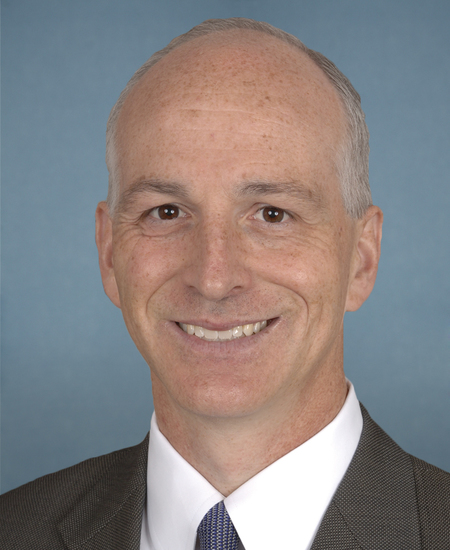
Rep. Adam Smith
Sponsored bills
This concurrent resolution commemorates the 50th anniversary of the enactment of the Federal Water Pollution Control Act Amendments of 1972, commonly known as the Clean Water Act.
Global Food Security Reauthorization Act of 2022 This bill reauthorizes through FY2028 activities to implement the Global Food Security Strategy, a whole-of-government strategy to promote global food security, resilience, and nutrition. The bill also modifies aspects of the strategy, such as requiring the strategy to seek to improve the efficiency and resilience of agricultural production. The bill also reauthorizes through FY2028 activities related to the Emergency Food Security Program, an international market-based assistance program.
National Defense Authorization Act for Fiscal Year 2023 This bill authorizes Department of Defense (DOD) activities for FY2023 and addresses other issues. For example, the bill authorizes the procurement of various items, including destroyers and aircraft; modifies inventory requirements for various Air Force programs; authorizes DOD to furnish electric vehicle charging stations at commissary stores and military exchanges; requires DOD to provide, subject to appropriations, support for the research and development of innovative bioindustrial manufacturing processes; requires DOD to carry out a pilot program to facilitate the transition of certain nontactical vehicles to electric vehicles; requires the Army and the Navy to jointly carry out a pilot program to evaluate the feasibility of using data recorders to monitor the operation of military tactical vehicles; prescribes end strengths for the branches of the Armed Forces; requires the branches of the Armed Forces to notify Congress before taking certain actions regarding reserve units, such as the deactivation or reassignment of such a unit; requires the Army to establish gender-neutral fitness standards for military occupational specialties that are higher than those for noncombat military occupational specialties; requires the Government Accountability Office (GAO) to report to Congress recommendations for improving the retention and recruitment of members who specialize in Army air and missile defense systems, and requires the Army to implement the recommendations; requires the GAO to report to Congress a review of a major military health contract after DOD has entered into the contract; temporarily prohibits certain TRICARE programs (health care programs that cover current and former members of the uniformed services and their dependents) from imposing cost-sharing requirements for prescription contraceptives and certain related services; requires the Department of Homeland Security to designate a laboratory as the Chemical Security Analysis Center; requires the Department of the Treasury to take actions to support international initiatives to provide debt restructuring and relief to developing countries; prohibits federal regulators from taking certain adverse actions against a depository institution solely for providing financial services to a cannabis-related business operating pursuant to state or local law; provides statutory authority for an April 27, 2021, executive order raising the minimum wage for the employees of federal contractors; prohibits barring a veteran from federal employment solely because the veteran consumes or has consumed cannabis; imposes data standards requirements on certain federal agencies, including the Securities and Exchange Commission and the Federal Deposit Insurance Corporation; and establishes the San Gabriel National Recreation Area in California as a unit of the National Park System.
This bill designates the facility of the United States Postal Service located at 3900 Crown Road Southwest in Atlanta, Georgia, as the John R. Lewis Post Office Building.
Expanding Representation at HHS Act of 2022 This bill requires certain agencies and offices within the Department of Health and Human Services to address diversity in their procurement activities and workforce. The bill specifically covers offices and agencies that are authorized to award grants or other financial assistance, such as the Centers for Medicare & Medicaid Services and the Centers for Disease Control and Prevention. Each covered entity must establish an Office of Minority and Women Inclusion that is responsible for managing diversity within the entity and with respect to the entity's activities. This new office is not, however, responsible for enforcing civil rights statutes, regulations, or executive orders. In addition, an entity subject to the bill's requirements must modify its evaluation, award, and termination of grants and contracts to ensure, to the maximum extent feasible, the inclusion of minorities; women; and minority-led and women-led grantees, contractors, subgrantees, and subcontractors. Each entity must also undertake actions to increase diversity in its workforce, including by recruiting at institutions of higher education where the majority of the students are members of minority populations.
Community and Technical College Investment Act of 2022 This bill establishes four grant programs, including a tuition-free community college grant program, to expand access to higher education. Specifically, the bill directs the Department of Education to establish a grant program to facilitate tuition-free community college for all eligible students, a grant program to provide institutional capacity and wraparound service support with respect to the implementation of tuition-free community college, a grant program to provide emergency aid subgrants to eligible students enrolled at public institutions of higher education, and a grant program to provide technical assistance to states applying for any of these grants.
Maximizing Outcomes through Better Investments in Lifesaving Equipment for (MOBILE) Health Care Act This bill allows a health center that currently receives funding through a Health Resources & Services Administration Health Center Program grant to use a New Access Point grant to set up a mobile unit regardless of whether the health center also establishes a permanent health care delivery site. New Access Point grants help health centers establish new delivery sites to provide comprehensive primary care to medically underserved populations. Under current law, health centers may only use the grants to set up a mobile unit if they also establish a permanent site.
Maddy summaryHRES 1383 is a symbolic House resolution designating September 2022 as "National Workforce Development Month." It expresses congressional support for workforce development initiatives but does not create new laws or allocate funding. The resolution acknowledges the importance of programs that train workers for jobs requiring postsecondary education (like community college or apprenticeships) and highlights challenges such as high unemployment among Black and Hispanic workers and pandemic job losses. It directly affects no specific group, as it is a non-binding expression of support for existing federal workforce programs like the Workforce Innovation and Opportunity Act.
Runaway and Homeless Youth and Trafficking Prevention Act of 2022 This bill reauthorizes through FY2027 and expands programs for runaway, homeless, and disconnected youth, including resources and services to support youth victims of human trafficking and youth at risk of being trafficked.