

Maddy summaryThis bill establishes a federal grant program to fund projects restoring native kelp forests, directly affecting eligible entities like fishing industry members, tribes, universities, nonprofits, and state/local governments. It requires projects to address the greatest kelp declines, focus on ecosystem resilience (including natural predator-prey relationships), integrate Indigenous knowledge, and avoid commercial harvesting. The program allocates $5 million annually (2024-2028), with at least $750,000 reserved for tribal projects, and mandates that federal funds cover up to 85% of project costs (with possible waivers). Grants prioritize areas identified in tribal or government restoration plans and require monitoring plans to measure project effectiveness.
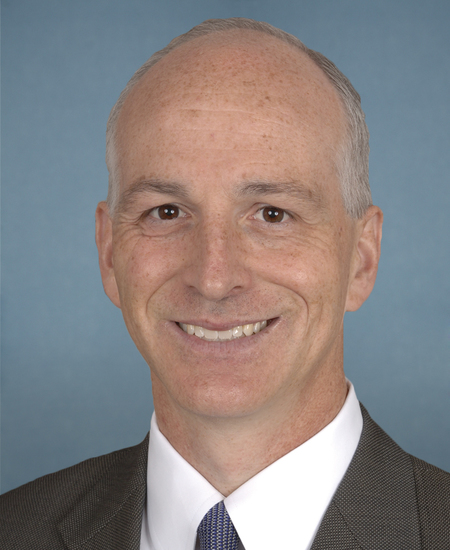
Rep. Adam Smith
Sponsored bills
Maddy summaryThis bill would create a new wealth tax on individuals with significant assets, targeting those with net assets exceeding $50 million. It would tax assets between $50 million and $1 billion at 2%, and assets above $1 billion at 3% (potentially increasing to 6% if certain health care legislation is enacted). The tax would apply to individuals, married couples treated as a single taxpayer, and certain trusts, with specific valuation and reporting requirements for assets. The bill also includes $70 billion in funding over 10 years for the IRS to enforce this new tax and related reporting requirements.
Maddy summaryHRES 1095 is a symbolic resolution expressing congressional support for designating March 2024 as "Music in Our Schools Month." It recognizes music's cultural importance, its long history in U.S. schools, and the unequal access to music education faced by students in underserved communities (including urban/rural schools and schools with high percentages of Black, Hispanic, or Native American students). The resolution does not create new laws, allocate funding, or mandate school actions - it simply affirms the value of music education and calls for greater support. This non-binding resolution was introduced by multiple representatives and referred to the Education Committee.
Maddy summaryHR 7722, the Blue Ocean Energy Innovation Act of 2024, establishes a Department of Energy program to fund research and development of "blue energy technologies" - renewable energy systems or greenhouse gas capture systems operating in aquatic environments. The program directly affects the Department of Energy, national laboratories, and industries like maritime transportation, algae biofuels, and ocean tourism by providing funding to improve these technologies, reduce costs, support coastal job creation, and address unique marine environment challenges. Key mechanisms include creating a dedicated "Blue Economy Center of Excellence" at a national lab, requiring cross-agency coordination with agencies like NOAA and the Maritime Administration, and authorizing $1.5 billion over 10 years (2024-2034) for R&D. The bill aims to advance ocean-based renewable energy while supporting ecosystem restoration and workforce development, without replacing existing funding.
Maddy summaryHCONRES 99 is a symbolic congressional resolution honoring Wadee Alfayoumi, a 6-year-old Palestinian-American boy murdered in a hate crime on October 14, 2023, after being stabbed 26 times by a perpetrator who made anti-Muslim and anti-Palestinian remarks. The resolution recognizes Congress's condemnation of hate crimes, Islamophobia, and anti-Palestinian discrimination, while affirming the United States' "zero tolerance" for such violence. As a procedural resolution (not a law), it does not create new policies but formally honors Wadee and his family, emphasizing the need to reject dehumanizing rhetoric targeting religious or ethnic groups.
Maddy summaryThis bill creates a new fund to provide essential support services like childcare, groceries, and transportation for individuals enrolled in workforce training programs under the Workforce Innovation and Opportunity Act. It authorizes competitive grants to local or state workforce boards (up to $2 million annually per grant) to cover these services for trainees in specific programs. The fund requires partnerships with existing programs like Temporary Assistance for Needy Families (TANF) and SNAP food assistance. It directly affects low-income job seekers by removing barriers to completing training, such as unaffordable childcare costs.
Maddy summaryHR 7634, the Plastic Pellet Free Waters Act, prohibits plastic pellets and pre-production plastic materials from being discharged into water through wastewater, spills, or runoff from specific facilities. It directly affects plastic polymer production facilities, plastic molding and forming facilities, and any point source (like packaging or transport operations) handling plastic pellets. The bill requires the EPA to issue a final rule within 60 days of enactment banning these discharges and updating all relevant wastewater, stormwater, and performance standards in permits and regulations. This creates a legal requirement for facilities to prevent plastic pellet pollution in waterways, targeting a major source of ocean plastic pollution.
Maddy summaryThis concurrent resolution (HCONRES 97) recognizes the gender wage gap, noting that women working full-time earn 84 cents for every dollar earned by men. It highlights racial disparities (e.g., Latinas earn 57 cents, Black women 69 cents) and the economic impact of the gap, including $965 billion in annual lost wages for women. As a symbolic resolution, it does not create new laws or policies but formally acknowledges the issue and reaffirms Congress’s commitment to addressing wage inequality.
Maddy summaryHR 7629, the Protect Our Letter Carriers Act of 2024, allocates $1.4 billion annually (2025-2029) to the U.S. Postal Service for high-security collection boxes and replacing physical universal mailbox keys with electronic versions, directly affecting USPS operations and letter carriers. It requires the Attorney General to appoint specialized prosecutors in each district to coordinate investigations and prosecutions of postal-related crimes, such as assaults on carriers or mail theft. The bill also mandates the U.S. Sentencing Commission to adjust guidelines so that assaults or robberies against postal employees are treated with the same severity as assaults against law enforcement officers. These provisions aim to enhance safety through infrastructure upgrades, improved prosecution, and stricter sentencing for crimes targeting postal workers.
Maddy summaryThe American High-Speed Rail Act authorizes $35 billion annually for high-speed rail corridor development (with $3 billion for corridor planning), requiring at least 20% of project costs to come from non-Federal sources. It defines "high-speed rail" as services reaching 186+ mph and "higher-speed rail" as 110-186 mph, with no more than 20% of funds allocated to higher-speed rail projects. Key provisions include allowing advance acquisition of rail corridors before environmental reviews, creating tax exclusions for rail carriers selling property to high-speed rail projects, and requiring consideration of equity, sustainability, and economic development impacts in planning. The bill affects federal agencies, state and local governments, rail carriers, and communities along proposed rail corridors.