

Maddy summaryHR 8732, the Domestic Workers Bill of Rights Act, would establish new labor protections for domestic workers including nannies, housekeepers, and caregivers who work in private homes. The bill requires written agreements between employers and domestic employees, provides earned sick days, ensures fair scheduling practices, and prohibits unfair wage deductions for cash shortages or communications. It also creates a Domestic Employee Standards Board to recommend workplace standards and establishes a National Domestic Employee Hotline for assistance. The bill specifically targets domestic workers who have historically been excluded from labor protections under the Fair Labor Standards Act and Civil Rights Act, benefiting an estimated 2.2 million domestic workers in the U.S. who are disproportionately women of color and immigrants.
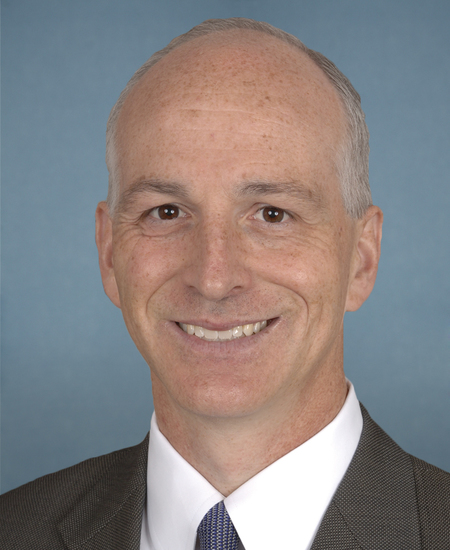
Rep. Adam Smith
Sponsored bills
Maddy summaryThis resolution (HRES 1286) supports continued U.S. funding for Gavi, the Vaccine Alliance, to expand access to vaccines in low-income countries. It directly aids children and communities in these nations by enabling immunization against preventable diseases like measles, malaria, and polio, which has averted an estimated 17.3 million deaths since 2000. Key provisions highlight Gavi's role in reducing child mortality from vaccine-preventable diseases by 70%, achieving a $54 economic return for every $1 invested, and strengthening health systems through cold-chain infrastructure. The resolution urges sustained U.S. financial commitments to maintain Gavi's market-shaping impact, support malaria vaccine rollout, and ensure global health security.
Maddy summaryHRES 1273 designates a day in May 2024 as "Disability Reproductive Equity Day" to raise awareness about reproductive rights barriers faced by people with disabilities. The resolution highlights historical and ongoing issues like forced sterilization laws, accessibility gaps in healthcare, and higher rates of sexual violence, while referencing existing protections under the Rehabilitation Act, ADA, and Affordable Care Act. It does not create new laws but calls for greater attention to ensuring people with disabilities can exercise reproductive autonomy. This resolution directly affects millions of people with disabilities, particularly women, people of color with disabilities, and those with low incomes, who face systemic barriers in reproductive healthcare.
Maddy summaryThe Safe Workplaces Act mandates a study on reducing workplace violence threats, requiring the National Institute for Occupational Safety and Health (NIOSH) to complete a report within 15 months of enactment. This report will inform the Occupational Safety and Health Administration (OSHA), which must then issue nonmandatory guidance within 4 years. The guidance will provide specific, workplace-specific strategies for reducing violence - including engineering controls (like weapon detectors or secure workstations) and work practice controls (such as staff training and security personnel) - across diverse settings like hospitals, retail stores, schools, and restaurants. The bill directly affects all workplaces by establishing a framework for voluntary violence prevention measures, without creating new enforcement standards.
Maddy summaryHR 8617, the Adoptee Citizenship Act of 2024, automatically grants U.S. citizenship to certain internationally adopted individuals who meet specific criteria. It directly affects adoptees adopted by U.S. citizen parents before age 18, who were physically present in the U.S. in legal custody before age 18, never acquired citizenship before the bill's enactment, and were residing in the U.S. on the bill's effective date. For those already in the U.S., citizenship becomes automatic upon meeting these conditions; for those abroad, citizenship is granted upon lawful entry. The bill removes barriers that previously prevented automatic citizenship for these adoptees under prior immigration rules. It requires background checks for visa issuance but exempts applicants from standard inadmissibility grounds.
Maddy summaryThe George Floyd Justice in Policing Act of 2024 establishes a National Police Misconduct Registry to track complaints and disciplinary actions against officers, requiring all federal, state, and local law enforcement agencies to report use-of-force incidents with racial, gender, and age data. It bans chokeholds and carotid holds in police encounters, prohibits no-knock warrants in drug cases, and reforms qualified immunity to make it harder for officers to avoid accountability for misconduct. The bill mandates body cameras for federal officers, requires independent investigations of officer-involved shootings, and creates new data collection systems to monitor racial profiling and use-of-force patterns. It also includes provisions for civilian oversight boards, improved officer training on de-escalation and implicit bias, and restrictions on military equipment transfers to local police departments. This law affects all law enforcement agencies receiving federal funding under programs like Byrne and COPS grants.
Maddy summaryHRES 1063 is a non-binding resolution passed by the U.S. House of Representatives to reaffirm America's commitment to NATO ahead of its 75th anniversary. It formally recognizes NATO's role in collective security, emphasizes Article 5's importance for mutual defense, and supports Finland and Sweden's membership. The resolution also calls on NATO allies to meet the 2% defense spending target, but does not create new laws or affect specific individuals or groups.
Maddy summaryThe READ Act Reauthorization Act of 2023 extends the authorization period for the Reinforcing Education Accountability in Development Act (commonly known as the READ Act) from five to ten fiscal years. This change allows U.S. international education programs, administered by agencies like USAID, to operate without annual reauthorization for a longer period. The bill directly affects programs providing educational support in developing countries, such as teacher training and literacy initiatives. The key mechanism is amending Section 4(a) of the existing law to adjust the funding duration, ensuring continued program stability.
Maddy summaryThe CROWN Act of 2024 prohibits discrimination based on hair texture or style commonly associated with race or national origin, such as braids, locs, cornrows, twists, or afros. It directly affects individuals - particularly people of African descent - who face workplace, school, housing, or public accommodation discrimination due to natural or protective hairstyles. The bill expands existing federal civil rights laws (like Title VI, the Fair Housing Act, and Title VII) to explicitly include hair-based discrimination, requiring compliance in federally funded programs, housing, employment, and public spaces. It clarifies that grooming policies targeting these hairstyles violate anti-discrimination protections without creating new legal standards.
Maddy summaryThe Captive Primate Safety Act prohibits the import, export, sale, transport, breeding, or possession of certain nonhuman primates - including chimpanzees, gorillas, monkeys, and their hybrids - in interstate or foreign commerce. It directly affects private owners, breeders, and commercial traders of these animals, with limited exceptions for pre-enactment animals (requiring registration with the U.S. Fish and Wildlife Service and restrictions on breeding/sale) and registered research facilities. The law amends the Lacey Act to add these primates to prohibited species lists, effective upon enactment, with regulations to be issued within 180 days. Enforcement remains active even if regulations are delayed, ensuring immediate prohibitions on commercial trade and possession.