

Maddy summaryThis bill (HR 9391) designates the U.S. Postal Service facility at 108 North Main Street in Bucoda, Washington, as the "Mayor Rob Gordan Post Office." It updates all official references to this location to reflect the new name, affecting only the postal facility's official designation. The bill is purely ceremonial and does not change any postal services, policies, or obligations.
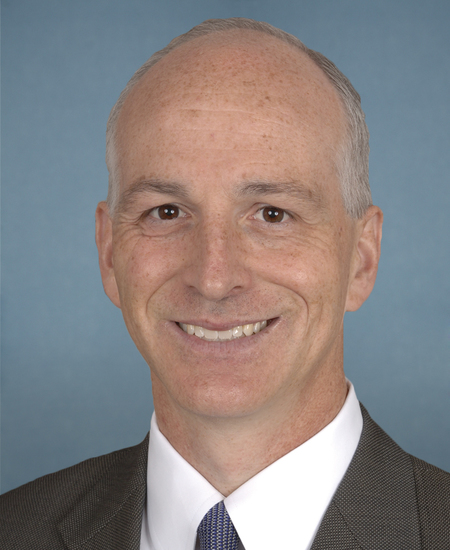
Rep. Adam Smith
Sponsored bills
Maddy summaryThe PROTECT Act of 2024 allows tribal courts to issue search warrants for electronic communications in Indian country using tribal procedures, rather than requiring state court warrants. It explicitly grants tribal courts jurisdiction over drug trafficking (including possession of controlled substances or paraphernalia) and firearms offenses (such as firearm use in crimes or by domestic violence offenders) within tribal lands. This directly affects tribal nations by expanding their authority to enforce laws on their territories for these specific crimes. The bill also extends a federal program for tribal prisoner reentry to include individuals convicted of drug trafficking or firearms offenses under tribal jurisdiction.
Maddy summaryThis resolution aims to block a rule issued by the National Highway Traffic Safety Administration (NHTSA) that sets new fuel efficiency standards for passenger cars, light trucks (starting in 2027), and heavy-duty pickup trucks/vans (starting in 2030). If passed, it would prevent this specific rule from taking effect by disapproving it under a congressional review process. The rule directly affects vehicle manufacturers by requiring them to meet these updated fuel economy targets for future model years. This is a procedural resolution, not a new law, focused solely on halting the implementation of the existing NHTSA rule.
Maddy summaryThis resolution (HRES 1405) is a ceremonial recognition of the 165th anniversary (in 2024) of the peaceful resolution to the 1859 Pig War crisis. It commemorates the diplomatic settlement following a dispute over San Juan Island, where a U.S. farmer killed a British-owned pig, nearly sparking conflict between U.S. and British forces. The resolution honors the peaceful resolution through negotiation and arbitration, which established the U.S.-Canada border along the 49th parallel. As a commemorative resolution, it has no policy impact or direct effect on any individuals or groups.
Maddy summaryThe NO BAN Act (HR 9244) prohibits U.S. immigration authorities from denying visas or entry based on national origin, religion, or sex. It amends immigration law to explicitly ban such discrimination in visa decisions and tightens restrictions on the president’s power to suspend entry of certain groups under Section 212(f). The bill requires specific evidence, narrow tailoring, time limits, and congressional notification for any entry restriction, while mandating public reports on visa denials and waivers. It directly affects nonimmigrant visa applicants (e.g., students, workers) and federal agencies administering immigration policy.
Maddy summaryHRES 1397 is a non-binding congressional resolution expressing support for designating July as "Disability Pride Month" in the United States. It highlights that 61 million American adults and over 3 million children live with disabilities, notes the anniversary of the Americans with Disabilities Act (ADA) on July 26, 1990, and acknowledges ongoing discrimination risks faced by people with disabilities. The resolution calls on the public, organizations, and affected individuals to observe Disability Pride Month through celebrations and to actively prevent exclusion and discrimination against people with disabilities. It does not create new laws or funding but formally recognizes the contributions of the disability community and aligns with existing annual observances. This resolution directly supports the disability community and encourages nationwide participation in promoting inclusion.
Maddy summaryThe Federal Prison Oversight Act establishes a new inspections regime for federal prisons, requiring the Justice Department's Inspector General to conduct regular assessments of Bureau of Prisons facilities. These inspections will evaluate conditions of confinement, medical care, staffing levels, safety protocols, and policies related to visitation and programming. The bill also creates a new Ombudsman position within the Department of Justice to receive and address complaints from incarcerated people, their families, and staff about health, safety, and rights concerns. The Inspector General must submit public reports with recommendations, and the Bureau must respond with corrective action plans within 60 days. The law includes protections against retaliation for those filing complaints and requires the Bureau to provide multiple confidential channels for submitting complaints.
Maddy summaryH.J. Res. 193 proposes a constitutional amendment to eliminate legal immunity for federal officials, including the President, from criminal prosecution for actions taken while performing official duties. It also prohibits the President from granting a pardon to themselves. The amendment would apply to all federal officers (such as the President, Vice President, and members of Congress) except for Congress members acting in their legislative role as defined in the Constitution. If ratified by 38 states, this change would become part of the U.S. Constitution, requiring no further congressional action.
Maddy summaryHR 3042 updates the eligibility rules for countries seeking to become "candidate countries" under the Millennium Challenge Corporation (MCC) program. It revises the income threshold to align with World Bank graduation standards and clarifies that U.S. waivers or suspensions of foreign aid restrictions no longer disqualify countries. The bill specifies that the MCC Board will make the final determination on candidate country status. This directly affects countries aiming to qualify for U.S. economic aid through the MCC program.
Maddy summaryHRES 1355 is a non-binding resolution supporting the designation of July 10 as Journeyman Lineworkers Recognition Day. It honors lineworkers who maintain electrical infrastructure under hazardous conditions, including during disasters, and commemorates Henry Miller, the first president of the International Brotherhood of Electrical Workers, who died on July 10, 1896, while troubleshooting an electrical outage. The resolution encourages public recognition of these workers' contributions but does not create new laws or policies.