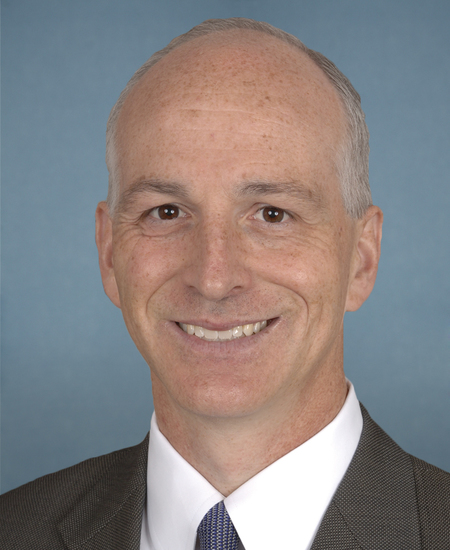
Photo of Adam Smith
D United States House · District 9 · Washington On the 2026 ballot

Rep. Adam Smith

Compare
Total votes
2,837
all sessions
Attendance
98%
66 missed
Lower than 87% of chamber peers
With party
98%
of cast votes
Higher than 88% of chamber peers
Bipartisan score
1%
crosses aisle rarely
Lower than 89% of chamber peers
Sponsored
1,280
bills & resolutions
Near the chamber average
Committees
1
assignment
1,280 bills and resolutions

Sponsored bills

Total
1,280
Primary
71
Co-sponsor
1,209
This page
1,280
matching current filters
Co-sponsor HR 5350
In committee · Indiana House · Co-sponsor
FAIR Act of 2025

Maddy summaryThe FAIR Act of 2025 would prohibit companies from requiring pre-dispute arbitration agreements or waivers that prevent individuals from joining class or collective lawsuits in employment, consumer, antitrust, or civil rights cases. This directly affects workers, consumers, and small businesses who currently face forced arbitration for issues like workplace discrimination, product defects, or unfair business practices. The bill makes such agreements unenforceable while allowing voluntary arbitration after disputes arise and leaving collective bargaining agreements unaffected. It applies to all disputes occurring after the law takes effect, without changing how voluntary arbitration works post-dispute.

In committee Sep 15, 2025 1 co-sponsor
Co-sponsor HRES 704
In committee · Indiana House · Co-sponsor
Expressing the sense of the House of Representatives that the Wasteful and Inappropriate Service Reduction Model undermines beneficiary access to health care and should not be implemented.

Maddy summaryHRES 704 is a non-binding resolution expressing the House's opposition to the proposed "Wasteful and Inappropriate Service Reduction Model" (WISeR) for traditional Medicare. It opposes expanding prior authorization requirements for Medicare services by 30% - requiring doctors to seek approval before treatment - using private companies with a history of incorrect denials and AI tools reported to have high error rates. The resolution states this would undermine beneficiary access to timely care, citing data showing prior authorization causes physician burnout and that Medicare Advantage denials are overturned 81.7% of the time. It urges CMS to terminate the model but does not change existing law.

In committee Sep 11, 2025 1 co-sponsor
Co-sponsor HR 5234
In committee · Indiana House · Co-sponsor
Local School Foods Expansion Act of 2025

Maddy summaryThe Local School Foods Expansion Act of 2025 expands a federal program to help schools purchase domestically grown, unprocessed fruits and vegetables directly from farmers. It increases the number of participating states from 8 to 14 and requires states to demonstrate support for small/local farmers, Tribal producers, and socially disadvantaged communities. The bill allocates $25 million annually (2026-2030) for the program, including $10 million yearly for administrative costs and technical assistance to help schools and farmers participate. States must also report on program challenges and outcomes, with the USDA required to evaluate impacts like cost, agricultural benefits, and barriers to participation within four years.

In committee Sep 9, 2025 1 co-sponsor
Co-sponsor HR 1510
In committee · Indiana House · Co-sponsor
Due Process Continuity of Care Act

Maddy summaryHR 1510, the Due Process Continuity of Care Act, expands Medicaid eligibility to cover individuals in jail or custody while awaiting trial or disposition of charges, at a state's option. This allows states to provide Medicaid benefits to this population without requiring them to be convicted first. The bill provides $50 million in planning grants to states to develop implementation plans, including assessing healthcare needs, recruiting providers (especially for behavioral health and substance use treatment), and creating electronic billing systems for correctional facilities and outpatient providers. States must also consult with stakeholders like jails, providers, and Medicaid advocates before finalizing their plans.

In committee Sep 8, 2025 1 co-sponsor
Co-sponsor HR 4669
In committee · Indiana House · Co-sponsor
FEMA Act of 2025

Maddy summary# Summary of Proposed FEMA Reform Legislation (FEMA Act of 2025) This comprehensive legislative document proposes significant reforms to the Robert T. Stafford Disaster Relief and Emergency Assistance Act, with four main sections addressing: ## 1. Disaster Assistance Reforms - **Expanded eligibility** for assistance, including clarifying that absence of a fixed address doesn't disqualify individuals from sheltering assistance - **Improved rental assistance** with consideration of local post-disaster rent increases - **Direct assistance** for those unable to use financial assistance, with no requirement to show other assistance can cover costs (except insurance) - **Enhanced notices** for applicants, including documentation of denial decisions - **Clarification of displacement assistance** eligibility, stating insurance shouldn't be considered a duplication of benefits ## 2. Mitigation Program Enhancements - **Preapproved project mitigation plans** requiring states to develop plans with peer review processes - **Improved allocation of funds** with formulas prioritizing vulnerable communities, high-risk areas, and rural/economically distressed communities - **Resilient buildings** requirements for housing retrofits using the latest building codes - **Streamlined application processes** for hazard mitigation funds across multiple programs - **Study on mitigation benefits** to evaluate cost savings and effectiveness ## 3. Transparency and Accountability Measures - **Public dashboards** for both individual assistance (431) and public assistance (432) showing application status, approvals, denials, and funding - **Transparency requirements** for disaster declarations with detailed justifications for approvals/denials - **GAO studies** on numerous topics including: - Identity theft in disaster assistance (409) - Insurance utilization for public assistance facilities (410) - Wildfire management plans (411) - Effectiveness of alerting systems (412) - Cost savings of repair/rebuilding reforms (415) - **Prohibition on political discrimination** in assistance distribution ## 4. Workforce and Operational Improvements - **Study on workforce retention** in noncontiguous communities - **Pilot program** for preliminary damage assessments in remote communities - **Fast-moving disasters working group** to develop best practices for rapid response The legislation focuses on improving efficiency, transparency, and effectiveness of disaster relief programs while prioritizing vulnerable populations and communities with higher risk of disasters. It also emphasizes data-driven decision making through required studies and reports to continuously improve disaster management policies.


In committee Sep 3, 2025 1 co-sponsor
Primary HR 5057
In committee · Indiana House · Lead sponsor
Expanding Service Coordinators Act of 2025

Maddy summaryThis bill expands programs that employ service coordinators in federally assisted housing projects (like those under Section 202 of the Housing Act of 1959) to help residents access supportive services for housing stability, health, and aging in place. It requires housing owners to reserve $2,500 annually per project for coordinator training and establishes new grant programs with $225 million in annual funding (2026-2030) for hiring coordinators, prioritizing projects serving elderly/disabled residents or in rural/persistent poverty areas. Coordinators must meet training requirements and coordinate services without forcing residents to accept them. The bill also adds similar provisions for rural housing (Section 515) and public/Indian housing, with separate funding allocations.

In committee Aug 26, 2025 0 co-sponsors
Co-sponsor HR 4974
In committee · Indiana House · Co-sponsor
DETECT Act of 2025

Maddy summaryHR 4974, the DETECT Act of 2025, is a procedural bill requiring the Comptroller General to submit a report within 180 days of enactment to the House Ways and Means and Senate Finance committees. The report must assess the potential of artificial intelligence to help the Internal Revenue Service detect tax fraud. This bill does not create new policy or directly affect any group; it mandates a study on AI's role in tax enforcement. The focus is solely on gathering information, not implementing new measures.

In committee Aug 15, 2025 1 co-sponsor
Co-sponsor HR 4967
In committee · Indiana House · Co-sponsor
Keep Seniors Fed Act

Maddy summaryThis bill amends the Food and Nutrition Act to clarify that Social Security benefits (income under Title II of the Social Security Act) are not counted when determining eligibility for SNAP (Supplemental Nutrition Assistance Program) benefits. It directly affects seniors receiving Social Security who rely on SNAP for food assistance, ensuring their Social Security payments do not reduce their SNAP benefits. The key change adds Social Security income to the list of non-countable resources under SNAP rules. The amendment takes effect 90 days after the bill is enacted.

In committee Aug 12, 2025 1 co-sponsor
Co-sponsor HR 4849
In committee · Indiana House · Co-sponsor
Protecting Health Care and Lowering Costs Act of 2025

Maddy summaryThis bill adjusts health insurance subsidies by modifying the premium tax credit structure under the Internal Revenue Code. It replaces previous income thresholds with a sliding-scale formula, increasing subsidies for households earning between 150% and 400% of the federal poverty level - reducing their required premium payments as income rises within these tiers. The changes apply to tax years beginning after December 31, 2025, directly affecting middle-income individuals and families purchasing coverage through health insurance marketplaces. It also repeals specific provisions from a prior reconciliation law related to health care.

In committee Aug 1, 2025 1 co-sponsor
Co-sponsor HR 4797
In committee · Indiana House · Co-sponsor
EATS Act of 2025

Maddy summaryThis bill removes a barrier preventing most low-income students from accessing SNAP benefits. It amends the Food and Nutrition Act to explicitly allow students enrolled at least half-time in recognized higher education programs to qualify for SNAP, reversing a prior exclusion. The key change eliminates the previous requirement that students meet specific exceptions (now deleted) and adds a new eligibility category under Section 3(m)(5). This directly affects low-income undergraduate and graduate students at colleges and training programs who were previously ineligible. The changes take effect January 2, 2026.

In committee Jul 29, 2025 1 co-sponsor
Showing 181 to 190 of 1,280 bills
Previous 1 … 18 19 20 … 128 Next