

Streamlining Procurement for Effective Execution and Delivery and National Defense Authorization Act for Fiscal Year 2026 This bill sets forth policies and authorities for FY2026 for Department of Defense (DOD) programs and activities, military construction, and the national security programs of the Department of Energy and the Maritime Administration. It also authorizes appropriations for the Defense Nuclear Facilities Safety Board and the Naval Petroleum Reserves, and modifies the defense acquisition system to expedite delivery of capabilities to the Armed Forces. Among other elements, the bill authorizes the acquisition or modification of various military items (e.g., aircraft) and sets policy for certain procurement programs; authorizes research, development, test, and evaluation and sets policy for such activities; sets active component and reserve component end-strength levels; sets policy regarding various aspects of military health care and military compensation; sets policy regarding acquisitions and acquisition management, including contracting authorities and small businesses; sets policy for various matters related to DOD interactions with foreign nations, including matters concerning Israel; sets policy for various matters related to DOD cyber activities, cyber workforce and training, cybersecurity, and artificial intelligence matters; and authorizes the activities of the National Nuclear Security Administration, defense environmental cleanup, nuclear energy, and other defense activities. For additional information on the National Defense Authorization Act (NDAA) see CRS In Focus IF10516, Defense Primer: Navigating the NDAA , and CRS In Focus IF10515, Defense Primer: The NDAA Process .
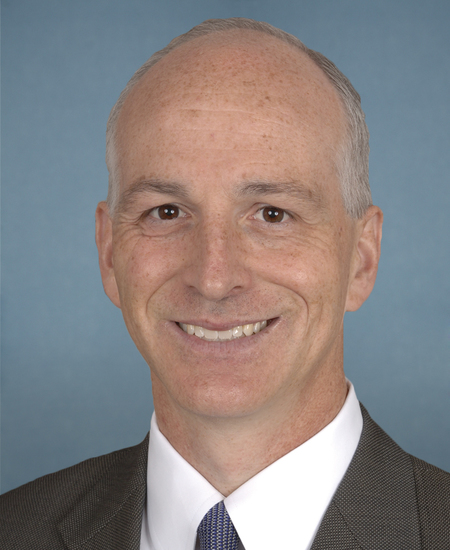
Rep. Adam Smith
Sponsored bills
Maddy summaryHRES 772 is a symbolic House resolution expressing support for National Public Lands Day (observed September 27, 2025). It encourages U.S. citizens to visit public lands on this fee-free day, recognizing their cultural, spiritual, and economic value. The resolution cites existing statistics on public lands' economic contributions (e.g., $252 billion in economic output from Bureau of Land Management lands in 2024) but does not create new policies or alter fees. As a procedural resolution, it has no binding effect and serves only to promote awareness of existing public land access.
Maddy summaryThis bill requires home medical devices like blood pressure monitors and sleep apnea machines to include nonvisual accessibility features (such as screen readers or audio feedback) so blind or low-vision users can operate them independently and safely. It sets a standard that devices must be as effective for these users as for sighted individuals, applying to Class II/III devices cleared under FDA's 510(k) process for home use. The FDA must issue proposed regulations within one year and final rules within two years of enactment, with manufacturers needing to comply one year after the final rule takes effect. Devices may qualify for waivers only if compliance would cause a "fundamental alteration" or "undue hardship" for the manufacturer, though the bill emphasizes accessibility can often be integrated without extra cost during design.
Maddy summaryThe Emergency Responder Protection Act (HR 5603) prohibits U.S. Immigration and Customs Enforcement (ICE) and U.S. Customs and Border Protection (CBP) officers from conducting immigration enforcement actions within 1,000 feet of protected emergency response locations - such as hospitals, shelters, disaster relief sites, or evacuation routes - except in clear cases of immediate danger to life or national security. It requires officers to consult supervisors in real-time if circumstances are unclear, mandates detailed annual reports to Congress on any enforcement near these sites, and creates penalties for violations, including barring evidence from removal proceedings. The law specifically exempts rare, premeditated arrests of terrorism suspects or individuals posing extraordinary public safety threats, with prior written approval. This directly affects ICE and CBP officers, requiring them to adjust operations near active emergency scenes.
Maddy summaryThe SAVES Act (HR 2605) creates a 5-year pilot program where the Department of Veterans Affairs (VA) awards competitive grants to nonprofit organizations to provide service dogs to veterans with specific disabilities. It directly affects veterans with covered conditions like blindness, mobility impairments, PTSD, traumatic brain injury, or other disabilities deemed appropriate for service dog assistance by the VA. Key provisions include: grants capped at $2 million per nonprofit (with $10 million annually authorized), no fees charged to veterans, VA-provided lifetime veterinary insurance for the dogs, and requirements for nonprofits to train veterans and maintain humane animal standards. The program aims to expand access to service dogs as a support tool for veterans managing qualifying disabilities.
Maddy summaryThis bill modifies how small business investment companies (SBICs) calculate their leverage by allowing them to exclude costs of investing in socially and economically disadvantaged small businesses from their leverage calculations. It applies specifically to SBICs that certify in writing that at least 50% of their investments target such businesses. The exclusion is limited to 50% of a company's private capital, with a maximum leverage cap of $175 million per company or $250 million for related companies under common control. These changes aim to encourage SBICs to direct more capital toward disadvantaged business owners.
Maddy summaryHJRES 126 is a joint resolution directing the removal of U.S. Armed Forces from military operations against specific targets without congressional authorization. It requires the President to end hostilities involving: (1) foreign terrorist organizations designated after February 20, 2025; (2) countries where those groups operate; or (3) non-state groups trafficking illegal drugs, unless Congress explicitly authorizes such actions through a war declaration or specific law. The bill cites recent military strikes on vessels as examples of unauthorized hostilities and emphasizes that drug trafficking alone does not justify military force under the War Powers Resolution. This resolution applies to all current and future operations targeting these groups without prior congressional approval.
Maddy summaryHR 5532 would establish a federal program to provide grants to states that develop comprehensive plans for tuition-free community college. States would receive funding to cover tuition costs for eligible students and provide direct aid for non-tuition expenses like housing, childcare, transportation, and food insecurity. The program requires states to create interagency committees coordinating workforce, education, and human services systems, with priority for low-income students, those without postsecondary credentials, and students facing employment barriers. It mandates data collection on enrollment, retention, completion rates, and outcomes related to in-demand industry sectors, with implementation over a 5-year period using 100% federal funding for tuition costs. This would affect community college students in participating states who meet eligibility requirements, including those without high school diplomas or postsecondary credentials.
Maddy summaryHR 5531, the Career and Technical Education Access Act, creates a voluntary federal grant program for states to establish, expand, or improve career and technical education (CTE) programs in public secondary schools. It directly affects students in underserved communities, rural areas, and opportunity youth by requiring states to align CTE programs with local job markets through workforce assessments and mandating industry partnerships, work-based learning, and automatic college credit transfer. Key mechanisms include competitive grants for building CTE facilities, developing online/hybrid programs, and creating CTE Pell Grants to cover costs for certifications, apprenticeships, and dual-enrollment courses. States must report annually on student outcomes like graduation rates, job placements, and credential attainment to ensure accountability.
Maddy summaryThis bill requires health plans and insurers to create a clear, timely process for patients or doctors to request exceptions when step therapy protocols (which force patients to try cheaper drugs first) might harm them. It mandates approval for exceptions in six specific cases, such as when prior treatments failed, delaying care risks severe harm, or the required drug causes adverse reactions. Plans must respond within 72 hours (24 hours for emergencies) and cover the requested drug for at least one year if approved. Additionally, health plans must report annual data on exception requests, approvals, denials, and reasons to the government for transparency.