

Give Kids a Chance Act of 2025 This bill expands the Food and Drug Administration’s (FDA’s) authority with respect to research on rare pediatric diseases, including by permitting the FDA to take enforcement action against drug sponsors that fail to satisfy pediatric study requirements and by reauthorizing programs that support pediatric research. Specifically, the bill modifies requirements relating to molecularly targeted pediatric cancer investigations to permit research on new drugs in combination with active ingredients that have already been approved, provided certain conditions are met; permits the FDA to take enforcement action against drug sponsors that fail to comply with pediatric study requirements, if such sponsors demonstrated a lack of due diligence in satisfying the requirement; renews the FDA’s authority to award priority review vouchers to sponsors of new products intended to treat rare pediatric diseases through September 30, 2029; and reauthorizes through FY2027 certain funding for the National Institutes of Health to support priority pediatric research. The bill also provides statutory authority for the FDA’s interpretation of the orphan drug exclusivity period. The bill specifies, consistent with FDA regulations, that the seven-year market exclusivity period for drugs for rare diseases or conditions (i.e., orphan drugs) prohibits the approval of the same drug for the same approved use or indication with respect to the disease or condition. (In Catalyst Pharmaceuticals, Inc. v. Becerra , a court rejected the FDA’s interpretation and held that orphan drug exclusivity extends to all uses or indications for the disease or condition.)
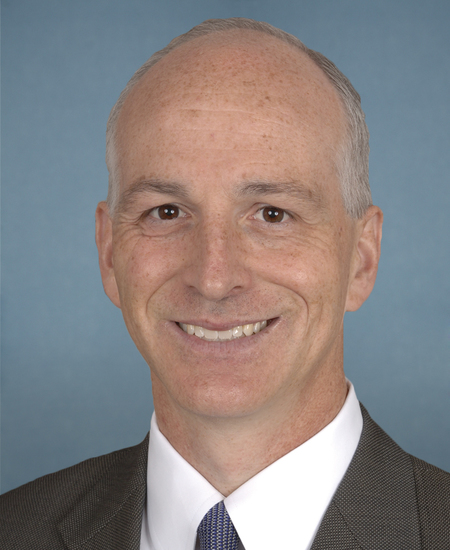
Rep. Adam Smith
Sponsored bills
Maddy summaryThe FRESHER Act of 2025 requires the Secretary of the Interior to study stormwater runoff impacts from oil, gas, and mining operations on groundwater and aquifers. It mandates a specific analysis of measurable contamination, groundwater resources, and aquifer susceptibility to contamination in affected areas. The study must be completed within one year of the bill's enactment, with results reported to Congress. This bill directly affects oil, gas, and mining operations by establishing new federal study requirements for their stormwater runoff.
Maddy summaryThe CHARGE Act of 2025 establishes a $50 million annual grant program (2026-2030) to fund solar energy systems and energy storage technologies at Federally Qualified Health Centers (FQHCs). Eligible recipients - including FQHCs, state/local governments, or nonprofits representing FQHCs - can use grants to install renewable energy systems or receive technical assistance for their design and operation. The program, administered by the Department of Energy, directly supports community health centers in improving energy resilience and reducing operating costs. It specifically targets FQHCs serving underserved populations, as defined under the Social Security Act.
Maddy summaryHRES 899 is a symbolic House resolution recognizing the Transgender Day of Remembrance and memorializing transgender people killed by violence in 2024-2025. It directly affects transgender individuals, particularly transgender women of color, by acknowledging the epidemic of violence against them - citing 27 U.S. victims (including names like Rick Alastor Newman and Kyla Jane Walker) and 241 global cases in 2025. The resolution’s key provisions include formally recognizing the violence epidemic, memorializing specific lives lost, and affirming the need for solutions to protect transgender people. It does not create new laws but expresses congressional support for addressing systemic violence and discrimination faced by transgender communities.
Maddy summaryThe ADOPT Act of 2025 creates federal offenses to prevent exploitation in private domestic interstate adoptions. It prohibits unlicensed groups from acting as intermediaries between birth parents and adoptive parents, restricts certain adoption advertising, and caps payments to birth parents at $2,500 before consulting a licensed agency or attorney. The bill directly affects unlicensed adoption facilitators, birth parents, and prospective adoptive parents by requiring all adoption services to occur through licensed providers or exempt entities like attorneys and nonprofit agencies. Violations carry fines up to $100,000 for organizations or $50,000 plus 5 years in prison for individuals, with exemptions for public agencies, licensed child-placing organizations, and attorneys.
Maddy summaryThis bill establishes fairer pay and retirement benefits for federal firefighters. It requires that overtime hours worked during a firefighter's regular schedule be included in retirement calculations, improving retirement payouts. The bill also sets a maximum 60-hour regular workweek for federal firefighters, to be defined by the Office of Personnel Management within one year. These changes directly affect federal firefighters by addressing pay disparities with municipal firefighters and enhancing recruitment and retention.
Maddy summaryThe Housing Financial Literacy Act of 2025 modifies mortgage insurance premiums for first-time homebuyers who complete approved financial literacy counseling programs. It requires that such counseling be completed before signing a mortgage application or sales agreement. The bill reduces the mortgage insurance premium by 25 basis points (0.25%) below the standard rate established by the Secretary of Housing and Urban Development. This change directly affects first-time homebuyers who participate in qualifying housing counseling programs.
Maddy summaryThe FAIR Act requires immigration detention centers to provide detained immigrants with access to forms needed to contact their congressional representatives, including a Privacy Waiver form (ICE Form 60-001) and a Congressional Privacy Release form, upon written request. Detainees must receive these forms and a multilingual handbook explaining constituent services within 90 days of the bill’s enactment, with the handbook provided in their language or via interpreter. Centers must notify the detainee’s congressional office within seven days of a request and allow access to communication tools like computers and printers for ongoing contact. Failure to comply allows detainees to file complaints or sue in federal court, with enforcement mechanisms detailed in the bill. The law takes effect 90 days after enactment.
Maddy summaryThe EXPERTS Act of 2025 requires agencies to disclose funding sources and potential conflicts of interest for studies submitted during rulemaking, including who funded research and any financial relationships that might influence findings. It establishes an Office of the Public Advocate within the Office of Management and Budget to assist public participation in rulemaking, conduct social equity assessments, and improve outreach to underrepresented groups. The bill also mandates that agencies consider social equity impacts when creating rules and requires detailed explanations for withdrawing proposed regulations. These provisions aim to increase transparency, inclusivity, and accountability in the federal regulatory process.
Maddy summaryHR 5894, the RESTRAIN Act, prohibits the United States from conducting any explosive testing of nuclear weapons or other nuclear explosions. It directly affects U.S. nuclear weapons programs by banning such testing using federal funds for fiscal year 2026 and beyond. The bill's key mechanism is a funding restriction: no money authorized for fiscal year 2026 or later may be used for explosive nuclear testing or other nuclear explosions. However, it explicitly excludes subcritical nuclear tests (which do not sustain a chain reaction) from this prohibition. The law aims to enforce a permanent ban on nuclear detonations while preserving the ability to conduct certain non-explosive testing.