

Domestic Workers Bill of Rights Act This bill provides rights and protections for domestic workers (e.g., housekeepers, nannies, caretakers, personal assistants, and chauffeurs), including pay and leave rights, and health and safety protections. Specifically, the bill repeals the exemption of domestic live-in employees from certain minimum wage and maximum hour requirements. Employers must provide written notice of termination and provide at least 30 days of lodging and two weeks of severance pay to terminated live-in employees. Live-in employees also must be provided with reasonable access to telephone and internet service during their employment. The bill requires employers to provide domestic workers with a written agreement covering wages, sick leave, benefits, and other matters. Further, domestic workers may request and be granted changes to work schedules due to personal events. The bill also provides domestic workers with certain privacy rights, extends to domestic workers protections against discrimination in employment, and increases the federal medical assistance percentage (FMAP) for certain Medicaid-funded medical services provided by domestic workers. The Department of Labor must (1) award grants for a domestic worker national hotline for reporting emergencies, training on hazards facing domestic workers, and workforce investment activities for domestic workers; and (2) establish a Domestic Worker Wage and Standards Board to investigate standards in the domestic workers industry. Labor must publish online a document that describes the rights and protections for domestic workers under this bill.
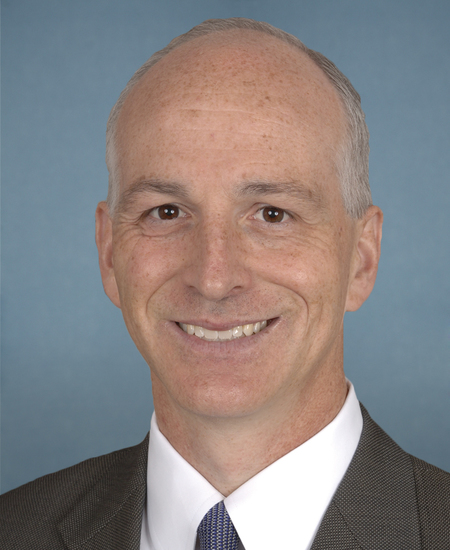
Rep. Adam Smith
Sponsored bills
Distillery Revitalization Act This bill requires the Small Business Administration to modify the Restaurant Revitalization Program, established to support food and beverage purveyors in response to COVID-19, to allow certain distilleries to participate in the program. To be program-eligible, a distillery must have at least 33% of revenue from on-site sales. However, certain states limit the percentage of revenue that a distillery may have from on-site sales to less than 33%. For a distillery located in such a state, the bill allows the distillery to use its combined revenue from on-site sales and sales to retailers for on-site sales to reach the 33% threshold.
Captive Primate Safety Act This bill limits the trade and possession of nonhuman primates. For example, the bill prohibits most individuals from owning a nonhuman primate as a pet.
This resolution (1) commits to advancing policies that will end roadway fatalities by 2050, and (2) calls on Congress and the Department of Transportation to commit to working together to achieve zero roadway fatalities by the year 2050.
Saving America's Pollinators Act of 2021 This bill addresses the use of certain pesticides and the health and status of native bees and other pollinators. First, the bill requires the Environmental Protection Agency (EPA) to establish a Pollinator Protection Board to develop an independent review process for pesticides that pose a threat to pollinators and their habitats. All active ingredients and pesticide products that contain one or more specified neonicotinoid pesticides must be deemed to generally cause unreasonable adverse effects to the environment. Under the bill, the registration of all uses of neonicotinoid pesticides must be immediately and permanently canceled. The EPA must revoke any tolerance or exemption that allows the presence of a neonicotinoid pesticide, or any pesticide chemical residue that results from neonicotinoid pesticide use, in or on food. The continued sale or use of existing stocks of neonicotinoid pesticides is prohibited, and the EPA may not register any such pesticides under the Federal Insecticide, Fungicide and Rodenticide Act. The bill requires the Department of the Interior, the EPA, and the Department of Agriculture to coordinate monitoring activities and report on the health and population status of native bees and other pollinators. Finally, a state or federal agency may be granted an exemption to use neonicotinoid pesticides if the board votes that use of the pesticide is warranted (1) in an emergency situation to avert significant risk to threatened or endangered species, (2) to quarantine invasive species, or (3) to protect public health.
Closing the Meal Gap Act of 202 1 This bill revises the requirements for calculating Supplemental Nutrition Assistance Program (SNAP) benefits. The bill increases the minimum SNAP benefit and requires benefits to be calculated using the value of a low-cost food plan. The Department of Agriculture (USDA) must determine the requirements for the low-cost food plan, which is the diet required to feed a family of four, consisting of a man and a woman 19-50 years of age, a child 6-8 years of age, and a child 9-11 years of age. USDA must (1) reevaluate and publish the market baskets of the plan by January 1, 2027, and every five years thereafter, based on current food prices, food composition data, consumption patterns, and dietary guidance; and (2) make adjustments to the plan to account for household size, changes in the cost of the diet, and the costs of food in specified areas. The bill modifies the requirements for calculating household income to determine SNAP eligibility by (1) authorizing a standard medical expense deduction for households containing an elderly or disabled member, and (2) eliminating the cap on the excess shelter expense deduction. The bill eliminates certain work requirements for SNAP. The requirements apply to able-bodied adults who are ages 18-49 and have no dependent children. The bill allows Puerto Rico, American Samoa, and the Northern Mariana Islands to participate in SNAP. Currently, the three territories receive block grants instead of participating in SNAP.
American Workforce Investment in Next Generation of Students Act This bill directs the Secretary of Education to award grants to eligible entities to carry out a program for students to enroll in and complete science, technology, engineering, and mathematics (STEM) courses, STEM-focused career and technical education courses, and other career pathway courses during grades 11 and 12 at a secondary school served by a local educational agency (LEA) partner; enroll in a course of study related to such a career pathway or in a youth apprenticeship program at a partner community college upon graduating from the secondary school; enroll, for a two-year period, in the youth apprenticeship program or the joint-labor management training program upon receiving an associate's degree from a partner community college; receive assistance from a student career workforce navigator; and receive work training and job placement through a workforce development consortium employer established under the bill. An eligible entity is a partnership (1) among at least one LEA, at least one community college, and at least one youth apprenticeship program or joint labor-management training program; and (2) that works with an employer in a state-identified high-skill, high-wage, or in-demand industry sector or occupation that is serving, or seeking to expand its capacity to serve, youth apprenticeship programs.
Universal School Meals Program Act of 2021 This bill revises requirements under the food and nutrition programs of the Department of Agriculture, such as the school lunch and breakfast programs. For example, the bill permanently provides free meals to all school children regardless of income. The bill increases the reimbursement rate for school food authorities participating in the food and nutrition programs. The bill also prohibits school food authorities from (1) physically segregating or otherwise discriminating against any child participating in the free breakfast program, or (2) overtly identifying a child participating in the program with a special token or announcement. Additionally, the bill expands the summer food service program by making all children eligible for participation in the program. Further, the bill revises eligibility determinations for measuring poverty to include runaway or homeless youth, foster children, migratory children, and children participating in specified programs (e.g., Head Start).
Urban Indian Health Providers Facilities Improvement Act This bill expands the authority of the Indian Health Service (IHS) to make funds available for urban Indian organizations to renovate, construct, or expand urban Indian health facilities. Specifically, the bill authorizes the IHS to (1) make funds available for renovations even if the renovations are not minor, and (2) make funds available for purposes other than assisting the organizations in meeting certain accreditation standards.
Accountability for Acting Officials Act This bill makes a series of changes with respect to the appointment, tenure, and qualifications of acting officials of executive agencies. Among other things, the bill specifies that, for a position that requires an appointment by the President (by and with the advice and consent of the Senate), the first assistant to the office may temporarily fill the position only if the individual has been the first assistant for at least 30 days during the preceding year; an officer or employee of the agency who is directed by the President to temporarily fill the position may only do so if the officer or employee has served at the agency for at least the entire preceding year (rather than 90 days); and an individual who is a presidential appointee and is directed by the President to temporarily fill the position, including an acting Inspector General, must possess the requisite qualifications for the position as provided by law or regulation. The bill also limits the tenure of acting heads of agencies to no more than 120 days (rather than 210 days).