

Maddy summaryHR 3409, the Healthy Families Act, requires most employers to provide employees with paid sick leave. Employees earn 1 hour of paid sick time for every 30 hours worked, up to a maximum of 56 hours per year, which can be used for their own illness, caring for family members, or addressing domestic violence, sexual assault, or stalking situations. Smaller employers with fewer than 15 employees can provide unpaid sick leave instead of paid leave. The bill includes protections against retaliation for using sick leave and requires employers to inform employees about their rights under this law.
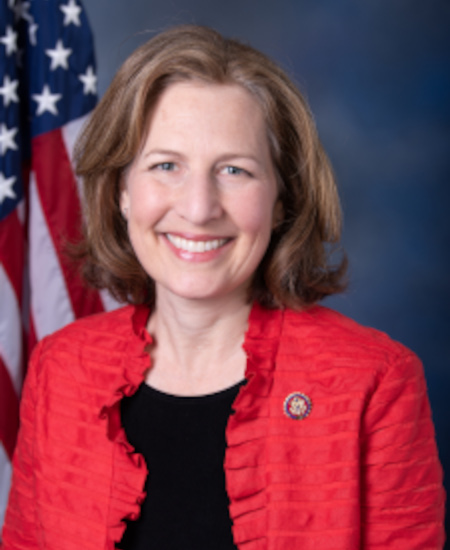
Rep. Kim Schrier
Sponsored bills
Maddy summaryHR 3416, the Youth Workforce Readiness Act of 2023, funds after-school and summer programs for youth aged 6-18 (including those in underserved communities) to build job skills and career pathways. It requires grants to community-based organizations partnering with employers, schools, and local agencies to provide career exploration, mentorship, work-based learning, and job training aligned with local industry needs. The program must track outcomes like school attendance, skill development, and job placement, with $100 million authorized annually for 2024-2028. It directly affects youth, community organizations, and local workforce boards through structured, measurable workforce readiness services.
Maddy summaryThis bill requires pharmacies and drug distributors to investigate suspicious orders of controlled substances. If they identify signs drugs might be diverted to illegal use, they must document their investigation, report to the DEA, and may decline the order. However, if they resolve all concerns, they can fill the order without reporting to the DEA. The DEA will define specific warning signs within one year, and the rules take effect one year after enactment.
Maddy summaryThis bill (HR 3364, WIC Act of 2023) amends the WIC program to expand eligibility for children, infants, and postpartum women. It extends the age for children to remain in WIC until their sixth birthday (instead of fifth) or until starting full-day kindergarten, and increases eligibility for infants to age 2 (from age 1) and for breastfeeding/postpartum women to 2 years (from 1 year) after childbirth. States must certify participants under these new rules starting October 1, 2028, and must conduct health assessments for newly certified infants and children. States can request waivers from the Secretary if facing technological barriers, high costs, or other implementation challenges.
Enhancing COPS Hiring Program Grants for Local Law Enforcement Act This bill allows funds under the Community Oriented Policing Services grant program to be used to provide bonuses for the recruitment and retention of law enforcement officers or career law enforcement officers.
Maddy summaryHR 2723 (Local Farms and Food Act of 2023) reforms the Local Agriculture Market Program to support local food systems. It extends funding periods to 2024-2028, increases annual funding to $75 million for program grants and $30 million for partnerships, and creates simplified application processes for projects under $100,000. The bill defines "food hub" to include businesses aggregating and distributing local food products, and adds new project categories like farmers market staff support and food safety equipment. It directly affects small local farms, food hubs, and rural communities by improving access to grants and reducing administrative barriers for market development.
Maddy summaryThe PAST Act of 2023 amends the Horse Protection Act to ban specific devices used to cause pain (soring) in horses at shows, particularly affecting Tennessee Walking Horses, Racking Horses, and Spotted Saddle Horses. It defines prohibited "action devices" (like boots or chains causing friction) and requires licensed, conflict-free inspectors at events to enforce rules. The bill increases penalties for violations to up to $5,000 fines or 3 years in jail, and mandates longer disqualifications for repeat offenses (180 days → 1 year → 3 years). Horse show organizers, exhibitors, and participants must comply with these new inspection and penalty requirements.
Maddy summaryHR 3238, the Affordable Housing Credit Improvement Act of 2023, updates the Low-Income Housing Tax Credit (LIHTC) program to increase the availability of affordable housing across the United States. The bill makes several key changes including increasing state funding formulas, modifying tenant eligibility rules to better serve vulnerable populations (such as domestic violence victims and students), and expanding credit eligibility for projects in rural and Native American communities. Specific provisions raise the credit for properties serving extremely low-income households, clarify rules around tenant income increases, and require housing providers to protect victims of domestic violence. The bill also updates terminology from "low-income" to "affordable" throughout the tax code and enhances program transparency through data sharing requirements. These changes aim to make the LIHTC program more effective at creating and preserving affordable housing units for low-income households nationwide.
Maddy summaryThe Invest to Protect Act of 2023 establishes a federal grant program for local law enforcement agencies with fewer than 200 officers (including counties, municipalities, and tribal governments) to fund training and support services. Grants cover de-escalation training, mental health resources, evidence-based safety training (such as handling domestic violence or mental health crises), and recruitment/retention incentives like signing bonuses, retention bonuses (up to 20% of salary), and stipends for graduate education in mental health or social work. The bill requires a streamlined grant application process (under two hours), public disclosure of bonus amounts, and annual audits to prevent misuse of funds.
Maddy summaryThe HELPER Act of 2023 creates a new FHA mortgage insurance program specifically for first responders and K-12 teachers. It allows eligible first-time homebuyers in these professions to secure mortgages with 100% financing (no down payment required) for purchasing or repairing a primary residence. To qualify, applicants must be employed as law enforcement, firefighters, paramedics, or K-12 teachers, have completed housing counseling, and meet specific employment history requirements (e.g., 4 years in the role or disability-related release). The program authorizes $660,000 for fiscal year 2024 and $160,000 annually through 2030, with authority expiring after 5 years.